



Glazed Mahogany Corner Display
These glazed mahogany corner display pieces turn neglected room angles into functional focal points, combining rich timber with glass to showcase cherished collections.
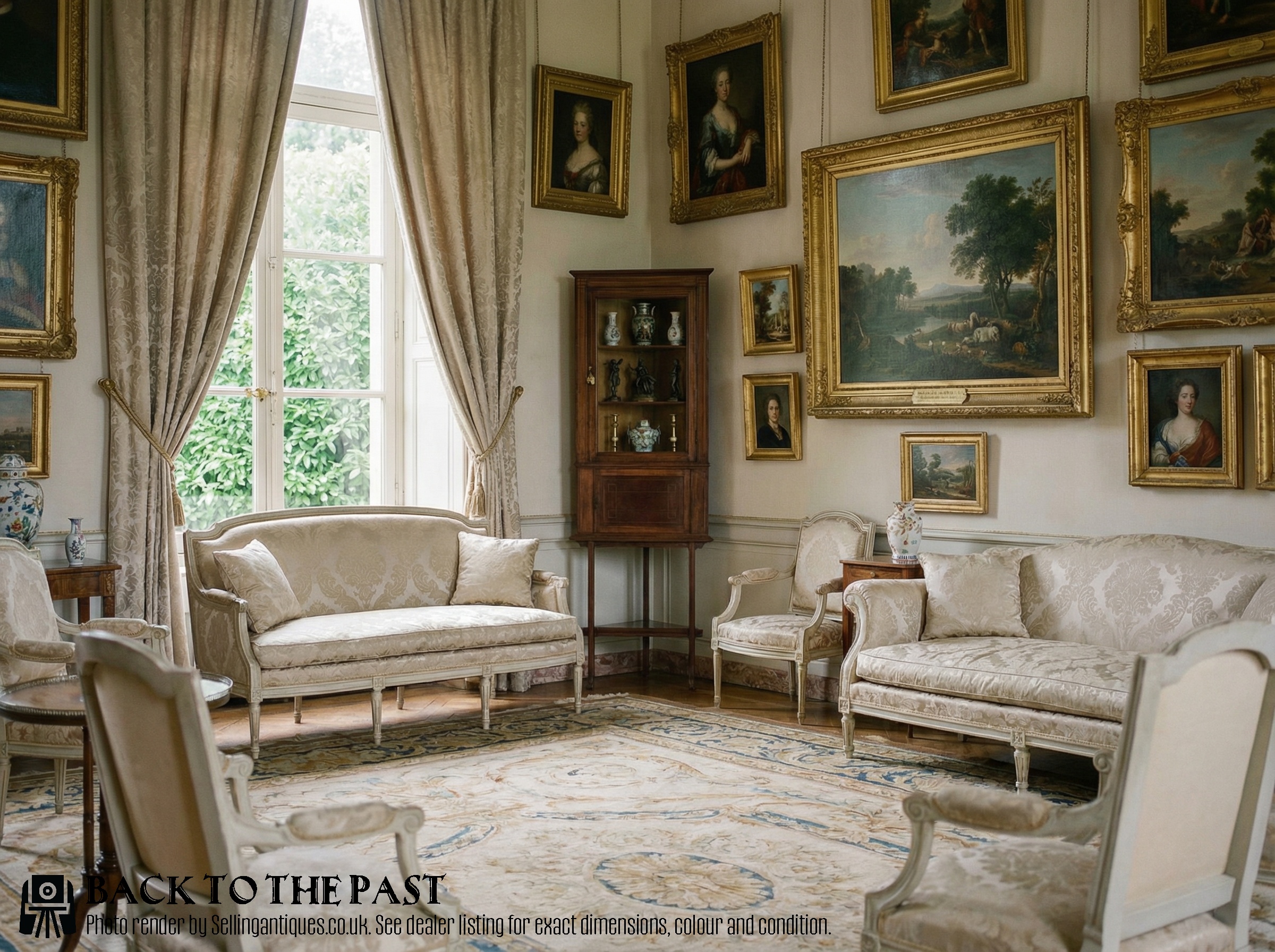
Glazed Mahogany Corner Display
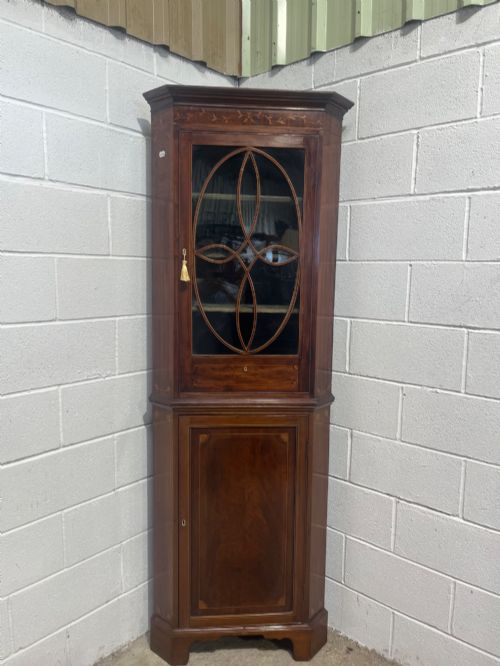
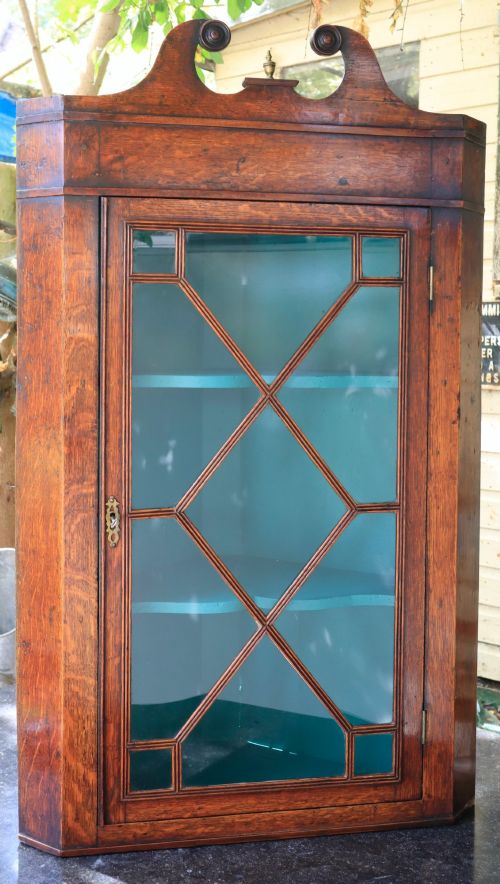
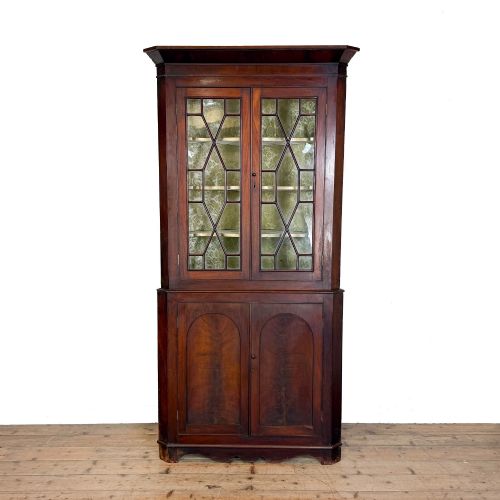
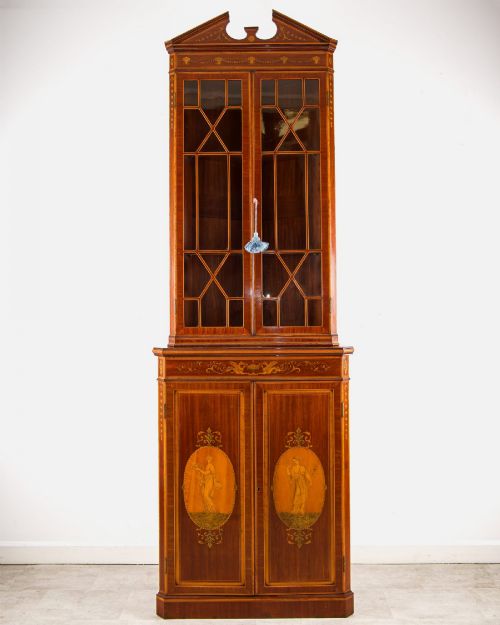
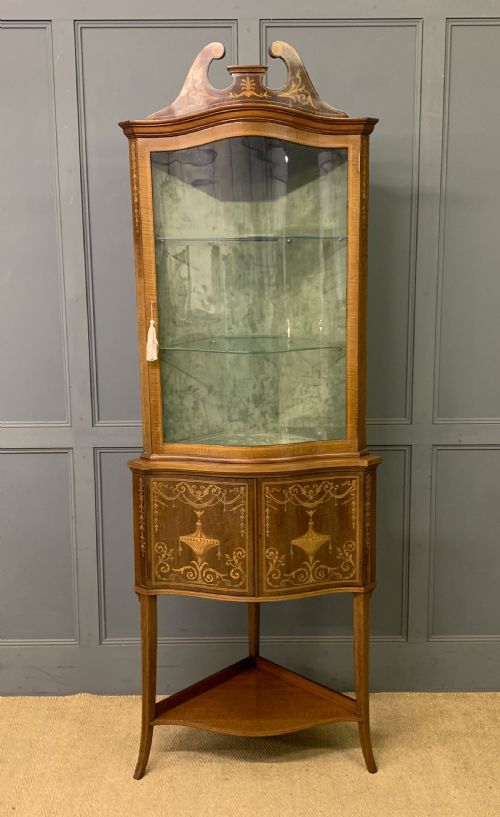
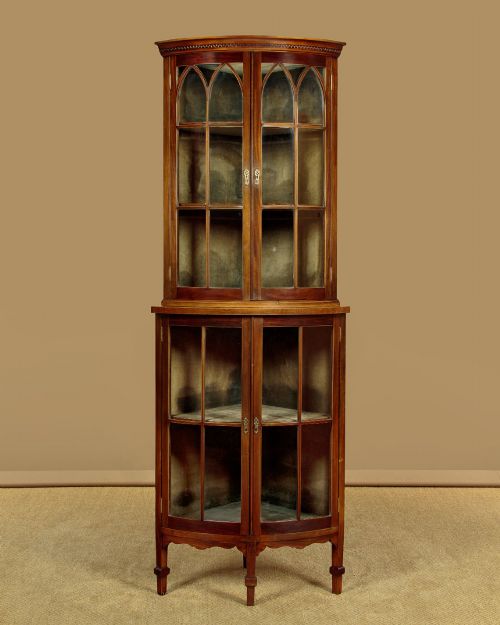
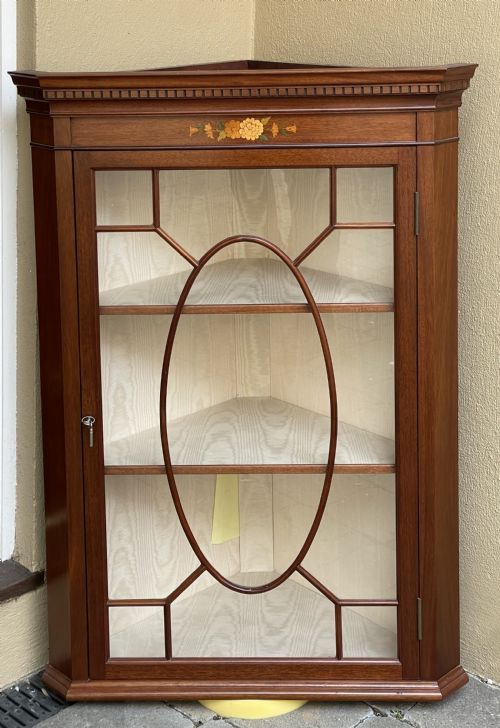
A glazed mahogany corner display utilises previously dead room space by fitting snugly into a 90-degree angle while offering glass-fronted storage. These items encompass wall-hanging cupboards, floor-standing units, and double-height cabinets designed to house ceramics, glassware, and books.
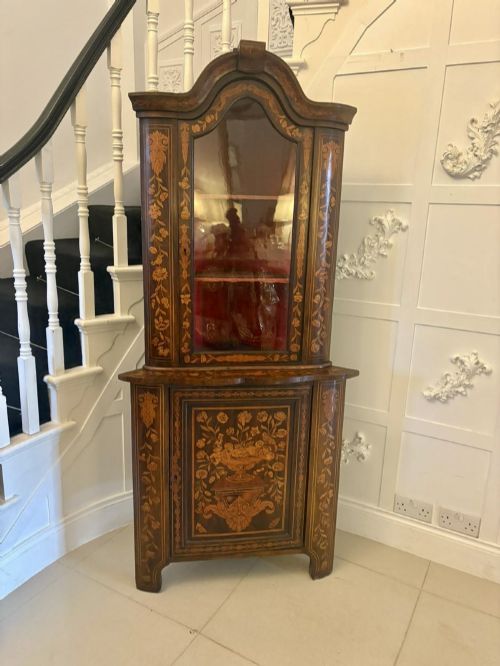
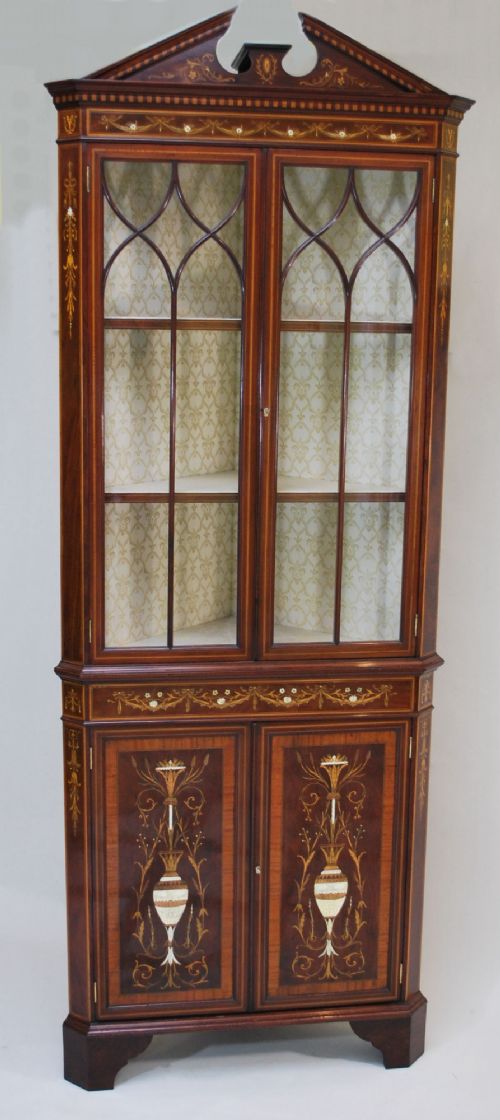
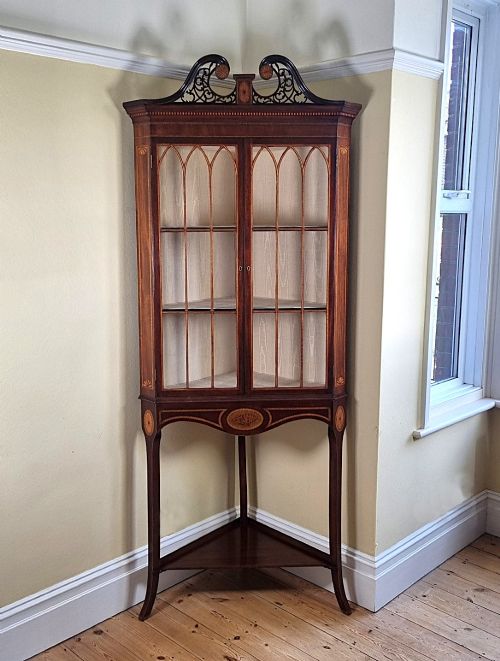
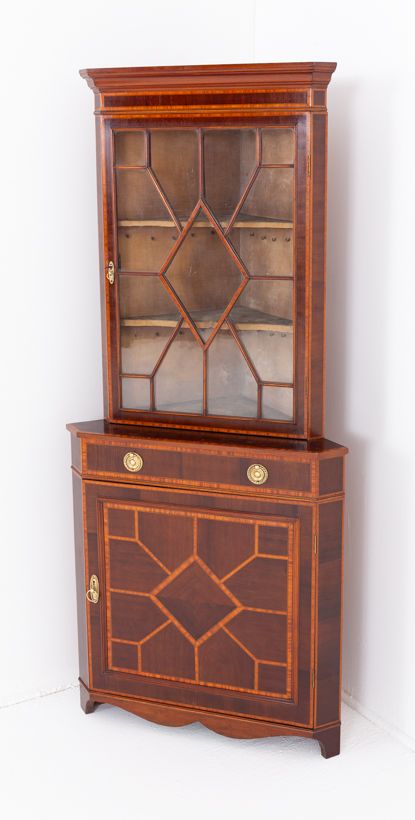
The pieces appearing on this page span several eras, originating predominantly from the Georgian, Victorian, and Edwardian periods. Buyers encounter variations that include Sheraton Revival styling, Dutch marquetry, bow fronts, and cabinets raised upon stands or built as two-part standing furniture.
How They Were Made
Cabinet makers built these frames primarily from solid mahogany and wood veneers, frequently incorporating satinwood inlay and brass hardware for decorative contrast. Fabric linings occasionally lined the interior compartments of display sections.
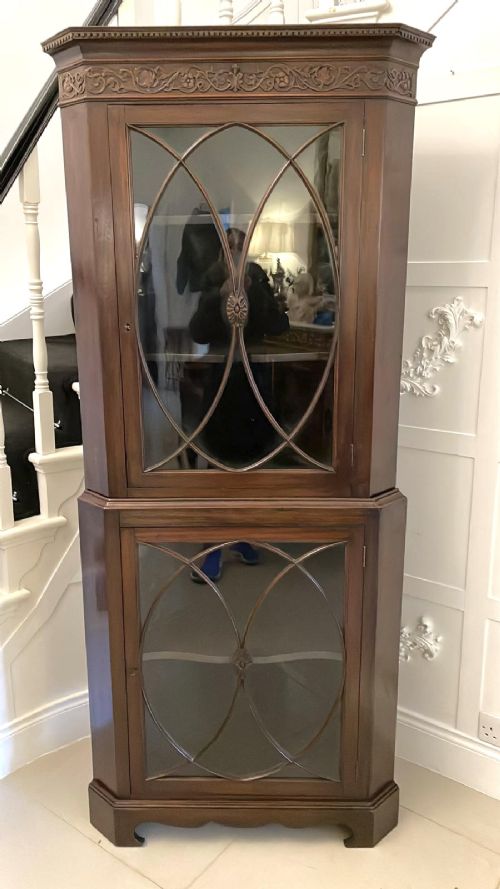
Glazing techniques defined the front doors, with many examples utilising astragal glazing bars to divide the glass panes into geometric patterns. Structural joinery accommodated the wedge shape required to mount securely on walls or stand firmly on the floor.
Listings feature woods including mahogany, walnut, oak, and satinwood, spanning the Georgian, Victorian, and Edwardian eras.
What Varies in Quality
The refinement of the timber grain and the precision of the satinwood inlay dictate much of the visual hierarchy among these cabinets. Simpler utility cupboards contrast sharply with finely carved Georgian pieces or intricate Edwardian marquetry work.
Construction methods also separate standard production from superior craftsmanship, seen in the delicacy of the astragal glazing bars and the integration of functional drawers or locking mechanisms with keys.
Goodhall Lamb and Heighway of Manchester
The Glazed Mahogany Corner Display Glossary
- Astragal glazing
- Timber bars dividing a glass door into smaller panes. This technique creates a lighter framework for displaying cabinet contents.
- Marquetry
- Decorative veneer work forming pictorial or geometric patterns using various woods. Craftsmen applied these elements to door panels and friezes.
- Bow front
- A convex, curved cabinet face extending outward. This curved profile softens the hard angles typical of corner furniture.
- Corner cabinet
- A storage unit built with a triangular cross-section to fit room corners. These forms maximise spatial efficiency in smaller rooms.
Glazed Mahogany Corner Display: Frequently Asked Questions
How do I hang a wall cabinet?
Wall-hanging corner cupboards require secure fixing into solid masonry or direct wall studs due to the combined weight of mahogany timber and glass doors. Proper brackets support the triangular load safely.
Professional installation ensures the cabinet hangs level, preventing the glazed doors from warping or swinging open unexpectedly.
Are these cabinets secure?
Many period examples include functional brass locks and matching keys to secure the contents. This traditional hardware remains operable on numerous surviving pieces.
Collectors should test the lock mechanism gently to ensure the original bolt engages properly with the frame.
Can I store heavy books inside?
While some standing models and bookcases handle heavier volumes, wall-mounted display units suit lighter items like porcelain and glassware. The internal wooden shelves have specific weight limits depending on their thickness.
Checking the shelf support system helps determine whether a cabinet suits books or delicate ornaments.
How do I date an Edwardian piece?
Edwardian cabinets often display Sheraton Revival influences, featuring lighter mahogany tones, satinwood inlay, and delicate astragal glazing bars. These characteristics reflect the design revivals popular around 1900.
Construction clues such as secondary woods and machine-cut elements help differentiate these 20th-century items from earlier Georgian originals.