


Glazed Earthenware Jardiniere
A glazed earthenware jardiniere brings sculptural plant display indoors, combining robust ceramic bodies with rich, colourful glazes from the nineteenth and early twentieth centuries.
Glazed Earthenware Jardiniere
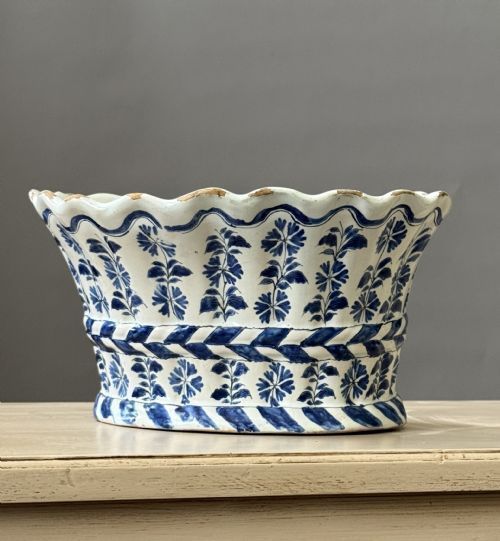
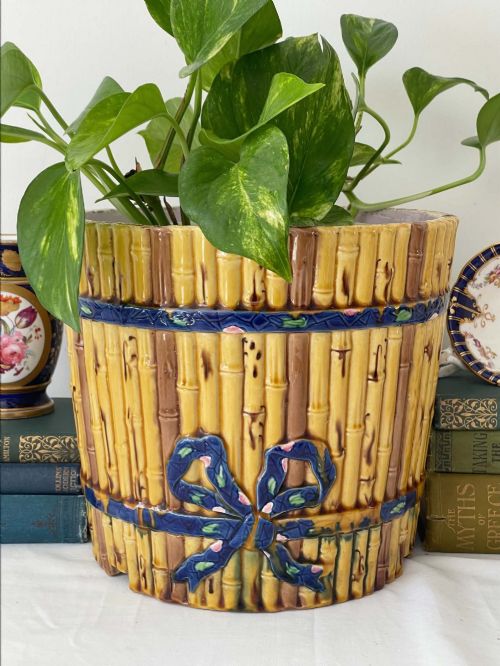
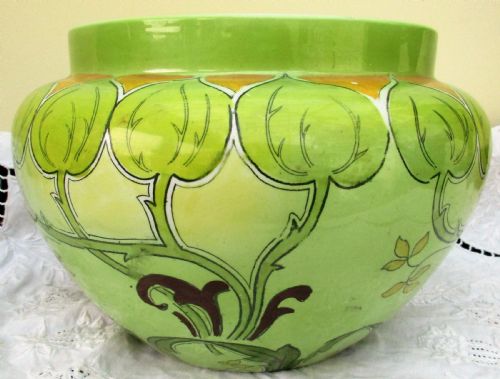
A glazed earthenware jardiniere is a decorative plant holder designed to sit on tables, floors, or matched pedestal stands within domestic interiors. When searching this phrase, a buyer encounters vessels shaped to receive potted plants, often decorated with floral, figural, or abstract motifs suited to Victorian, Arts and Crafts, and Art Nouveau tastes.
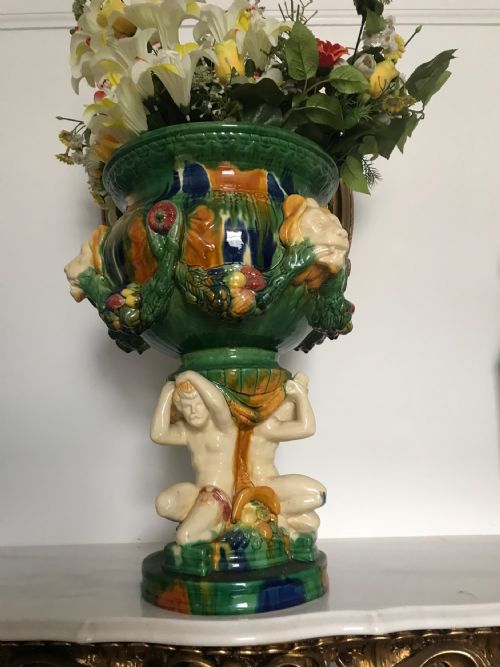
The pieces appearing here span from the late nineteenth century through to the Edwardian period, encompassing English potteries, Scottish works, and continental makers. Forms range from simple bowls with handles to large urns resting on figural bases.
Many examples arrive paired with matching stands or pedestals, creating tall focal points for hallways and reception rooms. The pottery bodies utilise earthenware, stoneware, and faience, coated in glossy or lustre glazes.
How they were made
Potters shaped the earthenware and stoneware bodies either by throwing on a wheel or by moulding in sections, particularly when incorporating complex relief decoration such as bamboo, rockwork, or lion heads. Makers then applied coloured lead or tin glazes directly to the ceramic surface before firing.
Specialised techniques included Majolica glazing, which produced vibrant, glossy surfaces through metal oxide pigments fired over an opaque tin-white glaze. Other workshops developed lustres and slip-decorated faience to achieve shimmering metallic sheens or tactile, matte textures.
A swan-shaped jardiniere demonstrates Victorian naturalism at its most whimsical, offering a feathered vessel ready to host an indoor fern.
What varies in quality
Quality rests in the crispness of the moulded relief and the depth of the glaze application. Superior pieces display finely detailed hand-painting, well-defined modelled elements, and rich, even colour saturation across the entire ceramic body.
The presence of an integrated pedestal or matching stand distinguishes grander exhibition pieces from standard tabletop planters. Attribution to named designers or major potteries elevates the standing of an individual jardiniere.
W.A. Adderley·Burmantofts Art Pottery·Doulton Burslem·Doulton Lambeth·Clement Massier·Minton·Royal Doulton·Royal Worcester·Julius Dressler·Woodlesford Art Pottery·Linthorpe Pottery·George Jones
The Glazed Earthenware Jardiniere Glossary
- Jardiniere
- A large ornamental pot or stand used for holding flowers or indoor plants. They usually sit directly on the floor or upon a matching ceramic pedestal.
- Majolica
- A type of earthenware covered with an opaque tin-white glaze and painted with metallic oxide colours. This technique yielded brilliant, glossy hues popular throughout the Victorian era.
- Faience
- Tin-glazed earthenware produced in imitation of Italian majolica or Dutch delftware. Workshops utilised this term for decorative pottery displaying colourful opaque glazes.
- Lustre glaze
- A ceramic finish incorporating metallic elements that create an iridescent sheen upon firing. Clement Massier utilised this technique to produce shimmering surface effects.
- Bough pot
- A traditional vessel designed originally for holding cut boughs of flowers or greenery. Early examples often feature pierced lids for arranging stems.
Glazed Earthenware Jardiniere: Frequently Asked Questions
What is a jardiniere used for?
A jardiniere serves as an ornamental container designed to house potted plants inside the home. It conceals standard clay flowerpots while adding decorative colour and form to a room.
Larger versions often rest on matching ceramic pedestals to elevate palms and ferns in hallways or parlours. Their waterproof glazed interiors protect household surfaces from water damage during watering.
Are stands usually sold with them?
Some pieces include their original matching pedestals, while others were produced solely as tabletop planters. Surviving matched sets command particular attention from collectors seeking complete installations.
Listings specify whether a tall base or pedestal accompanies the main planter bowl. Buyers should verify dimensions to ensure adequate ceiling clearance for combined sets.
How do I identify Art Nouveau pieces?
Art Nouveau examples display characteristic organic motifs, including stylized plant tendrils, whiplash lines, and flowing floral reliefs. Potters working in this style abandoned rigid symmetry in favour of dynamic, natural movement.
Makers such as Doulton and Burmantofts embraced these fluid contours alongside iridescent or mottled glaze effects. Look for stamped factory ciphers and stylistic cues pointing towards the turn of the twentieth century.