
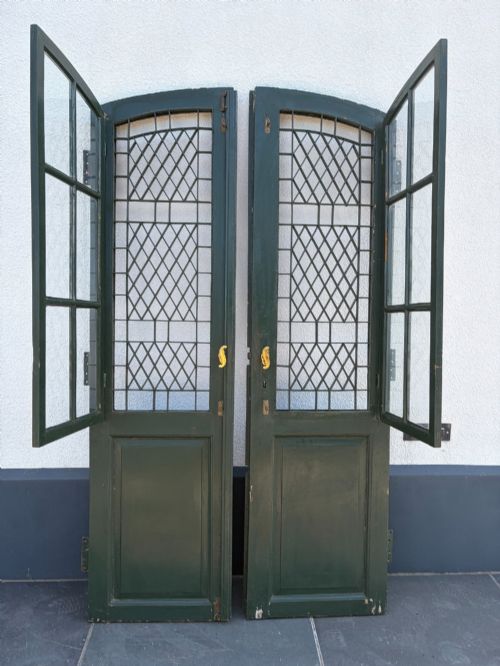
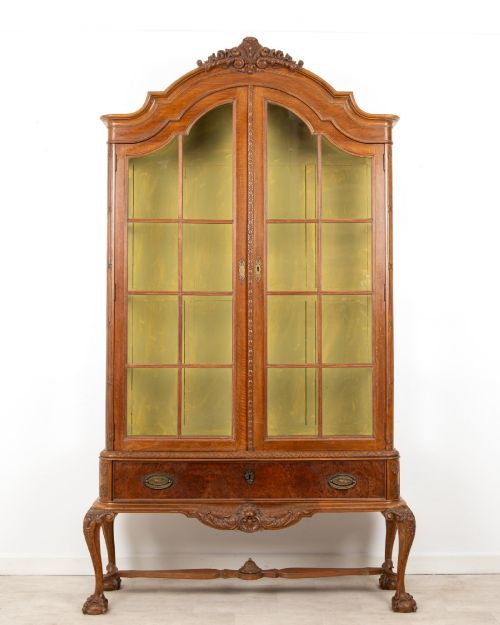
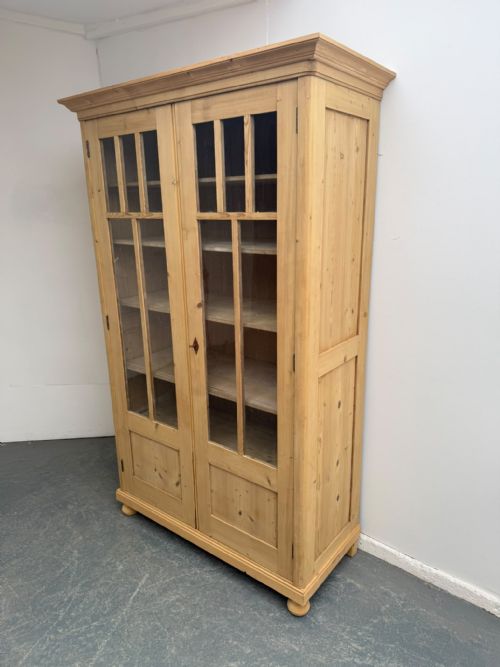
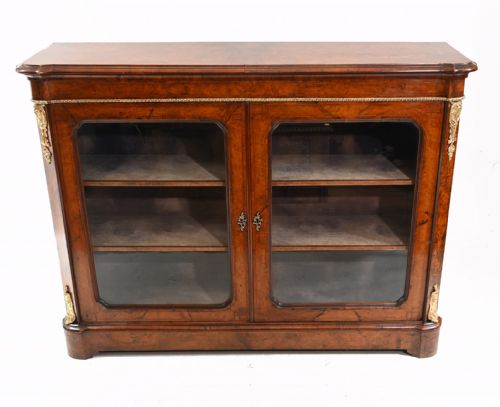
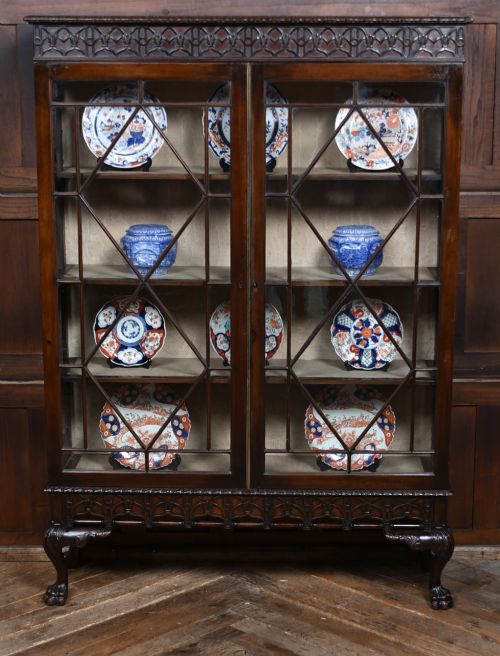


Glazed Double Doors
Glazed double doors bring natural light deep into a room while keeping books or displays protected behind glass.
Glazed Double Doors
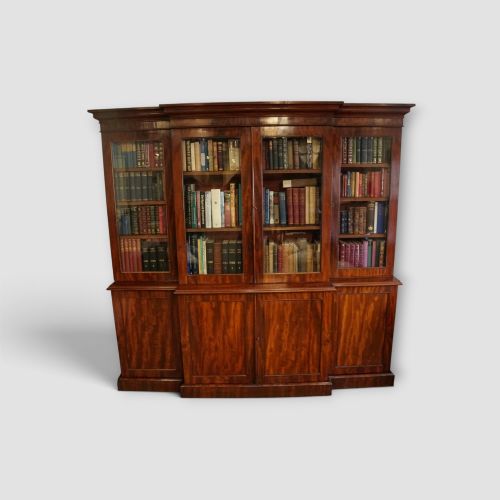
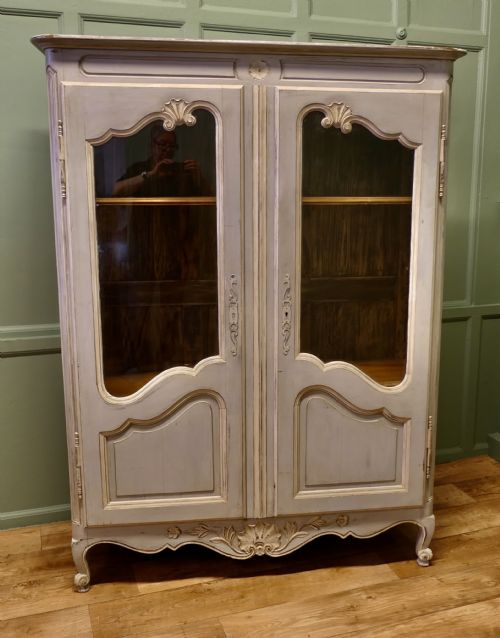
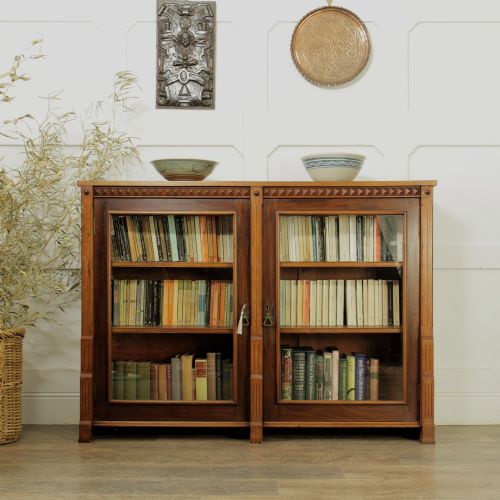
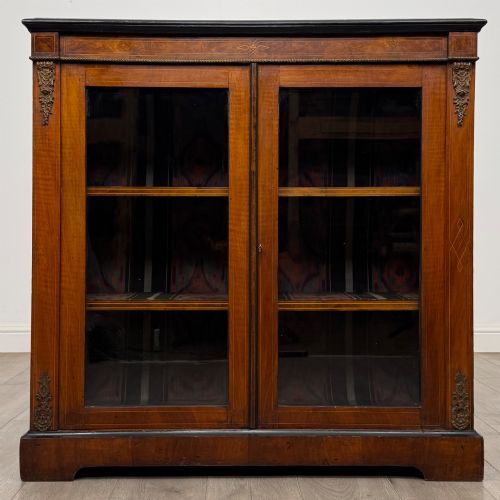
When you search for glazed double doors, you encounter architectural elements like pine arched top French doors and sets of French chateau doors, alongside large library bookcases and display cabinets that utilise twin glass-fronted panels. The pieces on this page span the Victorian and Edwardian periods, stretching back through the nineteenth century into the Georgian era and early twentieth century.
The form appears most frequently integrated into large storage furniture such as breakfront bookcases, vitrines, and cabinets a deux corp, though standalone pairs of architectural doors also emerge in timber.
These items serve to divide interior spaces or house collections of books and porcelain, combining timber framing with clear glass panels.
How they were made
Cabinet makers constructed the frames of these pieces using dense hardwoods like mahogany, walnut, burr walnut, rosewood, and oak, occasionally supplementing them with softer pines for architectural doorways.
Makers set glass panes into timber rebates, securing them with wooden glazing bars or astragals, and fitted brass hardware, ormolu mounts, and velvet linings to the interior display spaces.
Surface treatments range from painted and polished finishes to marquetry inlay and burr maple veneers, depending on the stylistic period.
Design influences range from Georgian and Queen Anne Revival to French Rococo, Chippendale Revival, and Edwardian styles.
What varies in quality
The distinction between ordinary and superior pieces rests on the selection of timber veneers, such as figured walnut or burr maple, and the precision of the joinery in the glazing bars.
Higher quality examples display refined details like intricate marquetry, ormolu mounts, and well-executed brass hardware, whereas simpler iterations rely on plain pine or straightforward mahogany construction.
The Glazed Double Doors Glossary
- Astragal
- A moulding profile used to separate panes of glass within a sash or door. These narrow timber strips form the grid pattern across the glazed sections.
- Breakfront
- A piece of furniture where the central section projects forward from the flanking wings. This architectural arrangement creates depth and variation across large bookcases.
- Vitrine
- A glass-fronted cabinet designed specifically for displaying objects and porcelain. The term typically applies to French and continental styles with extensive glazing.
- Pier cabinet
- A low cabinet built to fit the narrow wall space between windows. These nineteenth-century pieces frequently feature glazed doors and walnut or marquetry decoration.
Glazed Double Doors: Frequently Asked Questions
How do I clean antique glass?
Use a soft microfibre cloth and a mild glass cleaning solution applied directly to the cloth rather than the glass. This prevents moisture from seeping into the old timber rebates and putty.
Take care around delicate glazing bars and antique astragals, avoiding excessive pressure that might loosen centuries-old joints.
Can I paint an antique cabinet?
Many period pieces arrive with historic painted finishes or stripped pine surfaces suited to modern interiors. However, applying paint to polished mahogany or burr walnut permanently alters the original timber grain.
Consider whether the piece retains its factory finish before undertaking any cosmetic changes.
How do I date a glazed cabinet?
Examine the timber species, construction methods, and hardware style to determine the period. Victorian and Edwardian pieces often feature machine-sawn backing boards and standard brass locks, while Georgian items display hand-cut dovetails.
Glazing bar thickness and glass imperfections also offer clues to the approximate decade of manufacture.