
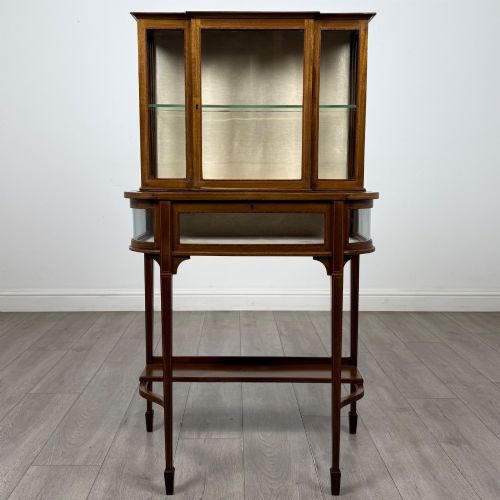
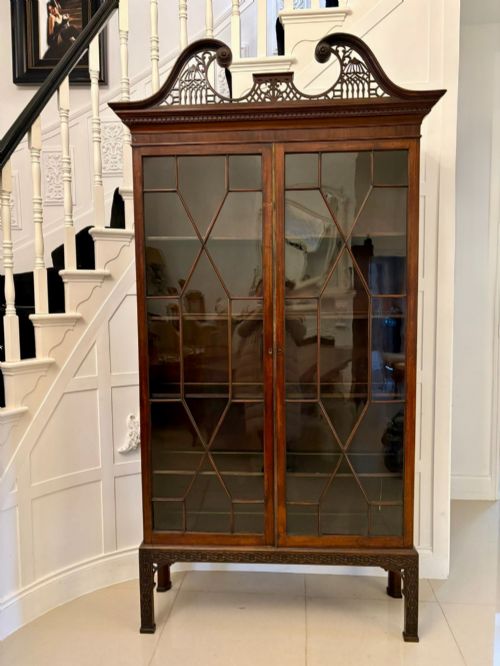
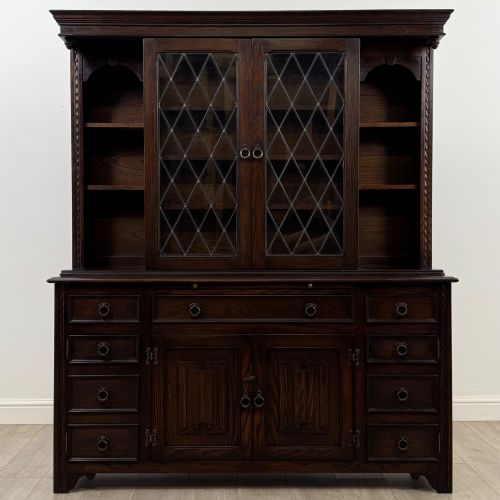
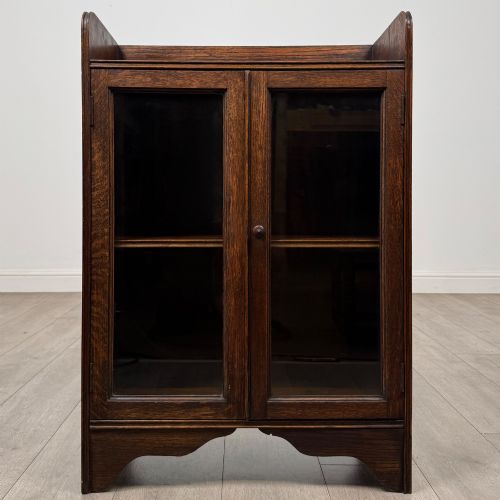
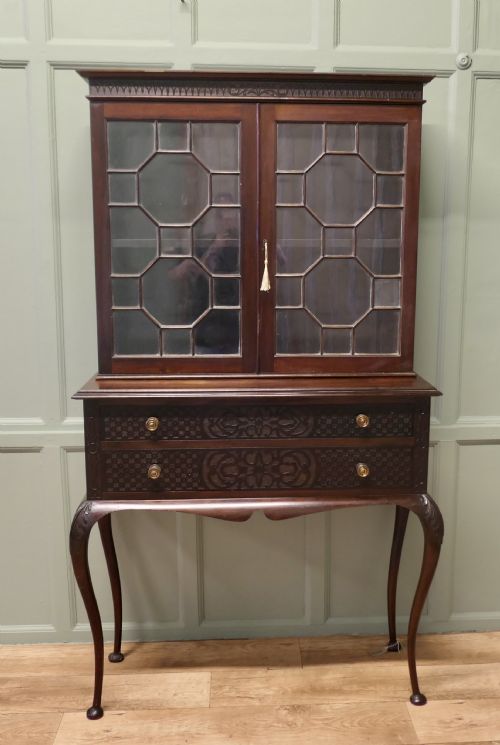
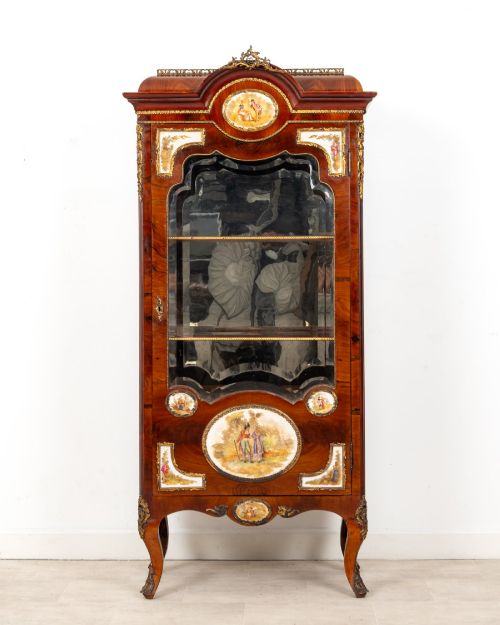
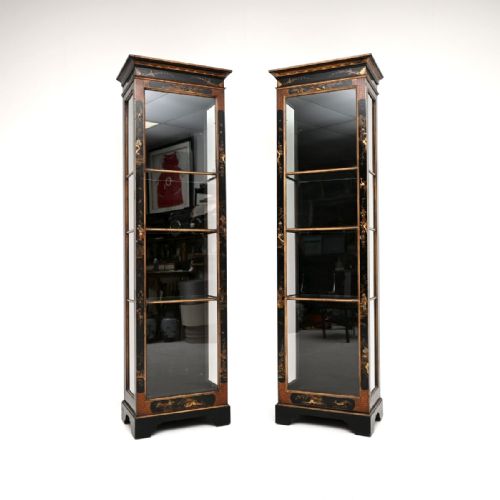
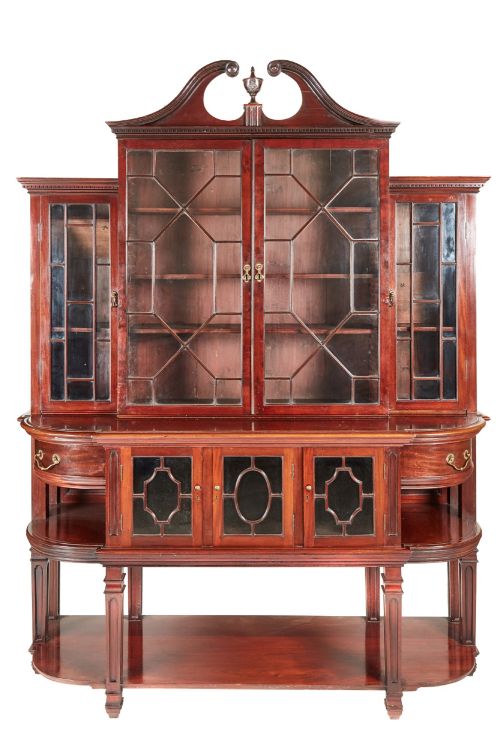
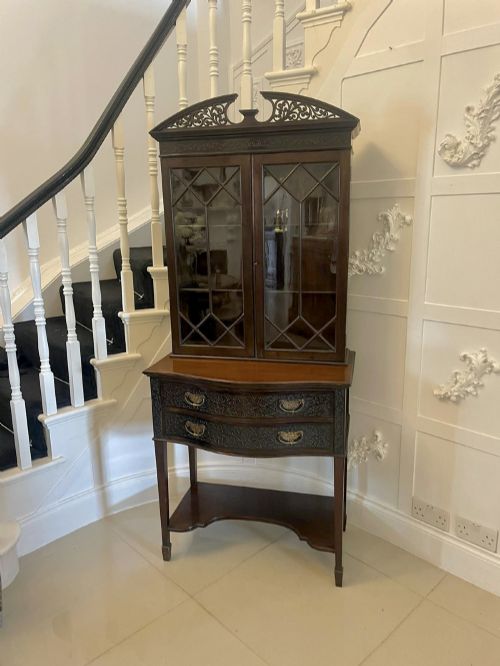
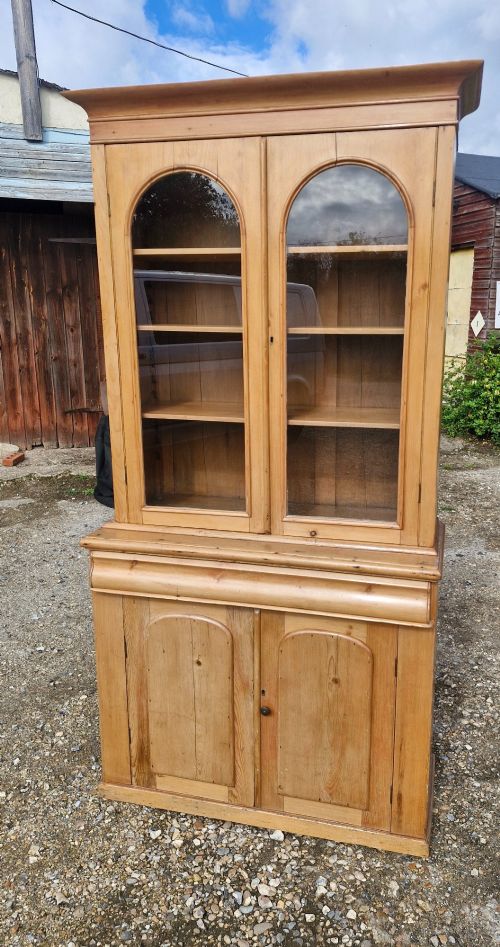
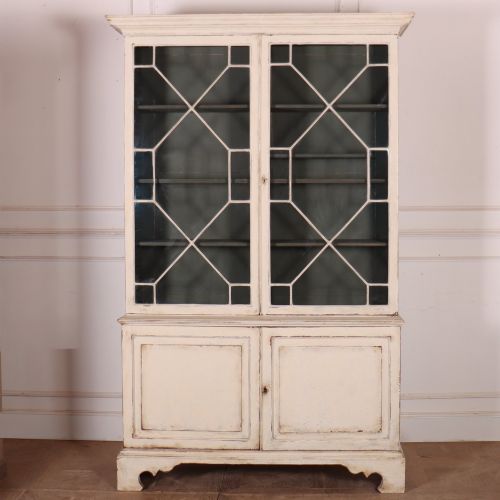
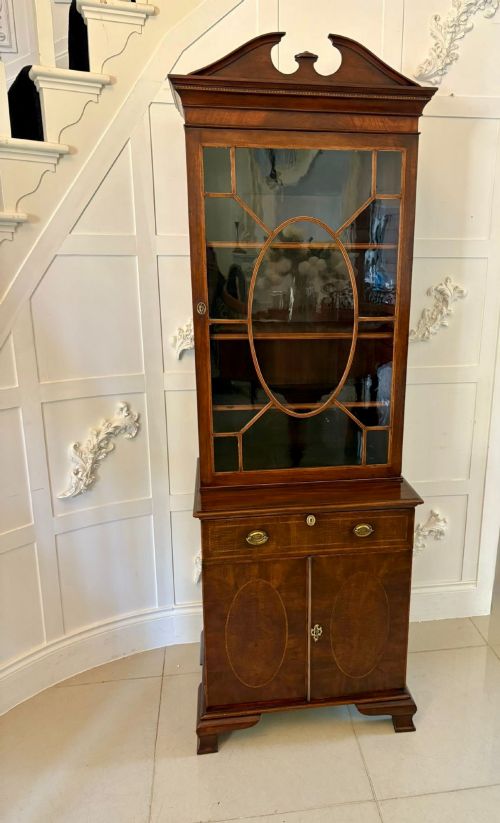
Glazed China Bookcase
These glazed china bookcase examples combine practical shelving with glazed display space, offering the ideal home for treasured books and porcelain.
Glazed China Bookcase
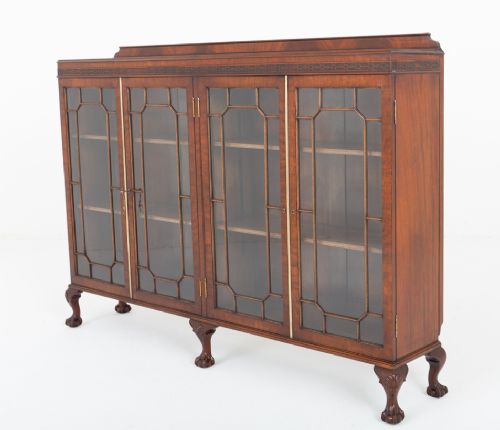
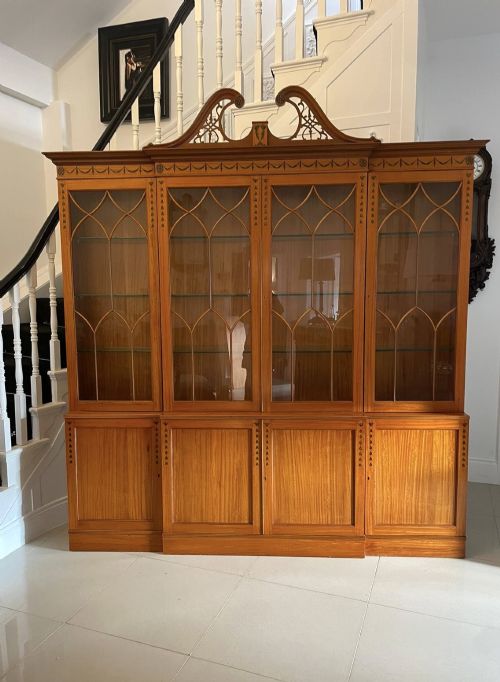
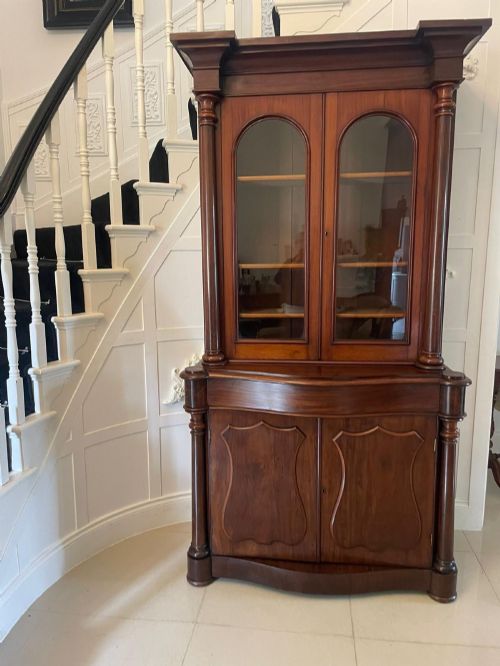
A glazed china bookcase serves as both a library and a vitrine, holding volumes behind glass doors alongside ornamental ceramics. Buyers searching for a glazed china bookcase will encounter forms ranging from simple pine kitchen dressers to grand breakfront library cabinets.
The periods represented span from the eighteenth century through the Victorian and Edwardian eras into the nineteen-thirties. Edwardian mahogany and oak versions alongside nineteenth-century Victorian pieces dominate the selections available.
Makers utilised various object types including display cabinets, glazed cupboards, and side cabinets. These pieces originate from diverse stylistic revivals such as Chinese Chippendale, Sheraton, and Tudor influences.
Materials and construction
Cabinets rely predominantly on timbers such as mahogany, oak, walnut, and satinwood, frequently paired with secondary woods like pine. Marquetry, inlay, and hand-carved details often embellish the primary surfaces of finer examples.
Glass panes are held within timber frames using lead or putty, sometimes forming intricate astragal patterns. Brass hardware and ormolu mounts secure the doors and drawers across various styles.
Some Edwardian display cabinets hide secret compartments behind their decorative inlaid panels, waiting for a stray key.
Assessing craftsmanship
Quality reveals itself in the selection of timber veneers, the precision of inlay work, and the crispness of carved details. Superior examples exhibit balanced proportions and integrated decorative schemes like original painted decoration.
The refinement of the glazing bars and the clarity of the glass pane construction distinguish standard utility cupboards from exceptional display furniture.
Jas Shoolbred·Collinson & Lock·Hampton & Sons·Edwards & Roberts
The Glazed China Bookcase Glossary
- Astragal glazed
- Timber glazing bars dividing a glass door into smaller panes. This technique creates a lighter framework for viewing contents.
- Breakfront
- A cabinet facade where the central section projects forward from the flanking wings. It adds architectural depth to large bookcases.
- Vitrine
- A glass-fronted display cabinet specifically designed for showing porcelain and small objects. These often feature mirrored backs or glass shelves.
- Marquetry
- Decorative veneer patterns formed by fitting together contrasting pieces of wood. Craftsmen apply these to door panels and friezes.
- Linenfold
- A carved wooden panel moulding imitating folded fabric. This decorative motif frequently appears on oak furniture from revival periods.
Glazed China Bookcase: Frequently Asked Questions
How do I date a cabinet?
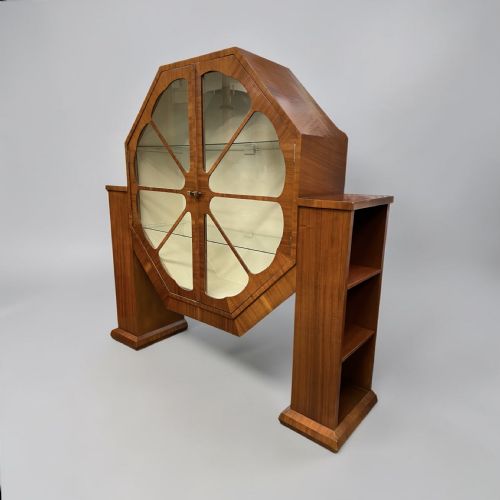
Dating relies on identifying characteristic timber choices, hardware styles, and construction methods associated with specific decades. Periods range from eighteenth-century Georgian designs to nineteen-thirties Art Deco examples.
Secondary woods and drawer dovetailing further clarify the era of manufacture. Examining stylistic revival cues helps place undated pieces within nineteenth or twentieth-century traditions.
Where should I place my cabinet?
Position cabinets away from direct sunlight to protect antique timber finishes and fragile book bindings. Ensure floors are level to prevent distortion of large glazed doors.
Adequate clearance is necessary for opening breakfront or side cabinet doors fully. Rooms with stable humidity levels preserve wood and veneer integrity over time.
Are shelves adjustable?
Many period bookcases feature fixed wooden shelving integral to the original carcase construction. Later Edwardian and Art Deco iterations occasionally incorporate adjustable timber supports.
Original interiors reflect the specific storage requirements for books or ceramics of the period. Alterations to shelving are sometimes visible upon close inspection of the interior walls.
How do I clean the glass?
Use a mild glass cleaner applied to a cloth rather than sprayed directly onto the surface. This prevents liquid from seeping into fragile putty or wooden glazing bars.
Antique glass often contains bubbles and minor imperfections that require gentle treatment. Regular dusting maintains the clarity of the panes without risking the surrounding timber.