
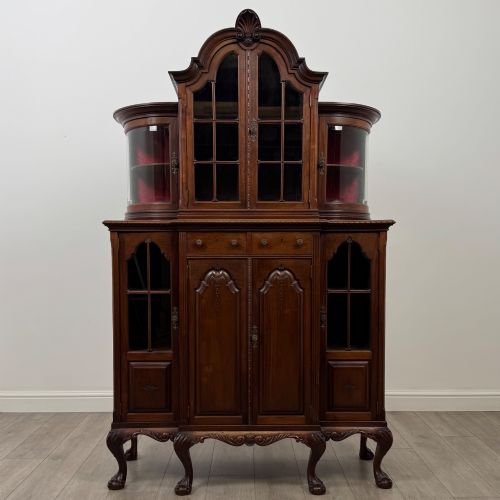
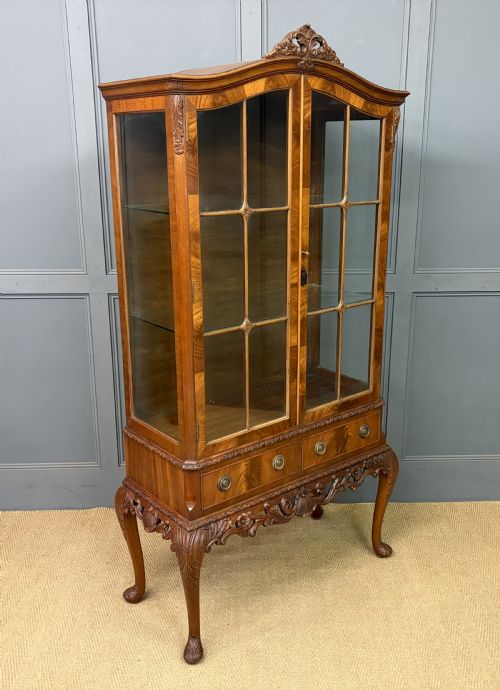
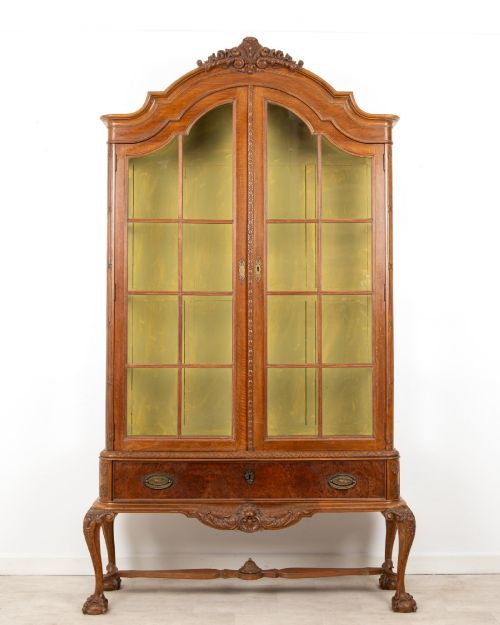
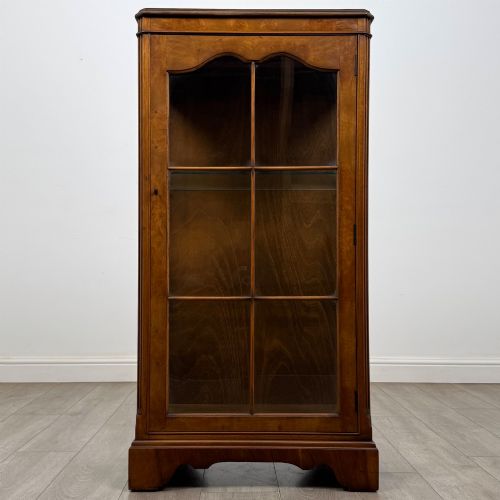


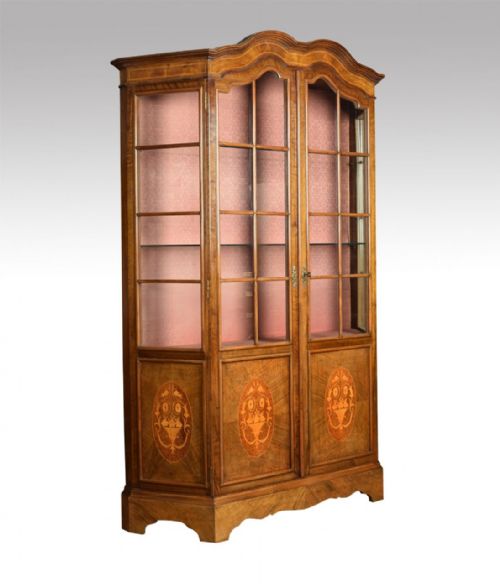


Queen Anne Vitrine
A queen anne vitrine brings walnut grain and glass display space into a room, offering both storage and a stage for treasured possessions.
Queen Anne Vitrine
When you search for a queen anne vitrine, you encounter pieces designed to exhibit collections behind glass while employing characteristic walnut timbers. The selections span revival periods from the Victorian and Edwardian eras up to the 1930s, alongside examples originating in the eighteenth century.
The forms vary across upright display cabinets, corner cabinets, and bookcases with glazed doors. Many pieces utilise walnut and burr walnut veneer, often mounted with brass hardware and shaped according to Queen Anne, George I, and Georgian styles.
How they were made
Cabinet makers constructed these pieces using solid timbers and decorative veneers such as burr walnut, laid over supportive woods. Glass panels were fitted into wooden frames to form doors for display cabinets and bookcases, sometimes accompanied by internal fabric linings.
Surface detailing frequently involved walnut inlay and polished finishes that highlighted the natural figuring of the wood. Brass mounts and handles completed the construction, securing doors and drawers while adding metallic contrast to the timber.
Walnut and burr walnut veneer dominate the material palette across these display cabinets and bookcases.
What varies in quality
The choice of timber creates a primary distinction, particularly the richness and complexity of the burr walnut veneer employed on the cabinet facade. Finer examples display careful grain matching across the doors and panels.
Execution of the style influences distinction, where proportion, crispness of carving on the woodwork, and the integration of brass fittings determine the refinement of the finished piece.
Maple & Co.·Epstein
The Queen Anne Vitrine Glossary
- Burr walnut
- A wood harvested from walnut tree growths that produces intricate, swirling grain patterns. It is sliced into thin veneers for cabinet surfaces.
- Vitrine
- A glass-fronted cabinet designed for displaying objects. It protects contents from dust while allowing full visibility.
- Veneer
- A thin layer of superior wood applied to a base timber surface. This technique allows cabinet makers to utilise striking grain figures economically.
- Corner cabinet
- A storage unit shaped to fit directly into the corner of a room. These pieces maximise floor space while offering display or cupboard storage.
Queen Anne Vitrine: Frequently Asked Questions
What is a queen anne vitrine?
It is a glass-fronted display cabinet or bookcase that follows the stylistic conventions associated with the early eighteenth century. These pieces frequently incorporate walnut timbers and revival aesthetics from later decades.
They serve primarily to showcase collections of porcelain, books, or decorative objects while adding traditional cabinet work to an interior space.
How do I date a walnut display cabinet?
Dating relies on examining construction methods, timber preparation, and the specific revival style employed by the maker. Pieces span from eighteenth-century origins through Victorian, Edwardian, and 1930s interpretations.
Secondary woods, hinge types, and veneer thickness often provide further clues regarding whether a piece is an eighteenth-century original or a later revival.
Where should I place a corner display cabinet?
A corner display cabinet fits neatly into room angles, making efficient use of space that might otherwise remain empty. They work effectively in dining rooms or drawing rooms to display glassware and ceramics.
Positioning them away from direct sunlight helps protect the walnut timber and any internal fabric linings from fading over time.
What is the difference between a vitrine and a bookcase?
A vitrine is specifically designed for display with glass panels that reveal the interior from multiple angles. Bookcases focus primarily on shelving for books, though many examples combine glass doors with shelving.
In revival pieces, the terms often overlap when makers built glazed cabinets suited for both literary storage and decorative display.