
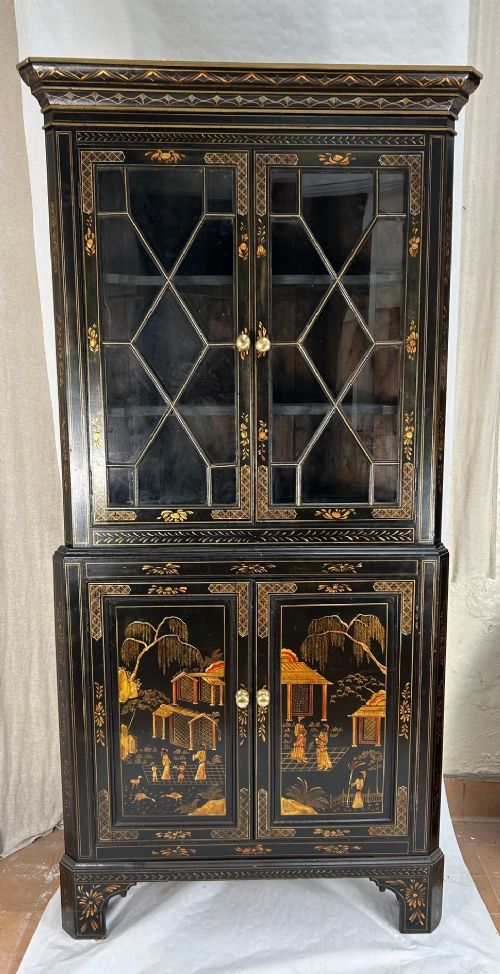
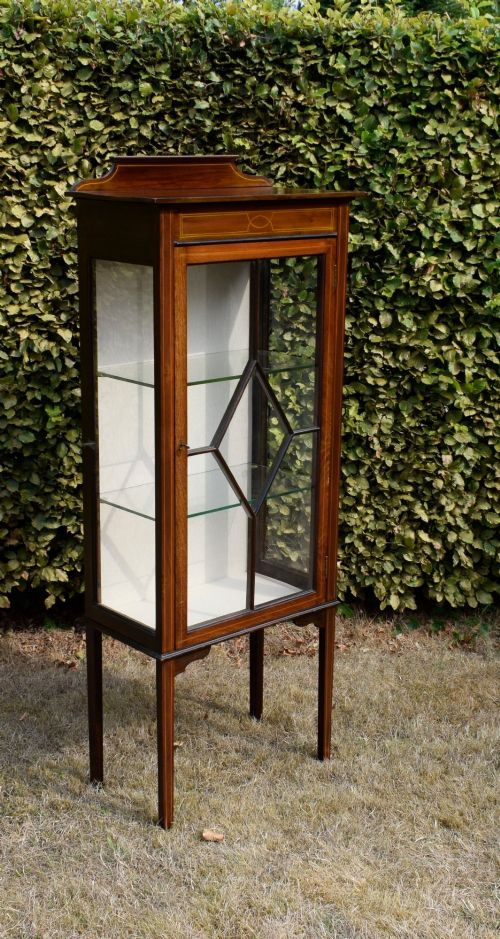
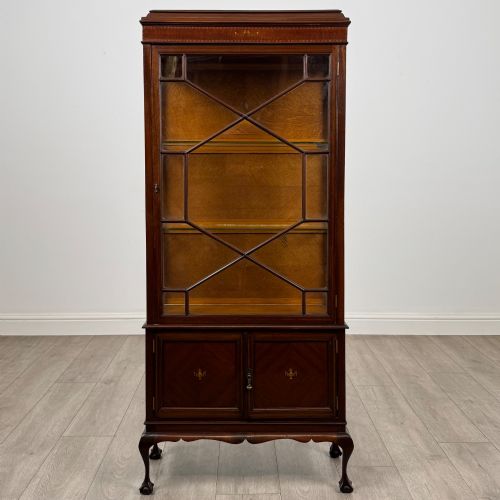
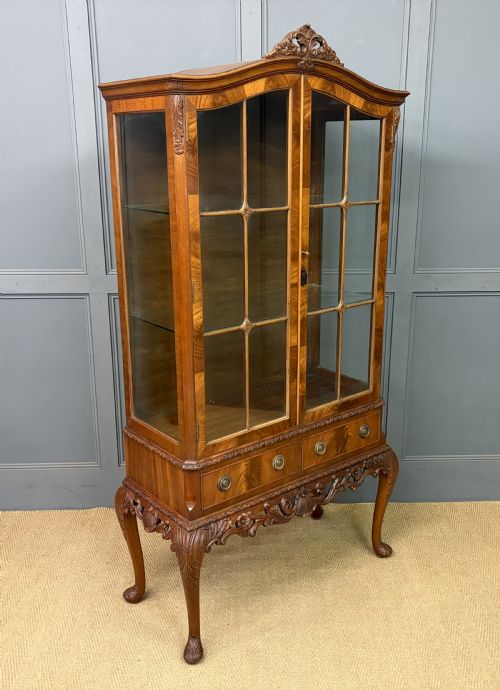
Glazed Bookcase on Stand
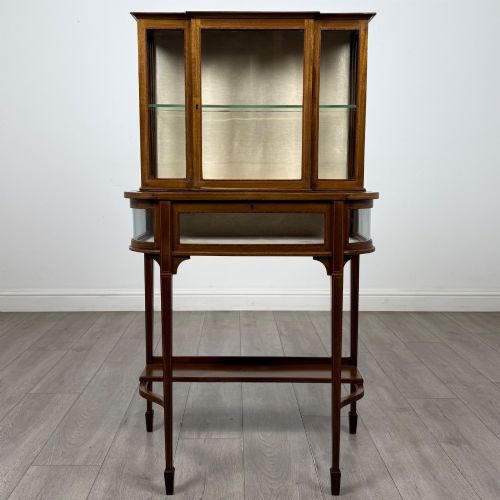
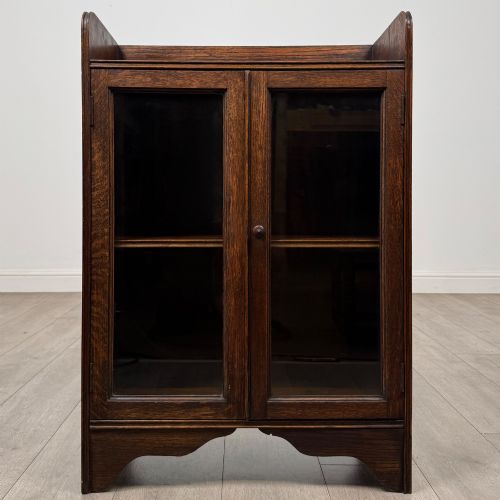
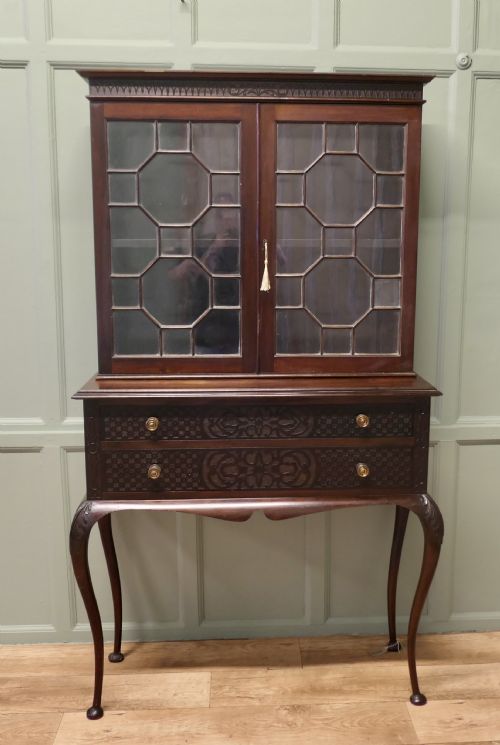
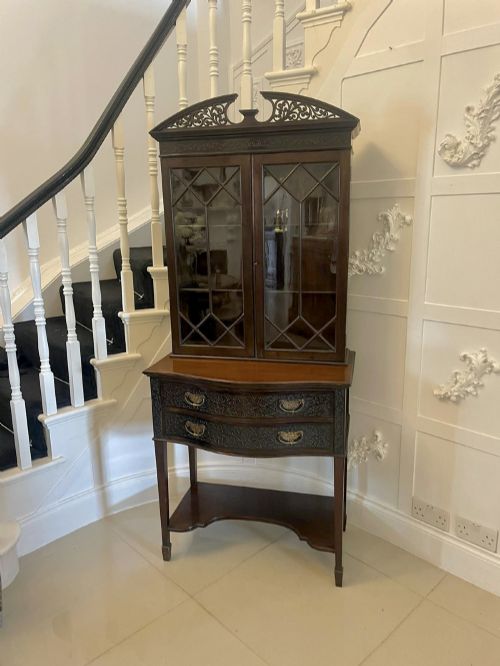
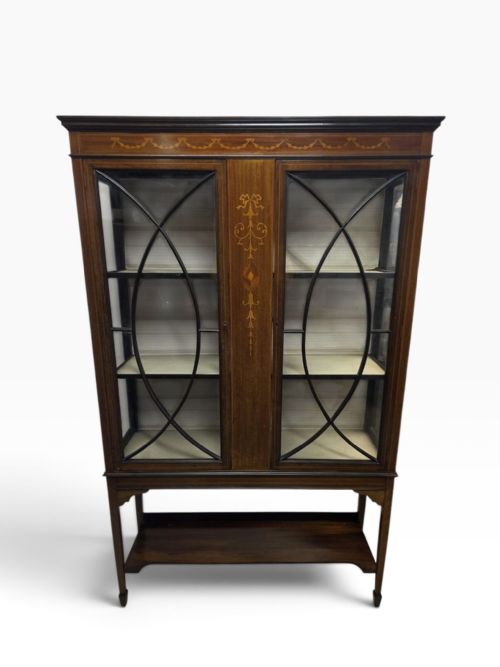
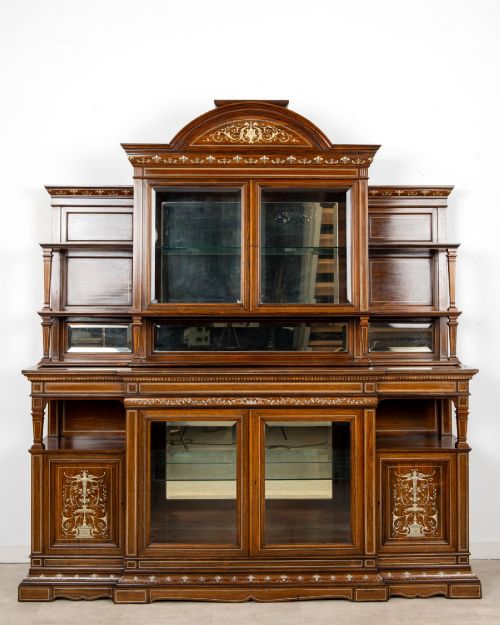
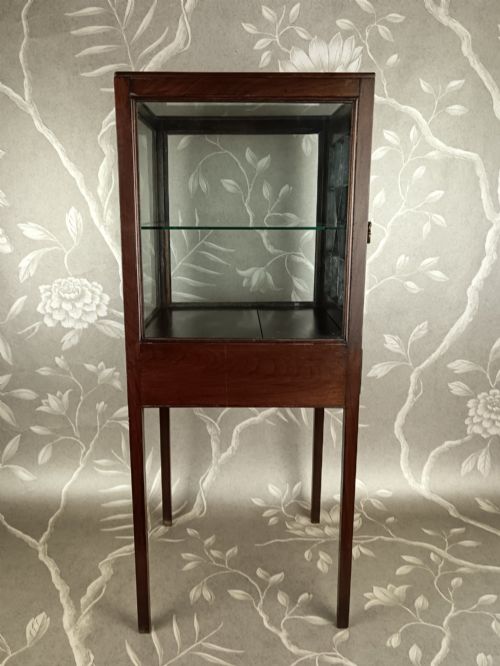
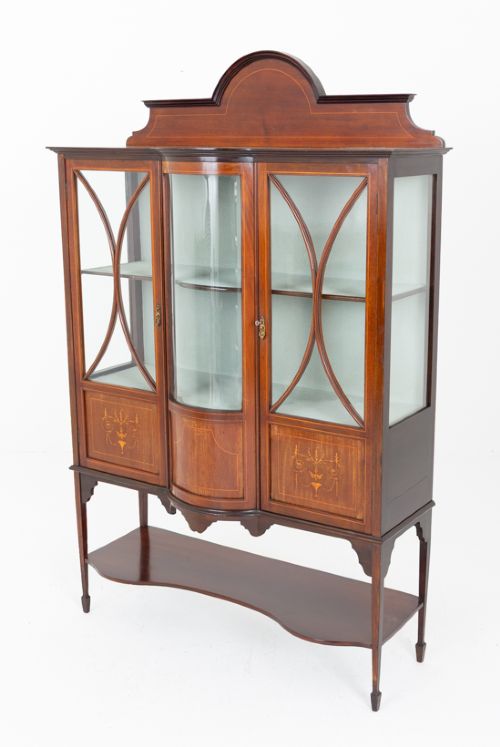
A glazed bookcase on stand offers an elevated display with glass doors for books and collections, combining timber cabinetry with a raised support.
Glazed Bookcase on Stand
When you search for a glazed bookcase on stand, you encounter elevated timber cabinetry designed to hold books or display objects behind glass doors. The form combines an upper glazed compartment with a distinct lower support structure, raising the contents off the floor.
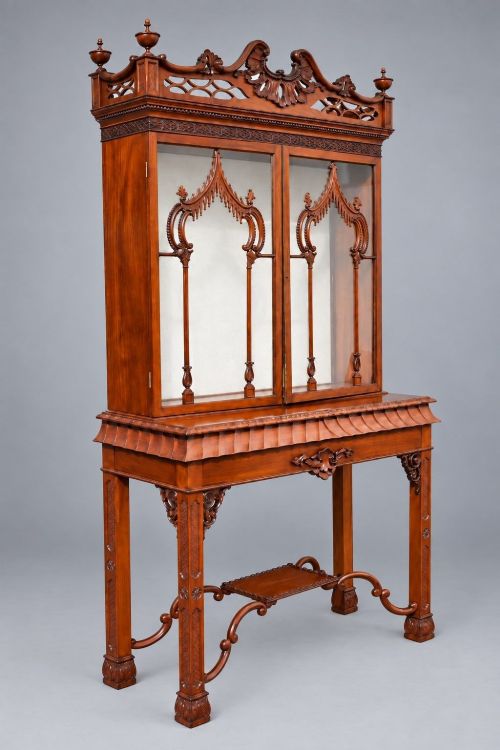
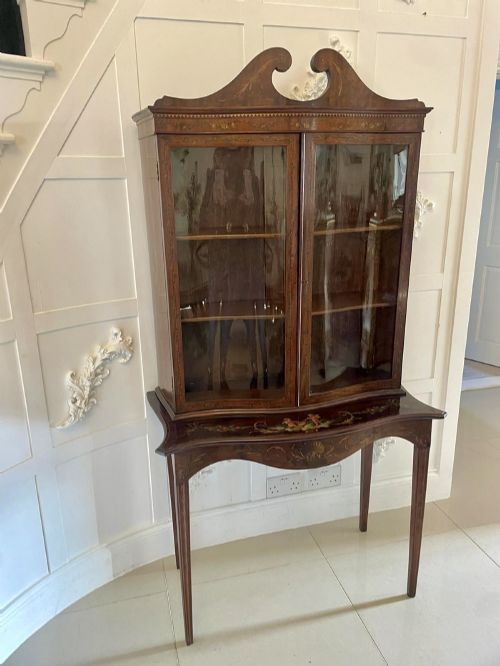
The versions you are most likely to meet on this page span the Georgian, Victorian, and Edwardian periods. Examples frequently appear in mahogany, oak, or satinwood, often showing styles from Sheraton Revival to Chinese Chippendale.
Makers and workshops ranging from regional cabinetmakers to firms like Maple & Co. produced these pieces across the eighteenth, nineteenth, and twentieth centuries. The primary function remains the safe housing and viewing of volumes or decorative items within domestic interiors.
How they were made
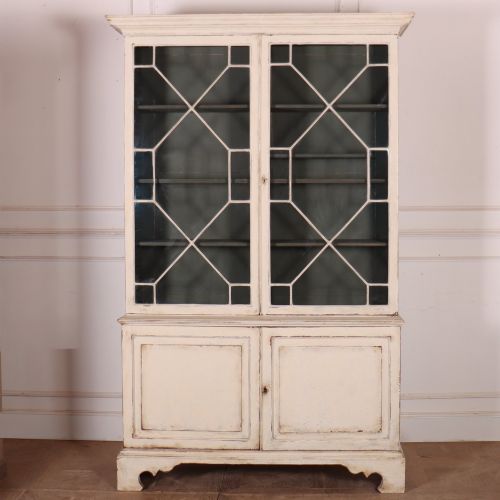
Cabinetmakers constructed the main bodies of these pieces using solid timbers and veneers such as mahogany, oak, walnut, and satinwood. Glass panes were secured within timber frames, frequently utilising astragal bars to form geometric or tracery patterns across the doors.
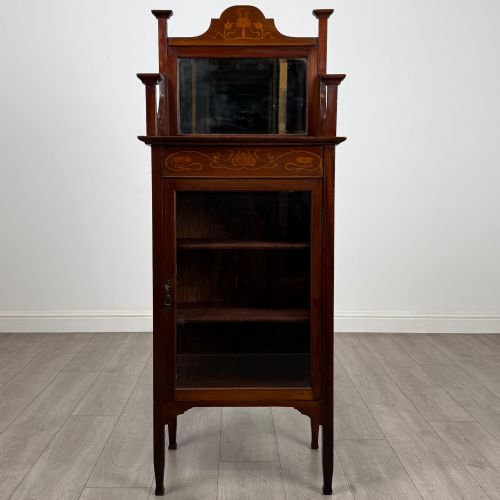
Lower stands incorporated supporting legs, brackets, or stretchers, sometimes featuring brass hardware and inlaid details. Workshops applied painted decoration, lacquer, or wax finishes to protect the wood and enhance the grain.
Listings feature glazed bookcase on stand examples spanning the William and Mary period through to Art Deco designs in oak, mahogany, and walnut.
What varies in quality
The standard of a glazed bookcase on stand depends on the selection of timber veneers and the precision of the joinery in the frame and stand. Superior examples exhibit finely shaped astragal bars, well-figured grain, and original brass fittings.
Design ambition separates standard utility pieces from exceptional commissions, seen in hand-carved ornamentation, balanced proportions, and integrated maker signatures or attribution.
Collinson and Lock·Maple and Co·Leonard Wyburd·Liberty and Co·James Winter and Sons·Heals of London·Laverton of Bristol
The Glazed Bookcase on Stand Glossary
- Astragal glazed
- Glass doors divided into smaller panes by narrow timber mouldings. This technique creates a grid pattern typical of eighteenth and nineteenth-century cabinetry.
- Breakfront
- A cabinet front where the central section projects forward from the flanking sides. This adds architectural depth to larger bookcase designs.
- Stand
- The raised lower structure supporting a cabinet or bookcase above the floor. It typically consists of legs connected by stretchers or a bracketed frame.
- Vitrine
- A glass-sided display cabinet intended for the presentation of delicate objects. The term derives from the French word for glass.
- Secretaire
- A desk form incorporating a pull-down writing flap revealing internal drawers and pigeonholes. It often forms the middle section of a larger bookcase cabinet.
Glazed Bookcase on Stand: Frequently Asked Questions
How are these bookcases cleaned?
Dust the timber surfaces gently with a dry, soft cloth to maintain the polish without stripping the wax or original finish. Use standard glass cleaner applied to a cloth rather than directly on the glass to protect adjacent wooden frames.
Avoid placing these cabinets near direct heat sources or strong sunlight, which can dry out the timber and cause veneers to lift over time. Regular conditioning with appropriate furniture wax keeps the wood nourished.
What fits inside the lower stands?
The lower stands generally provide structural elevation rather than internal storage, though some configurations incorporate open shelves or drawers. The primary storage capacity remains within the upper glazed compartment.
Heavier volumes or larger display items are best placed on lower shelves to maintain overall balance and stability within the room.
How do I date a piece?
Examine the timber species, construction methods, and hardware to determine the period of origin. Georgian examples often display hand-cut dovetails and simpler interior framing, while Edwardian and Sheraton Revival pieces show machine assistance and specific inlay patterns.
Maker stamps, labels, or attribution to firms like Maple & Co. or Liberty provide more precise dating and provenance when present.
Are the stands original?
Many bookcases on stand retain their original upper and lower sections, evidenced by matching timber patination and construction marks. Some pieces paired an older upper cabinet with a later stand during subsequent decades.
Inspect the join where the cabinet meets the stand for consistency in wear, wood type, and finishing techniques to assess originality.