

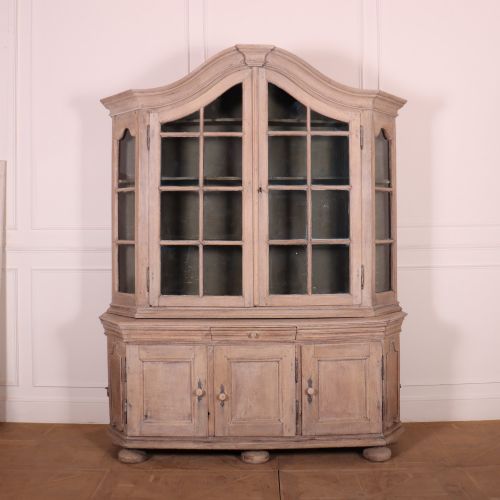
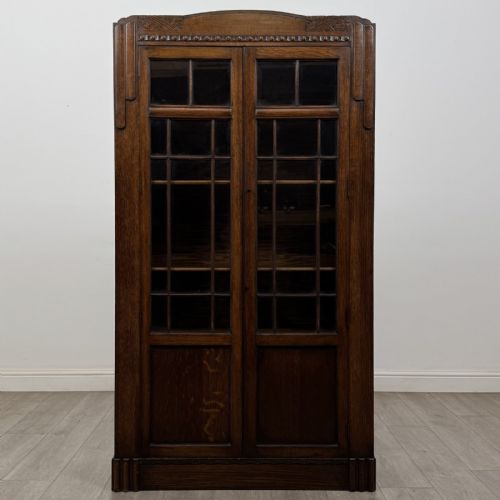
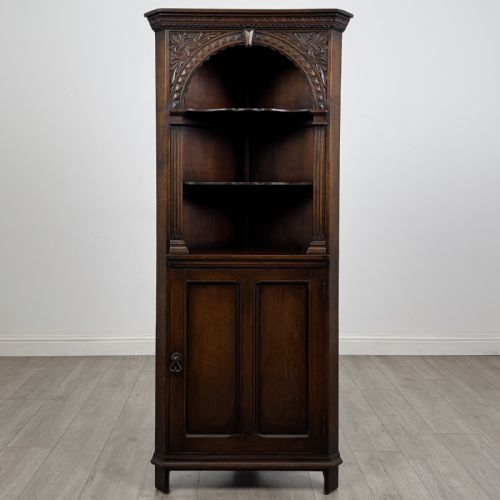
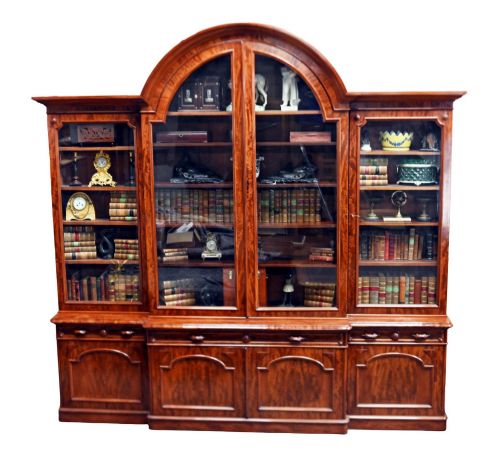
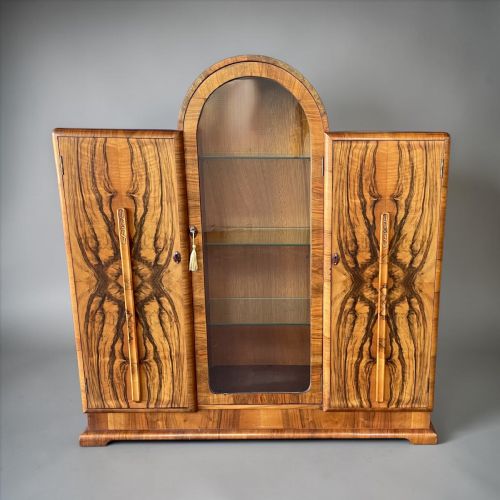


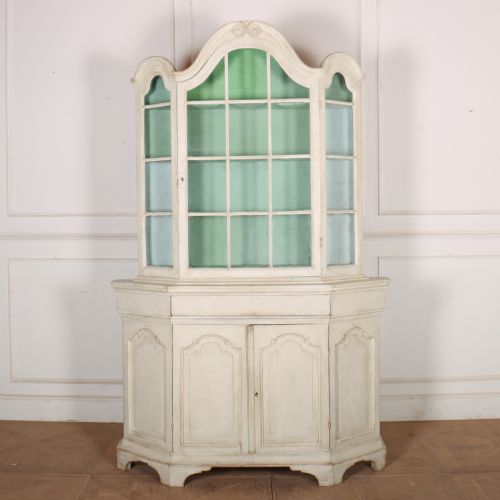


Arched Top Display Cabinet
An arched top display cabinet brings elegance to any room, offering glazed protection for cherished objects and books from periods spanning the eighteenth century to the art deco era.
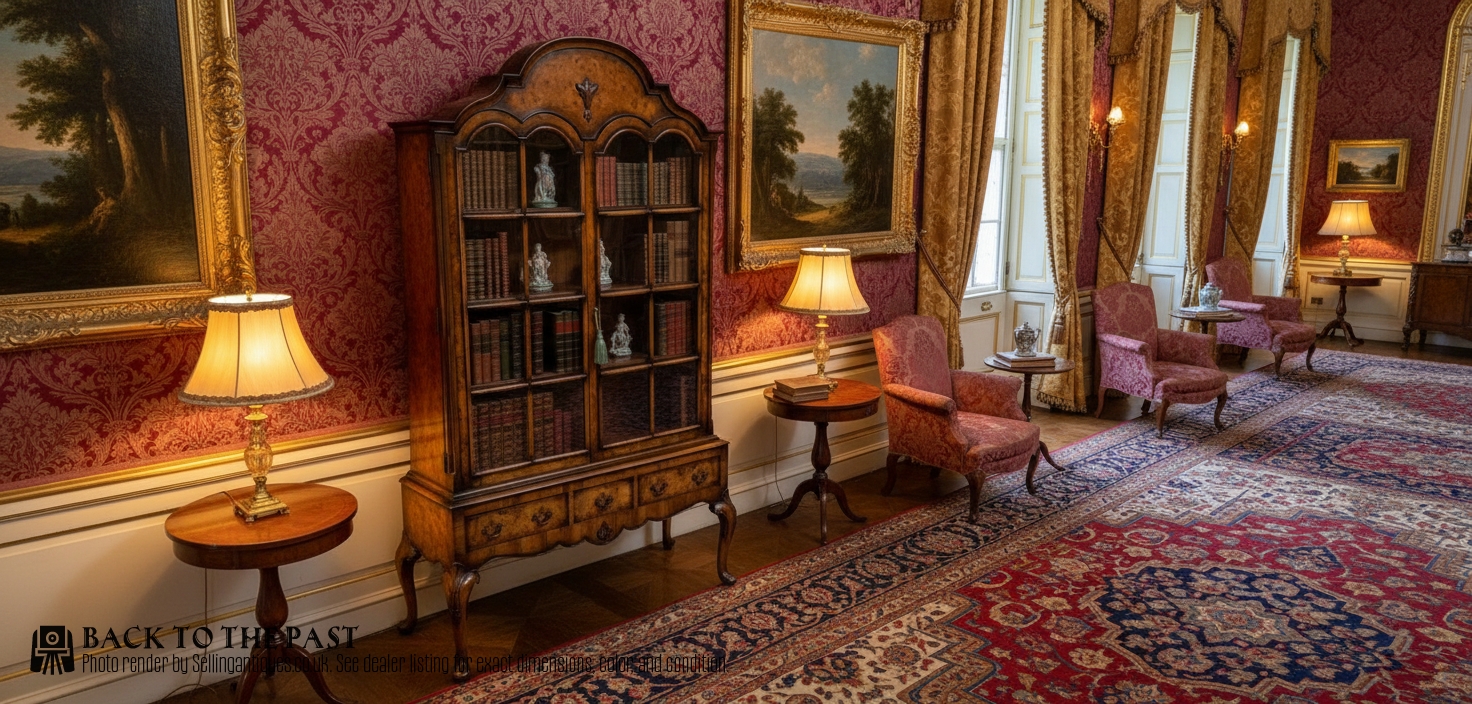
Arched Top Display Cabinet
An arched top display cabinet is a piece of furniture designed to exhibit objects or store books behind glass doors while drawing the eye upward with a curved upper frame. Buyers searching for an arched top display cabinet will encounter forms ranging from tall bookcases on stands to compact corner cupboards and vitrines.
The selection on this page includes pieces originating from the eighteenth century through to the 1930s, encompassing styles such as queen anne, regency, and art deco. Cabinets appear in materials including walnut, burr walnut, mahogany, oak, and painted wood, often featuring glazed panels to display the contents clearly.
Corner cabinets and wall-mounted table top versions provide solutions for smaller spaces, whereas grander armoires and two-part bookcases dominate larger rooms. The architectural curve at the top unites these diverse regional and period interpretations under one distinctive silhouette.
How they were made
Cabinet makers constructed these pieces using dense hardwoods like mahogany, walnut, and oak, frequently applying burr walnut veneers to create rich, figured surfaces on the main panels. Marquetry inlay added intricate decorative patterns to the timber on certain continental examples.
Glazing bars divided the glass panes of the upper doors into geometric or arched patterns, requiring precise joinery to support the fragile transparent panels. Brass hardware, including hinges, escutcheons, and key plates, provided functional detailing that complemented the dark wood tones.
Arched Top Display Cabinet Retail Price Guide 2026
Typical asking prices for arched top display cabinet among the pieces listed under this phrase on Sellingantiques today, from the lower quarter to the upper quarter. They describe what is for sale here now, not the wider market.
Listings span multiple centuries, uniting eighteenth century Dutch painted furniture with art deco oak bookcases and Victorian corner cabinets.
What varies in quality
The distinction between ordinary and exceptional examples lies in the selection of timber veneers and the finesse of the joinery around the curved arch. Finer cabinets display continuous grain matching across the doors and sophisticated moulding profiles that follow the upper contour without awkward transitions.
Hardware integrity and the clarity of the original glass also separate the grades of cabinet making. Superior pieces retain period brass fittings and hand-blown glass panes that add subtle distortion and texture to the reflected light.
The Arched Top Display Cabinet Glossary
- Vitrine
- A glass-fronted cabinet designed specifically for the display of porcelain, curiosities, or fine objects. These pieces rely heavily on glass panels to maximise visibility from multiple angles.
- Marquetry
- The art of applying pieces of veneer to a structure to form decorative patterns and pictures. Craftsmen utilise various coloured woods to achieve pictorial depth.
- Escutcheon
- A flat plate of brass or other metal surrounding a keyhole. This element protects the surrounding wood from damage when the key is inserted.
- Veneer
- A thin slice of figured wood adhered to a secondary timber base to create a decorative exterior surface. Burr walnut is a frequent choice for this technique.
- Glazing bar
- A wooden strip that holds individual panes of glass within a window or cabinet door. Narrow bars indicate careful craftsmanship and lighter construction.
Arched Top Display Cabinet: Frequently Asked Questions
What is an arched top display cabinet used for?
These cabinets serve primarily to display and protect valuable collections, porcelain, glassware, or books behind glass doors. The enclosed shelving keeps dust away while maintaining full visibility of the interior contents.
In living spaces or studies, they act as focal points that combine storage with architectural presence. The arched upper section draws the eye upward, adding height and elegance to the room's proportions.
How do I identify an eighteenth century cabinet?
Eighteenth century cabinets typically feature hand-cut dovetail joints, pegged framing, and native timbers such as oak or walnut without modern mechanical aids. Closer inspection of the interior boards and back panels often reveals hand-planed surfaces and traditional fixings.
Stylistic cues like heavy cornices, Dutch marquetry, or fielded panels also point toward this earlier period. Hardware should match the period, showing appropriate wear and hand-finished characteristics.
Are corner cabinets suitable for small rooms?
Corner cabinets utilise dead space effectively by fitting snugly into room angles where standard rectangular furniture would block walkways. Their triangular footprint allows them to offer substantial storage and display capacity without dominating floor area.
Many period examples, including rustic pine and burr walnut variants, were specifically built for corners in smaller domestic interiors. They provide the visual interest of an arched top without requiring a flat wall expanse.
What is a bookcase on stand?
A bookcase on stand consists of an upper glazed cabinet section resting upon a separate lower table structure with legs. This form lifts the main display area off the floor, creating a lighter visual profile than a floor-standing wardrobe or cabinet.
Originating in earlier centuries for easier access and mobility, these pieces often feature drawers within the stand portion. The combination provides both enclosed shelving above and structural openness below.