
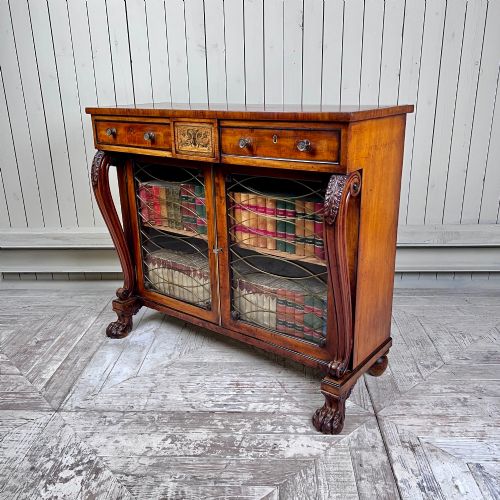
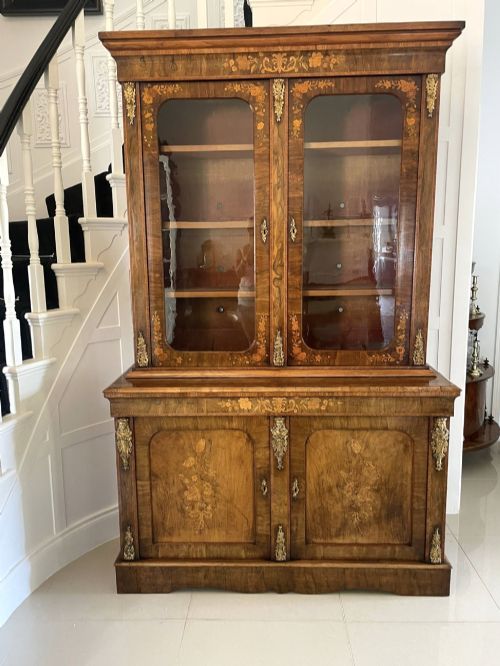
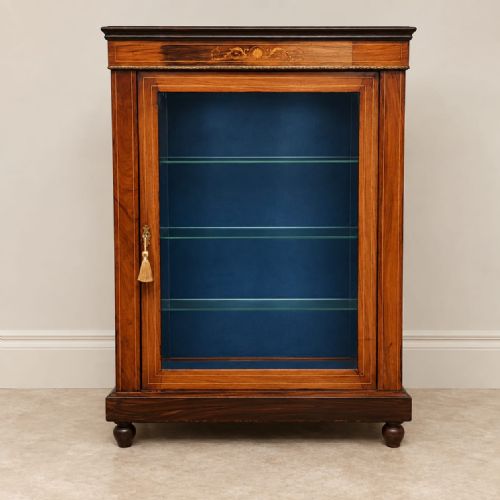
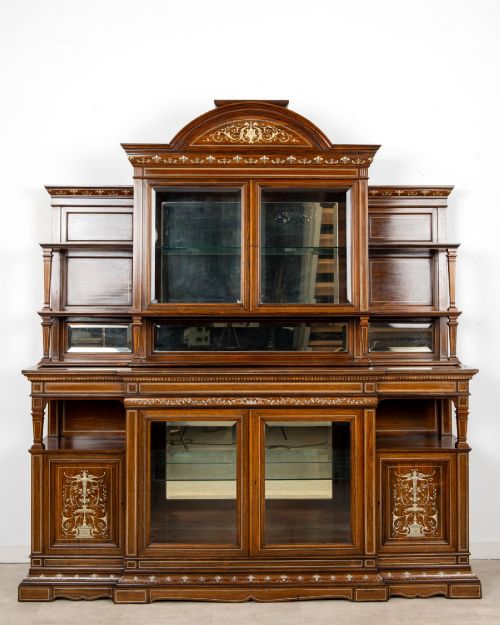
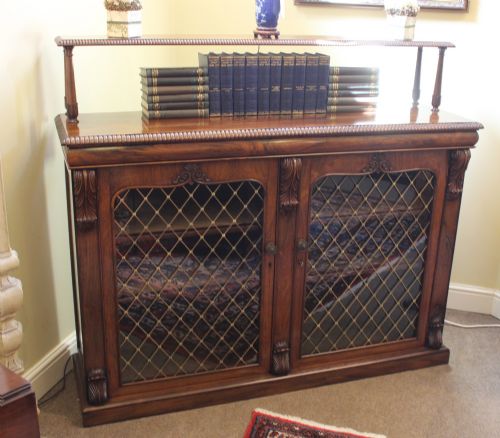
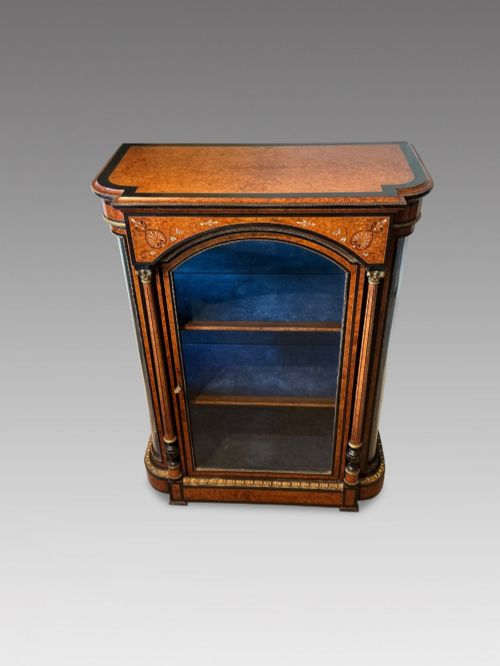
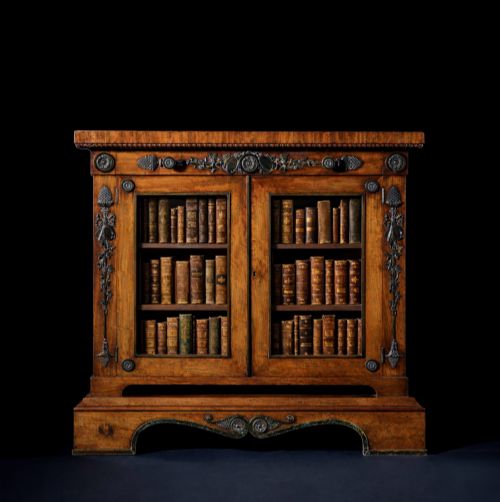
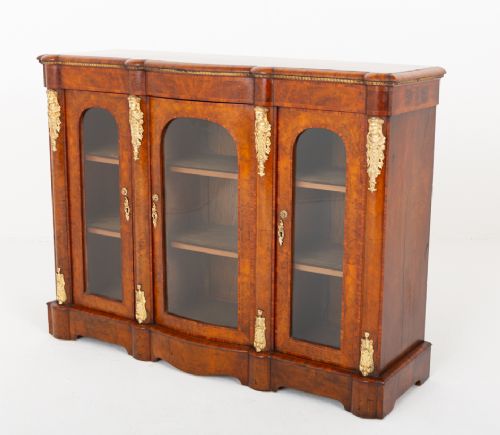
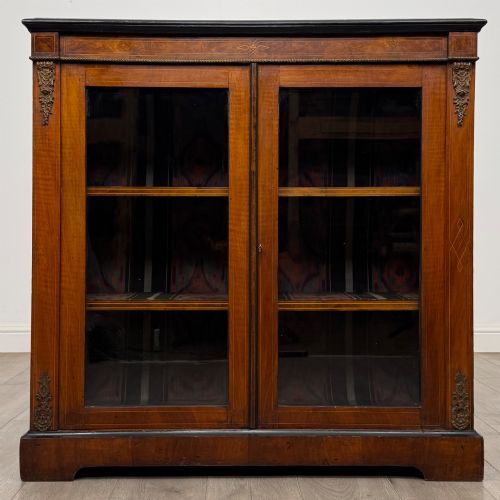
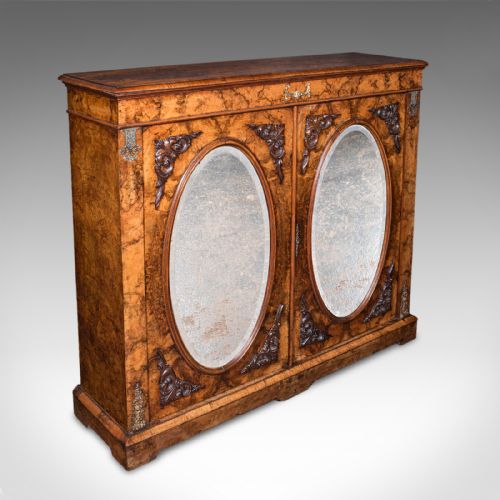
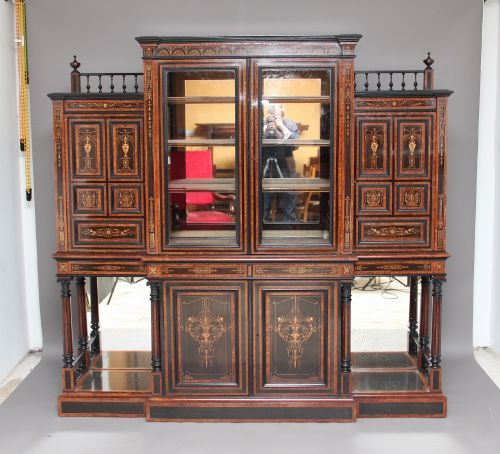
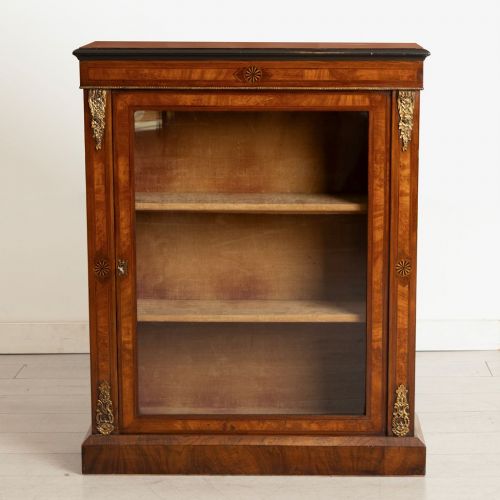
Glazed Bookcase Credenza
These glazed bookcase credenza pieces combine library storage and display, bringing nineteenth-century timber and glasswork into modern rooms.
Glazed Bookcase Credenza
A glazed bookcase credenza unites the enclosed shelving of a library piece with the low display surface of a Victorian or Regency cabinet. Buyers searching this phrase meet side cabinets, pier cabinets, and breakfront bookcases originating primarily in the nineteenth century.
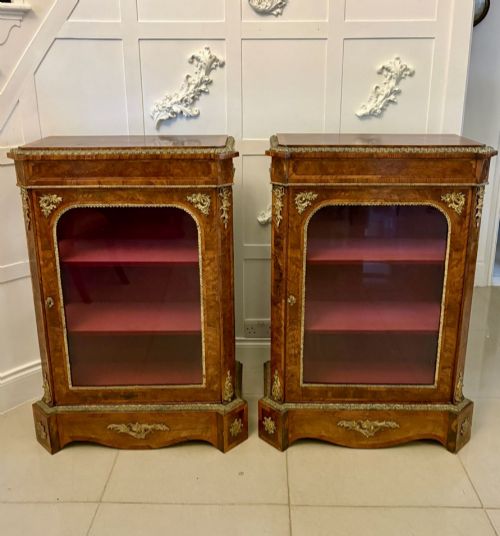
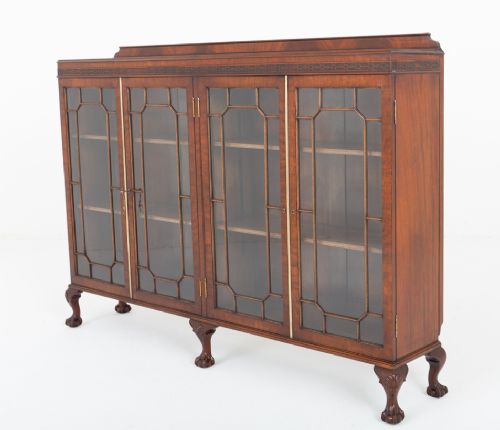
The selections span Victorian, Regency, and Edwardian eras, utilising rich timbers like burr walnut, mahogany, and rosewood. These forms served as principal reception room furniture for housing leather-bound volumes and displaying porcelain.
Lower credenza forms and upright glazed bookcase hybrids dominate the offerings, showing revival influences from Sheraton, Chippendale, and Queen Anne aesthetics.
Materials and Construction
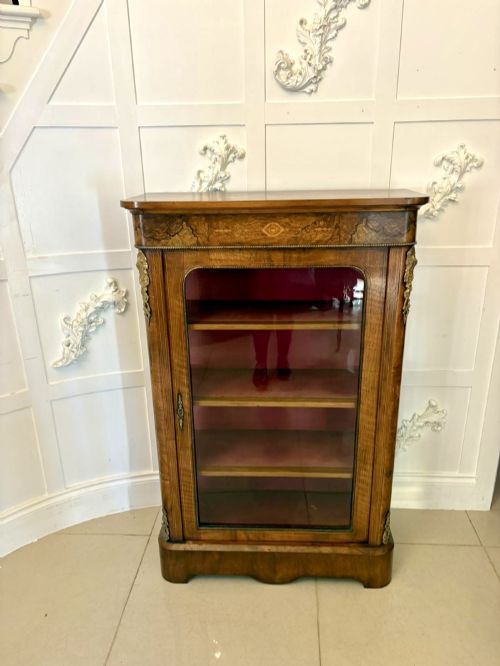
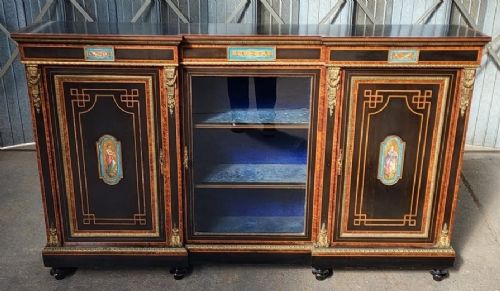
Cabinet makers constructed carcass frames in solid mahogany, oak, or walnut, applying choice veneers of burr walnut, rosewood, and amboyna to primary surfaces. Fine marquetry inlay and contrasting stringing define the decorative vocabulary of these pieces.
Glazing relies on hand-blown or early sheet glass fitted within timber framework, accompanied by cast or chased ormolu and brass mounts. Velvet linings frequently appear within display interiors alongside adjustable wooden shelving.
Morning room books often remained locked behind glazed doors to prevent visiting children from borrowing sermons.
Assessing the Workmanship
Quality rests upon the selection of timber veneers, where symmetrical matching of burr walnut or figured mahogany denotes superior workshop standards. Finer examples display crisp ormolu mountings and intricate brass inlay rather than plain timber surfaces.
Construction integrity separates standard utility items from exhibition-grade commissions, visible in the precision of dovetail joints, door alignment, and the retention of original glass panes.
Collinson and Lock·Lamb of Manchester·Liberty and Co
The Glazed Bookcase Credenza Glossary
- Ormolu
- Gilded bronze mounts applied to cabinet corners, friezes, and door centres for decorative accent. French makers popularised this technique during the eighteenth and nineteenth centuries.
- Burr Walnut
- Timber taken from the gnarled growth of a walnut tree, yielding highly patterned, swirling grain veneers. Cabinet makers prized this material for principal door panels.
- Marquetry
- Elaborate patterns created by fitting thin pieces of wood veneer into a background panel. It often depicts floral motifs or geometric strapwork.
- Chiffonier
- A low sideboard or cabinet featuring enclosed lower cupboards and sometimes a small upper shelf. Regency and Victorian examples frequently incorporate glazed or fabric doors.
- Pier Cabinet
- A narrow, upright display cabinet designed to fit the wall space between windows. These pieces typically feature glazed single doors and velvet-lined interiors.
Glazed Bookcase Credenza: Frequently Asked Questions
What is a glazed bookcase credenza?
A glazed bookcase credenza is a low nineteenth-century cabinet that combines glass-fronted bookshelf storage with display space for ornaments.
These hybrids bridge the gap between heavy libraries and refined drawing room furniture.
How do I spot a Regency piece?
Regency pieces often display clean architectural lines, mahogany timbers, and brass inlay without heavy Victorian carving.
Look for classical restraint and symmetrical proportion typical of the early nineteenth century.
Are the shelves adjustable?
Many nineteenth-century cabinets feature wooden rack systems allowing internal shelves to be repositioned for different book sizes.
Original adjustable brackets indicate higher workshop standards during the Victorian and Regency periods.
Where were these cabinets placed?
Original homes positioned these low cabinets against drawing room walls, morning rooms, or beneath large windows.
Their low profile ensured windows remained unblocked while providing accessible storage.