
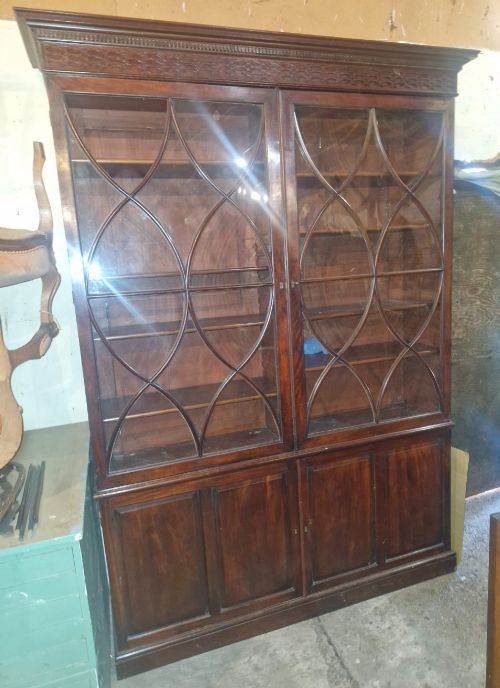
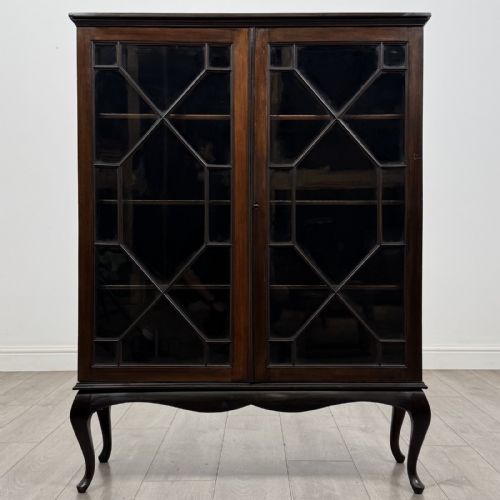
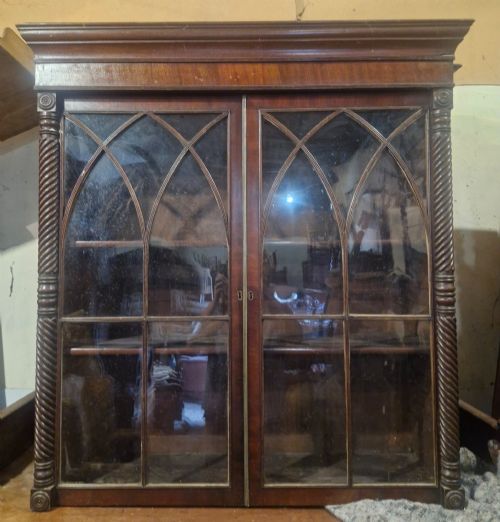
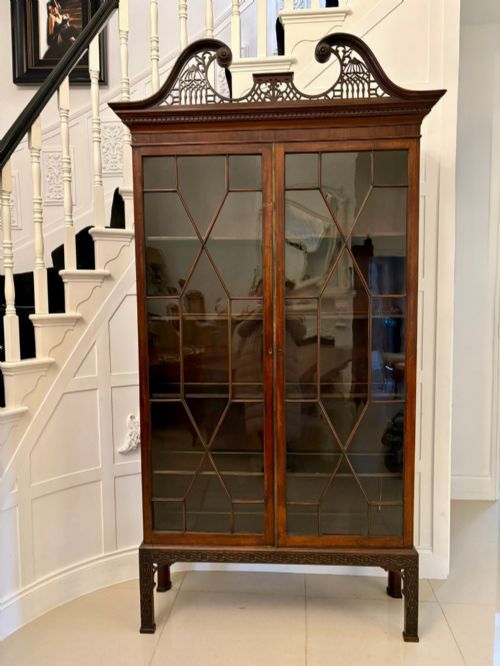
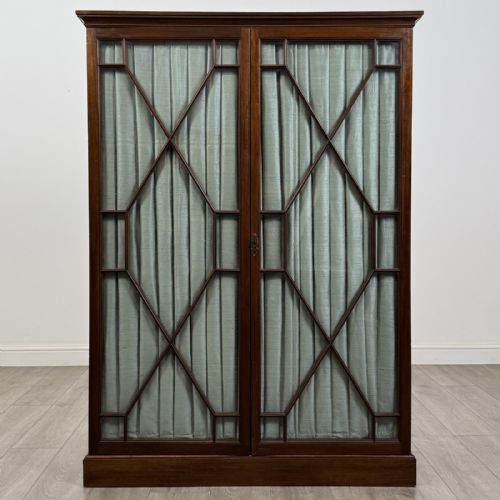
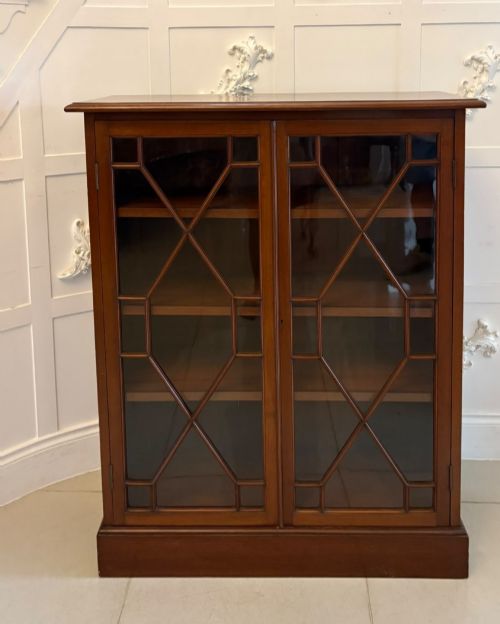
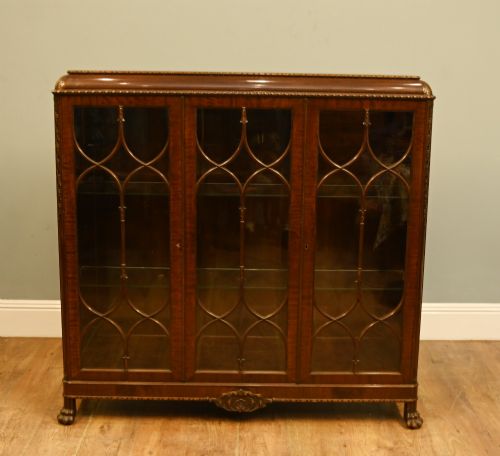
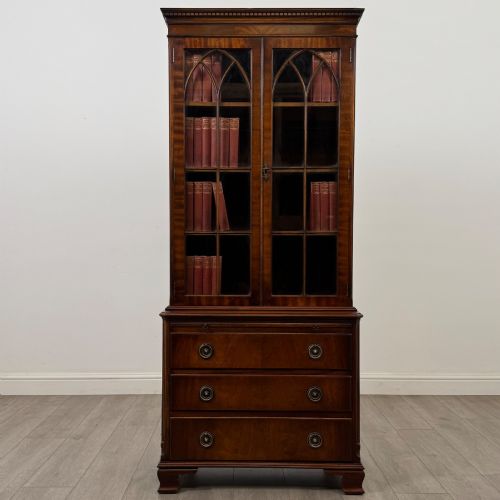
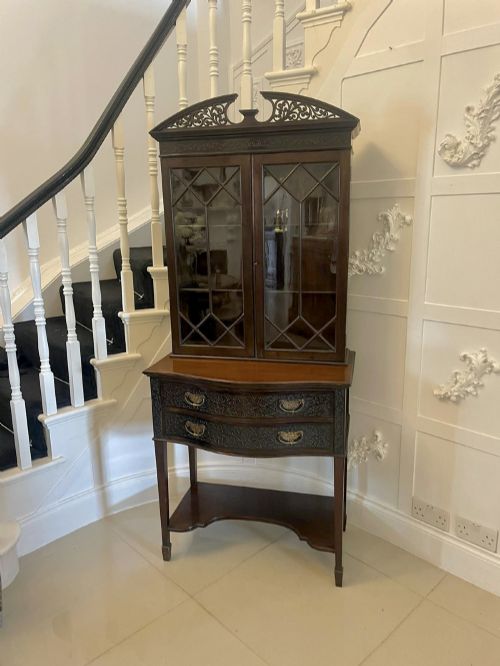
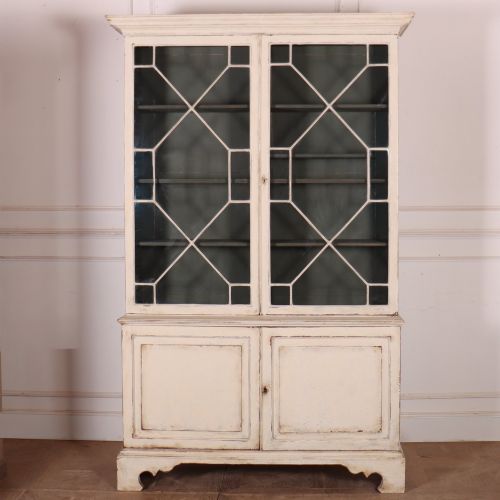
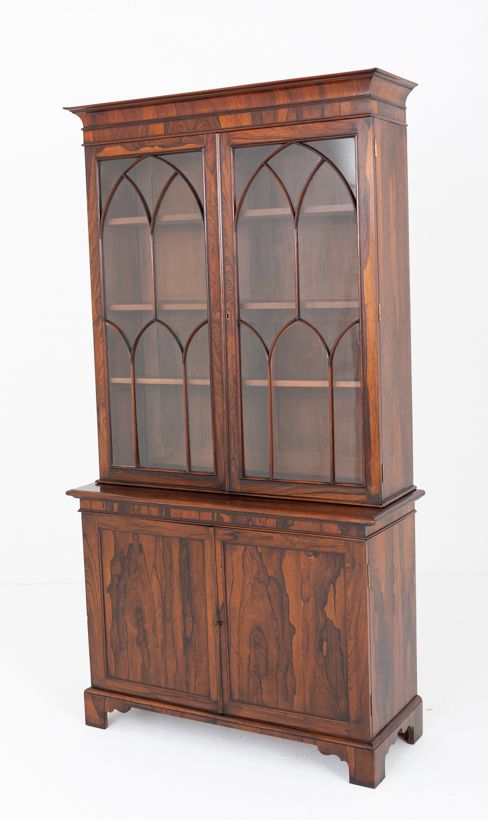

Glazed Astragal Door Cabinet
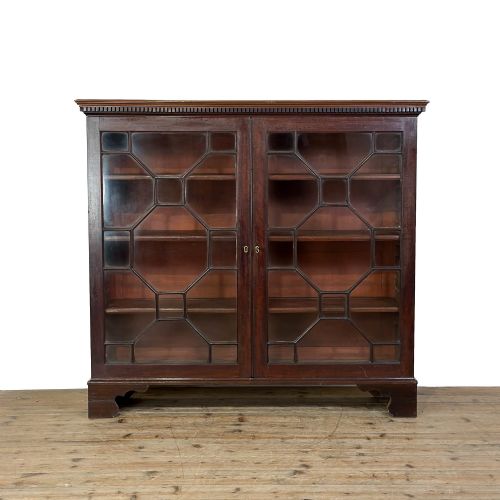
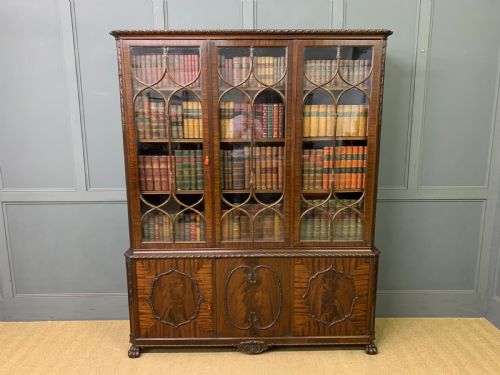
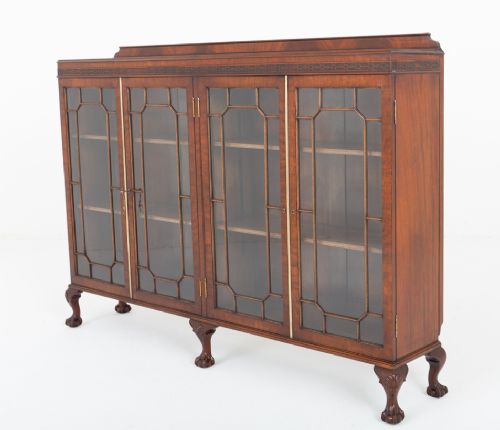
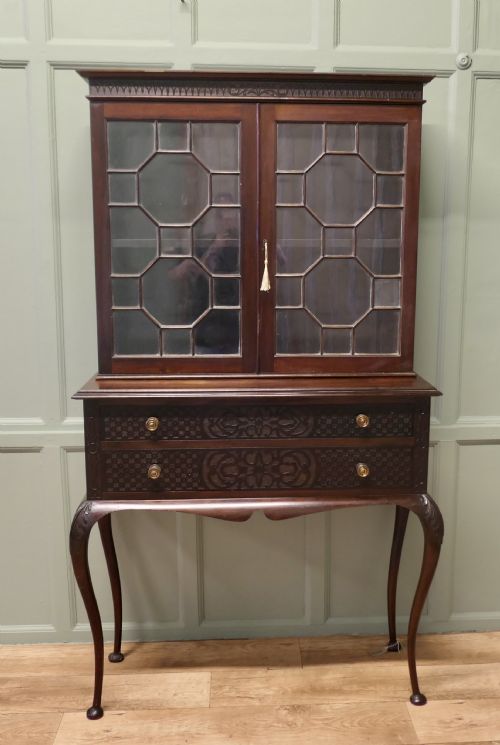
A glazed astragal door cabinet displays books or porcelain behind intersecting timber bars that frame the glass panes.

Glazed Astragal Door Cabinet
A glazed astragal door cabinet groups bookcases, display cabinets, and bureau bookcases designed to hold books or decorative objects. You meet these primarily in mahogany across the 18th Century, Georgian, Regency, Victorian, and Edwardian periods.
The form spans tall breakfront bookcases, corner cabinets, wall cabinets, and bureau bookcases fitted with desks. Surviving examples range from Georgian and George III workshops to later revival pieces from the 19th Century and 1920.
How they were made
Mahogany, oak, and satinwood provide the structural timbers, frequently enhanced by inlaid banding or painted decoration. Glass panes are secured within timber astragal bars to form geometric patterns.
Brass fittings, fabric linings, and hand-painted interior surfaces complete the construction of these cabinets across the Georgian and later periods.
Listings feature mahogany, oak, satinwood, and painted timber across the Georgian, Victorian, and Edwardian periods.
What varies in quality
The refinement of the astragal glazing bars and the choice of figured mahogany or satinwood veneers distinguish finer examples. Carved details, such as Gothic or Chippendale motifs, indicate the level of craftsmanship applied to the carcass.
Proportion and architectural balance, seen particularly in breakfront and bureau bookcase forms, separate standard production from superior pieces.
Tudor & Burrey·Wylie and Lochhead·Maple & Co.
The Glazed Astragal Door Cabinet Glossary
- Astragal
- The timber moulding that divides a glass door into smaller panes. These bars create geometric or Gothic patterns across the front of the cabinet.
- Breakfront
- A piece of furniture where the central section projects forward from the flanking sides. This configuration appears frequently on larger bookcases.
- Secretaire bookcase
- A tall storage piece containing a dedicated writing drawer or pull-out desk compartment beneath glazed upper doors. It provides workspace without the sloping front of a standard bureau.
Glazed Astragal Door Cabinet: Frequently Asked Questions
What is an astragal door?
An astragal door uses thin timber bars to divide a single large glass opening into multiple smaller panes. This technique provides structural support while creating a decorative grid.
These glazed doors allow contents to remain visible while protected from dust, a standard feature on display cabinets and bookcases from the Georgian period onward.
How do I use a bureau bookcase?
A bureau bookcase combines a functional writing desk with upper shelving for books or display. The drop-front flap folds down to reveal small drawers and pigeonholes.
This dual purpose makes the form suitable for studies and living spaces where surface workspace is required alongside enclosed storage.
Where do corner cabinets fit?
Corner cabinets utilise angled sides designed to slot directly into room corners. They make efficient use of dead space while displaying porcelain or books behind glazed doors.
Most surviving examples from the Georgian and 19th Century periods are built as floor-standing or wall-mounted units.
How do I date a mahogany cabinet?
Dating relies on timber selection, construction methods, and stylistic details such as George III proportions or Edwardian inlay. Figured mahogany and satinwood veneers shifted in grain pattern and application across decades.
Reference points include Georgian breakfronts, Victorian carved details, and later revival pieces recorded across the 19th Century and 1920.