
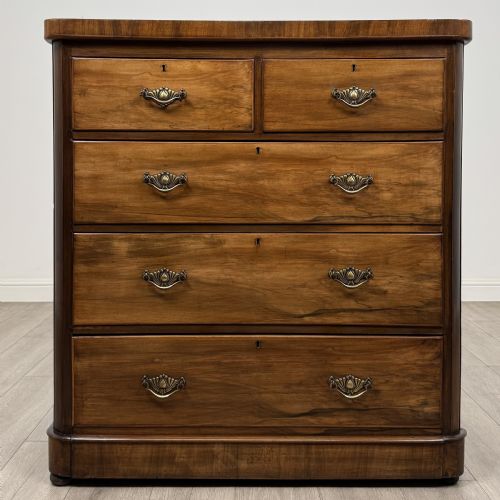
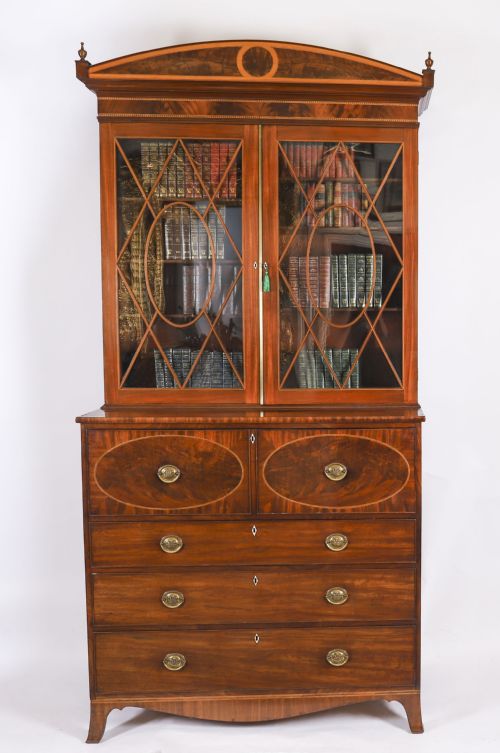
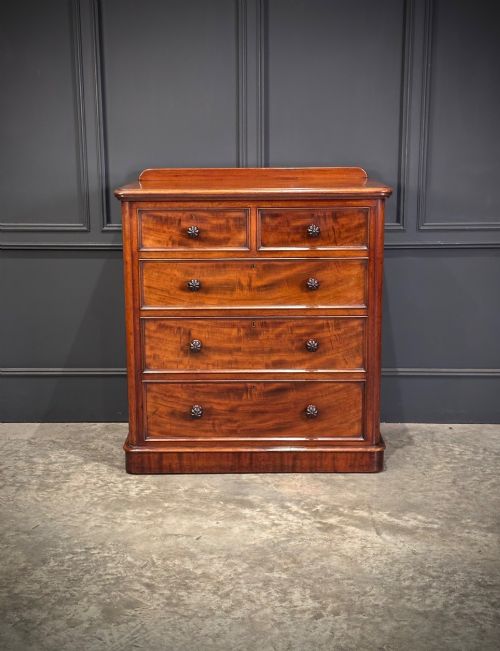
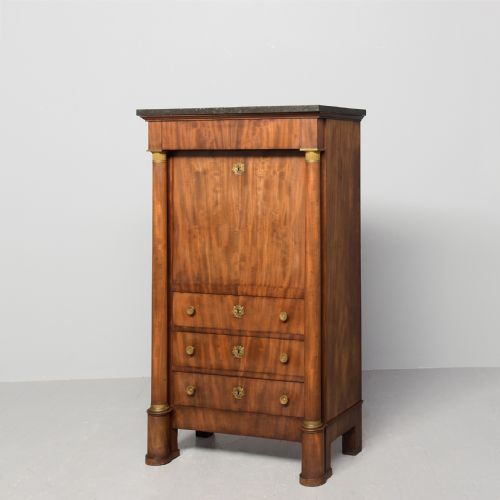
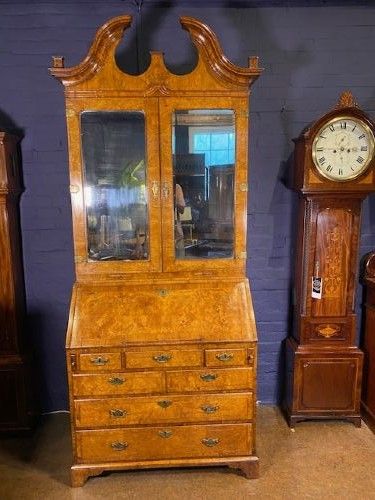
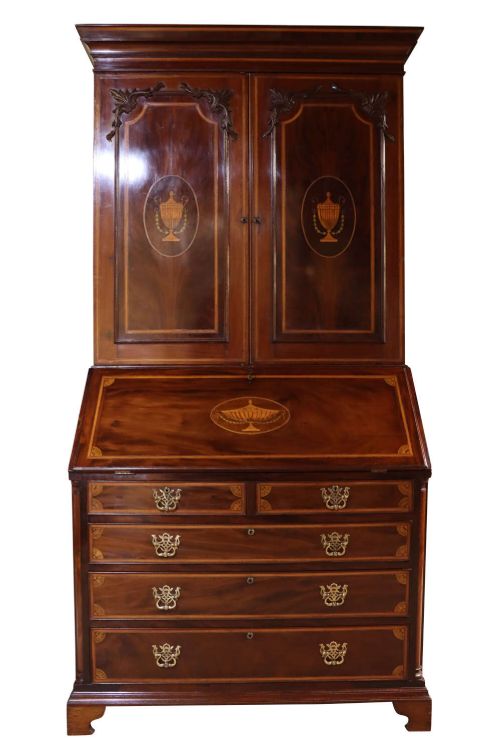
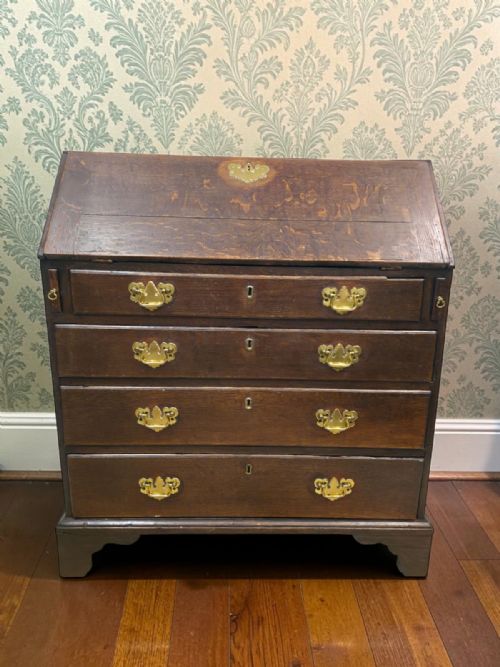
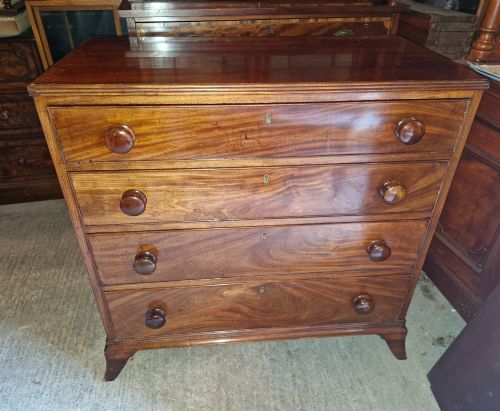
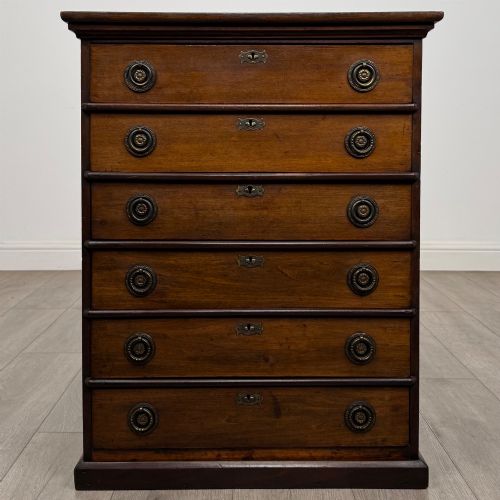
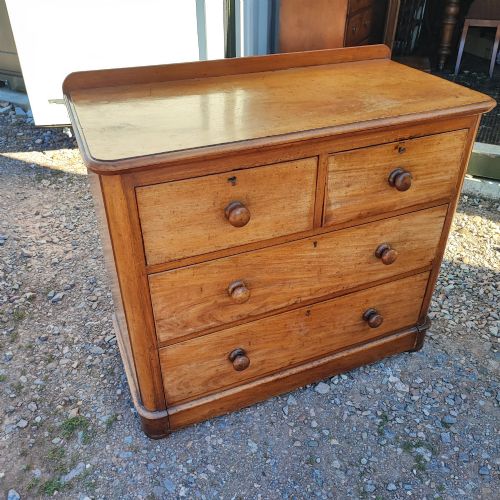
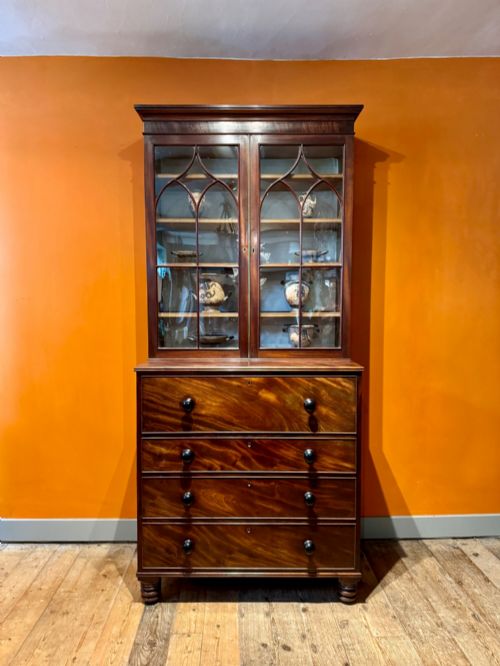
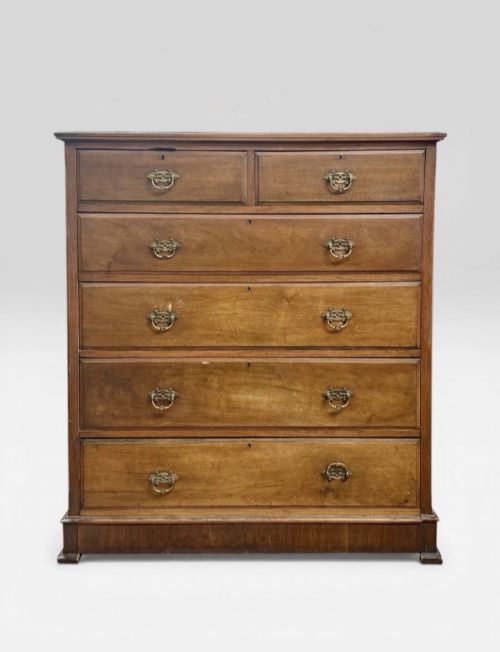
Brown Wooden Bureau Cabinet
A brown wooden bureau cabinet brings together practical workspace and concealed storage, offering a working surface that folds or slides away behind timber doors.

Brown Wooden Bureau Cabinet
When you search for a brown wooden bureau cabinet, you encounter pieces designed for correspondence and storage, frequently combining a writing flap with drawers or shelving above. The examples appearing here span centuries of cabinet making, with forms ranging from compact fall-front writing desks to tall bureau bookcases and secretaire cabinets.
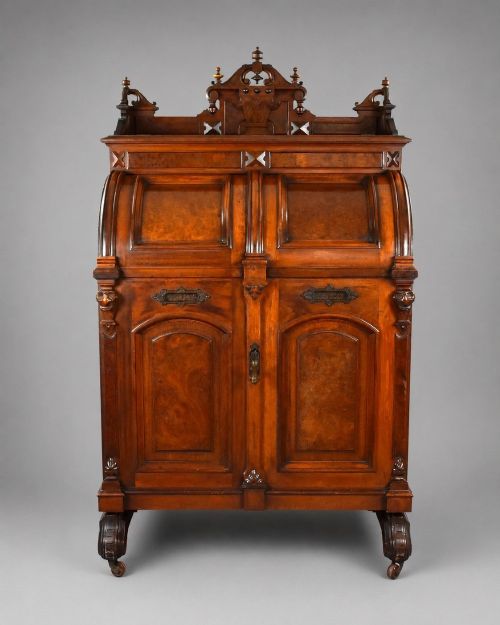
You meet variations rooted in the Georgian, Regency, and Victorian eras, alongside Edwardian and later twentieth-century iterations. Mahogany and oak dominate these listings, often accented with walnut, burr walnut, and flame mahogany veneer.
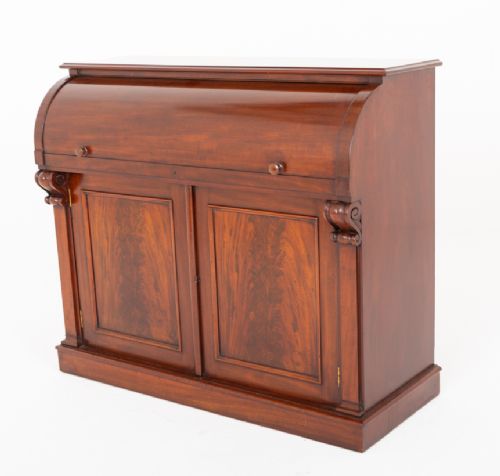
The objects serve as functional writing spaces and display units, taking the form of bureau bookcases, secretaire bookcases, and cylinder desks. These pieces reflect the prevailing tastes of their respective periods, from strict Georgian proportions to decorative Edwardian details.
Materials and construction methods
Cabinet makers relied primarily on solid mahogany and oak for structural integrity, utilising flame mahogany veneer and burr walnut to create figured exterior surfaces. These timbers were selected for their grain patterns and durability, providing a stable foundation for frequent writing and storage use.
Brass hardware, including handles, escutcheons, and hinges, functioned as both structural support and visual ornamentation. Glass panels appeared on upper bookcase sections, allowing enclosed storage to double as display space for books and papers.
Inlaid details incorporated contrasting lighter woods, such as satinwood, to edge panels and drawer fronts. Joinery techniques accommodated the seasonal movement of timber, keeping fall fronts and cabinet doors aligned over decades of use.
Listings feature pieces spanning from the 17th century through the Edwardian period and the Art Deco era, constructed in mahogany, oak, walnut, and satinwood.
Distinguishing quality across periods
The standard of execution rests on the selection of timber veneers and the precision of the interior compartment layout. Superior examples display carefully matched grain patterns across drawer fronts and fall fronts, ensuring a cohesive visual appearance when closed.
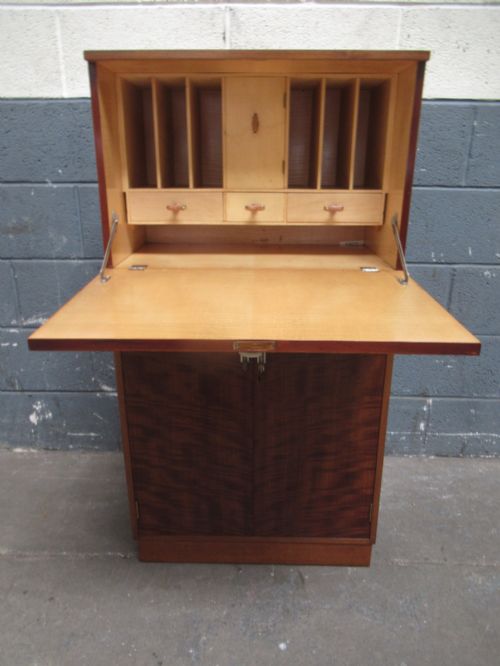
Internal engineering distinguishes finer pieces, particularly the smooth operation of sliding mechanisms, fall-front supports, and pigeonhole drawer fits. The integration of solid secondary woods inside drawers indicates the care taken by the maker during construction.
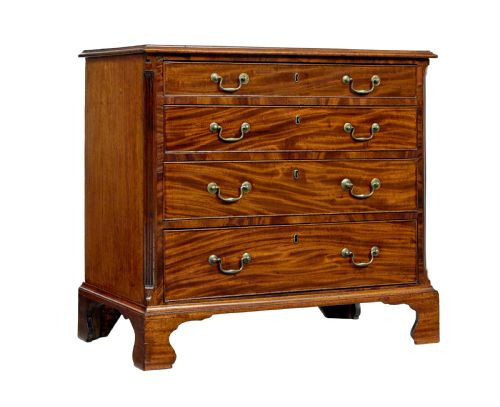
Proportion and decorative restraint separate standard production from exceptional work. Pieces featuring crisp inlay, well-cast brass hardware, and balanced proportions command greater attention than heavier, plain constructions.
Maple and Co
The Brown Wooden Bureau Cabinet Glossary
- Bureau
- A writing desk featuring a sloping hinged flap that opens to reveal a fitted interior of small drawers and pigeonholes. This form provides a concealed writing surface that tidies away instantly.
- Secretaire bookcase
- A tall cabinet combining a upper shelved section for books with a middle drawer or drop-front section configured for writing. It merges a library bookcase with a bureau.
- Flame mahogany veneer
- A sliced timber finish exhibiting a flickering, flame-like grain pattern created by cutting across the branch junction of the mahogany tree. Cabinet makers applied this to prominent drawer and door panels for visual depth.
- Fall front
- A hinged writing flap that drops down into a horizontal position for use, then lifts vertically to lock the desk interior from view. It serves as the primary writing surface on many period bureaus.
- Pigeonhole
- A small, open compartment within a desk interior designed for sorting letters and stationery. These compartments often sit above miniature drawers inside a bureau cavity.
Brown Wooden Bureau Cabinet: Frequently Asked Questions
How do I use a bureau cabinet daily?
Lower the fall front or slide the writing surface open to reveal the interior compartments for your laptop or stationery. When finished, simply close the flap to conceal your work and papers.
Keep the timber conditioned by avoiding direct sunlight and excessive humidity. Regular dusting maintains the finish of the wood veneer.
What is the difference between a bureau and a secretaire?
A traditional bureau relies on a sloping fall front that opens downward to form a writing ledge. A secretaire typically uses a drawer front that pulls straight out and drops down on hinges to create the desk surface.
Both types usually conceal pigeonholes and small drawers inside. Secretaire variants frequently form part of larger bookcase combinations.
Where should I place a bureau cabinet?
Position the piece against a stable interior wall away from direct heat sources such as radiators. These cabinets function effectively in home studies, living rooms, or hallways where surface space is useful.
Ensure there is enough clearance in front of the cabinet for the fall front or secretaire drawer to open fully.
How do I date a brown wooden bureau?
Examine the secondary woods inside the drawers, the style of the brass hardware, and the construction of the dovetails. Georgian pieces often feature hand-cut dovetails and oak drawer linings, while Edwardian examples show lighter internal timbers.
Check the overall proportions and decorative vocabulary, such as inlay work or carved bracket feet, to align the piece with its period.