
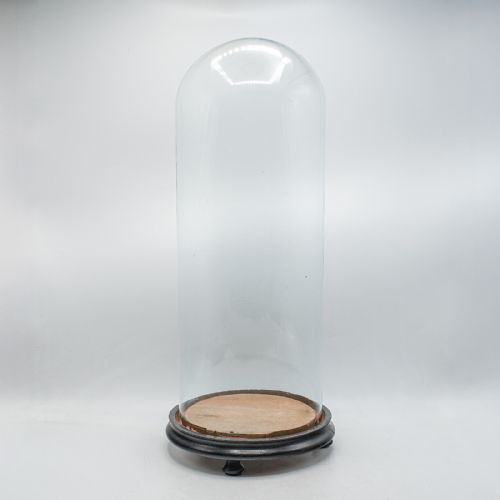


Glass Showcase Cloche
These glass showcase cloche pieces protect and display precious taxidermy, clocks, and ornaments under clear bell jars.

Glass Showcase Cloche
When you search for a glass showcase cloche, you are looking at nineteenth and early twentieth century display pieces designed to protect delicate items from dust. These vessels combine clear blown glass covers with fitted wooden bases, serving both practical preservation and aesthetic presentation.
How they were made
These pieces rely on blown glass domes shaped by hand, resulting in characteristic subtle ripples and thickness variations inherent to period production. The glass sits securely upon turned or flat wooden bases fashioned from timbers such as oak, beech, pine, and ebonised wood.
Interiors often feature fitted bases lined with fabric, velvet, felt, or baize to cushion the displayed objects. Such traditional materials provide a stable and contrasting platform for taxidermy birds, delicate ornaments, and timepieces.
Listings here span the Victorian and Edwardian periods, featuring glass domes mounted on ebonised wood, oak, beech, and pine bases.
What varies in quality
Quality in these pieces depends heavily upon the clarity and integrity of the blown glass cover, with superior examples showing minimal distortion or bubbling. The proportion between the height of the dome and the substance of the wooden base also dictates the visual balance.
The choice of base timber and the preservation of original interior linings influence the overall desirability of the piece. Fine joinery in the wooden plinth and intact textile linings separate standard utility items from superior collectors' specimens.
The Glass Showcase Cloche Glossary
- Cloche
- A bell-shaped glass cover traditionally used in gardening or display to protect delicate contents from the elements. In this context, it serves as a dust-free showcase for ornaments and specimens.
- Ebonised wood
- Timber treated with a stain or finish to imitate the dense, dark appearance of ebony. This dark finish provides a formal, contrasting border to the clear glass dome.
- Baize
- A coarse woolen material resembling felt, commonly used to line the interior bases of display domes. It offers a soft, protective surface for resting clocks and taxidermy.
- Taxidermy showcase
- A specialised display enclosure designed to house preserved animals, birds, or insects. These domes maintain a controlled environment away from handling and atmospheric dust.
Glass Showcase Cloche: Frequently Asked Questions
What fits under a glass showcase cloche?
These covers typically house delicate ornaments, vintage clocks, and preserved taxidermy specimens such as birds and insects. Their primary historical purpose was safeguarding intricate items from household dust.
Selecting what to place inside depends on the internal height and width of the specific dome. Collectors often match the scale of the object to the volume of the glass vessel.
How do I clean the glass?
Cleaning requires removing the glass dome carefully from its wooden base and washing it gently with warm soapy water. A soft cloth prevents scratching the old, hand-blown glass surfaces.
Avoid using harsh chemical cleaners that might damage any original finishes on the glass or the surrounding wooden plinth.
Are the bases original to the glass?
Most period pieces retain their original turned or flat wooden bases, which were manufactured specifically to fit the blown glass covers. Timbers like oak, beech, and pine are typical for these fitted plinths.
Inspecting the fit between the glass rim and the groove in the wood helps determine if the components belong together historically.
How do I date a dome?
Dating relies on observing the characteristics of the glass manufacturing technique, the wood species, and the interior lining materials. Victorian examples often feature heavier ebonised bases, while Edwardian pieces frequently utilise lighter oak or beech.
Design trends in clock housings and taxidermy styles also provide reliable clues for establishing the era of manufacture.