
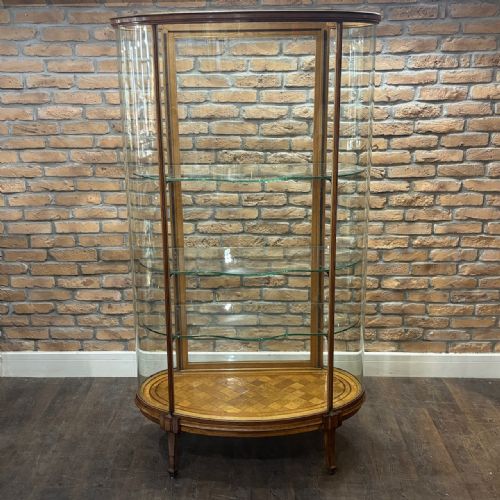
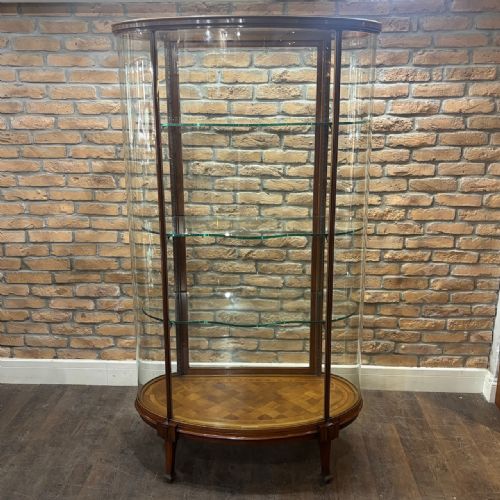
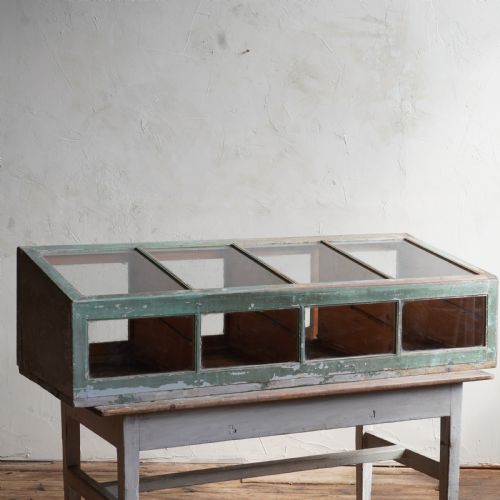
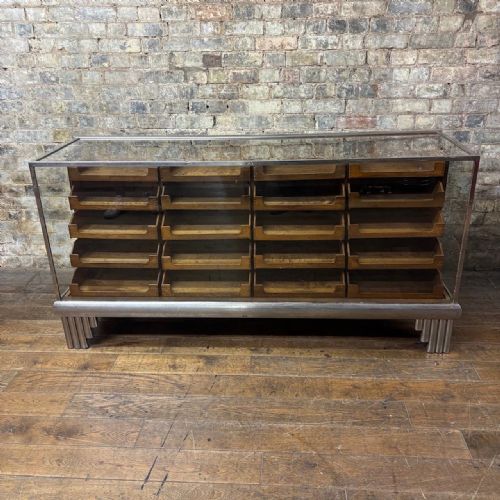
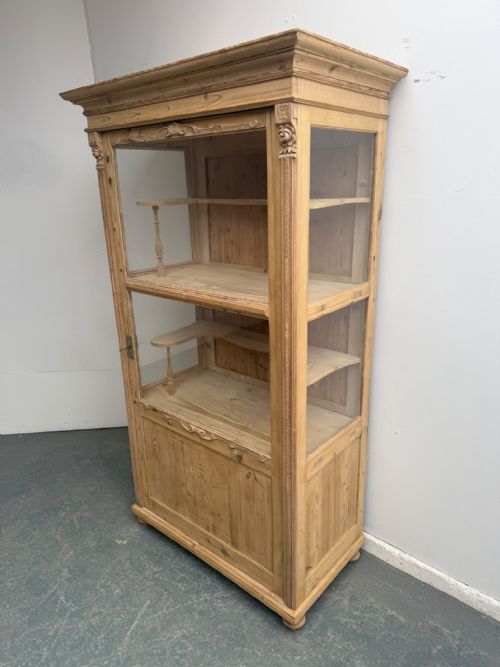
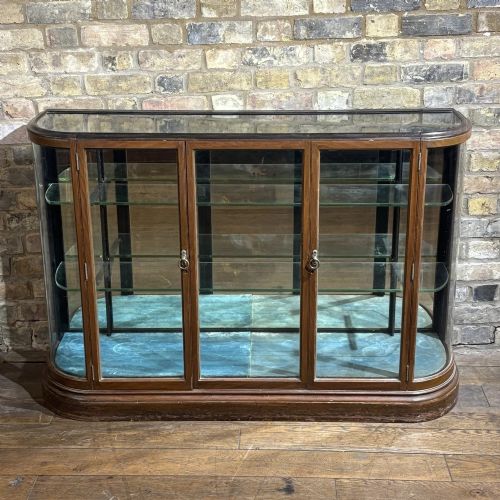


Glass Shop Display Cabinet
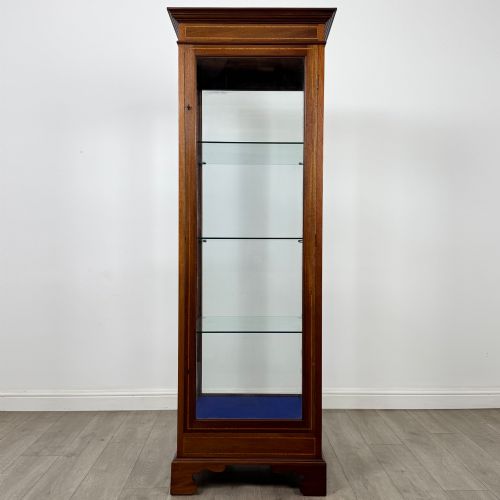
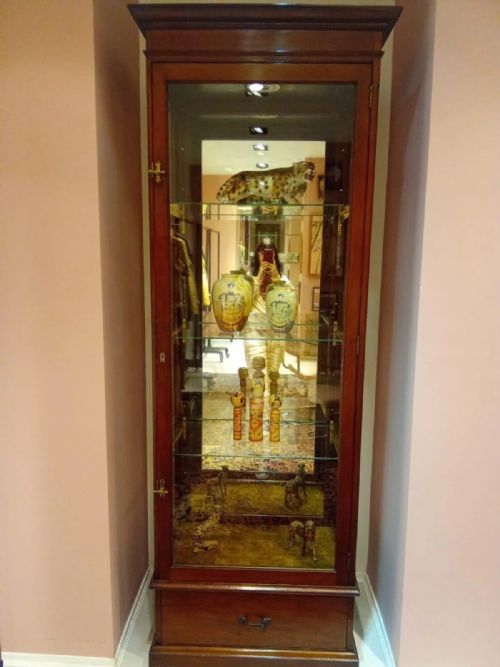
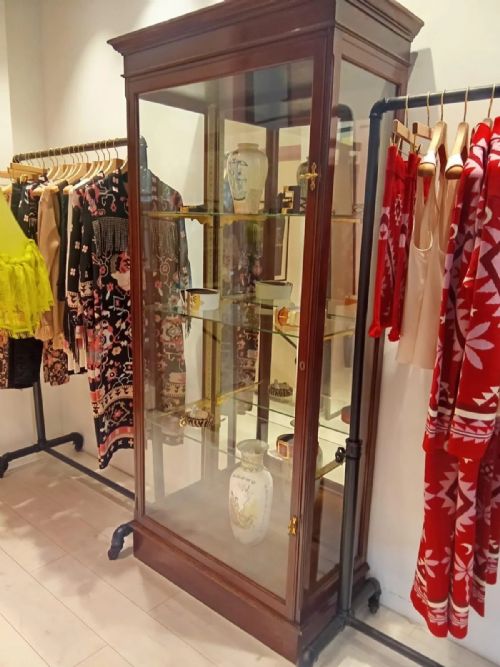
These old glass shop display cabinet pieces bring commercial utility into domestic rooms, offering broad glass panels to protect and show collections.
Glass Shop Display Cabinet
A glass shop display cabinet serves to hold merchandise securely while presenting it clearly to buyers through generous glazing. These items originate from late nineteenth and early twentieth century commercial spaces, including pharmacies, haberdasheries and grocers.
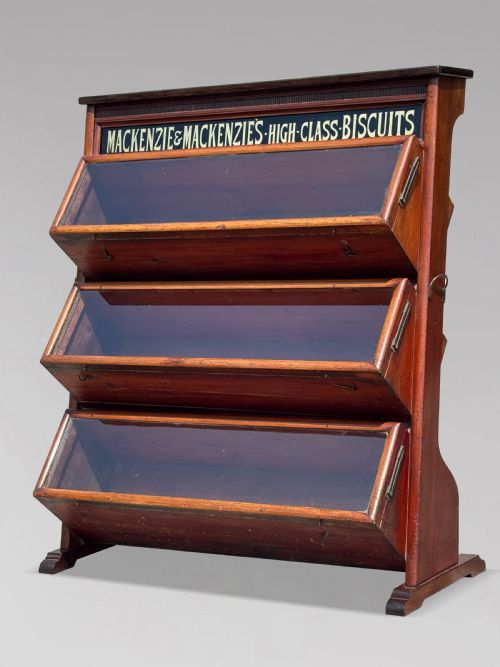
The version most commonly met on this page is the Edwardian or 1920s countertop unit in solid mahogany or oak. Larger freestanding models and shop counters also appear, alongside specialised brand advertising cases.
Makers such as F. Sage & Co and Dudley & Co supplied these fittings for high street trade. Surviving examples adapt easily to modern homes for displaying small collections or everyday objects.
Materials and Construction
Makers built these cabinets using sturdy timber frames of mahogany, oak or pine, glazed generously on multiple sides with clear float or sheet glass. Brass, bronze, ebonised wood and chrome hardware provided structural reinforcement and hinges for doors.
Interiors frequently incorporated mirrored glass backs to reflect light through adjustable glass shelves, while some specialist units utilised fabric linings or metal frames. Cabinets made for food or confectionery often featured painted or inscribed branding directly onto the glass or wooden base.
Some cabinets still whisper tales of biscuits, chocolates and gunsmiths through surviving gold leaf inscriptions.
Distinctions in Standard
The calibre of a piece depends upon the solidity of its timber chassis and the complexity of its glazing scheme, such as curved bow ends or bevelled edges. Specialist maker signatures and original branded advertising elements elevate certain commercial examples above standard utilitarian models.
Proportion and intact original hardware, including working locks and brass or bronze mounts, separate finer commercial fittings from simpler workshop items. The integration of mirrored backs and adjustable shelving reflects a higher grade of retail specification.
F. Sage & Co·Dudley & Co·John Stow Ltd·Mackenzie's Biscuits·Robert West·Kemps Pharmacy·Cadbury's·Lennards·Ermen & Roby
The Glass Shop Display Cabinet Glossary
- Haberdashery cabinet
- A commercial storage unit designed with numerous shallow drawers or glass fronts to organise small sewing goods and textiles. These pieces often incorporate glazed drop-front doors.
- Bow end
- A curved glass panel or cabinet end designed to soften hard right angles and improve visibility from multiple viewing angles. This technique required skilled glass bending.
- Bijouterie case
- A shallow glass-topped display table or cabinet created for holding jewellery, medals and delicate personal ornaments. They usually sit upon slender legs or countertops.
- Countertop display
- A compact showcase built to sit upon shop counters at eye level to encourage impulse purchases. They frequently feature rear sliding doors for serving staff.
- Ebonised
- Timber treated with chemical stains or dark finishes to imitate expensive ebony wood. This treatment was common on display frames during the late nineteenth and early twentieth centuries.
Glass Shop Display Cabinet: Frequently Asked Questions
How do I clean the glass safely?
Use a mild vinegar solution applied to a soft cloth rather than spraying liquid directly near antique wood frames. Wipe gently to avoid disturbing aged putty or seals.
Keep moisture away from any original mirror silvering or painted advertising lettering on the interior surfaces.
Can I adjust the shelves?
Many Edwardian and later commercial cabinets feature movable glass shelves resting on metal ratchets or wooden supports. This allows you to reconfigure the interior height for taller items.
Older or simpler carcasses may have fixed wooden grooves holding the glass securely in place.
Where should I place a countertop model?
Countertop versions sit well on sideboards, desks or large tables where their top and side glazing receives ambient light. Ensure the supporting surface is level to keep the door alignment true.
Avoid direct sunlight that might fade interior fabrics or warm enclosed items excessively.
How do I identify a shop counter from a domestic cabinet?
Commercial counters generally feature heavy timber construction with rear sliding doors designed for a shop assistant to access goods quickly. They often display maker plaques or branded glass inscriptions.
Domestic display cabinets usually open from the front via hinged doors rather than rear service panels.