
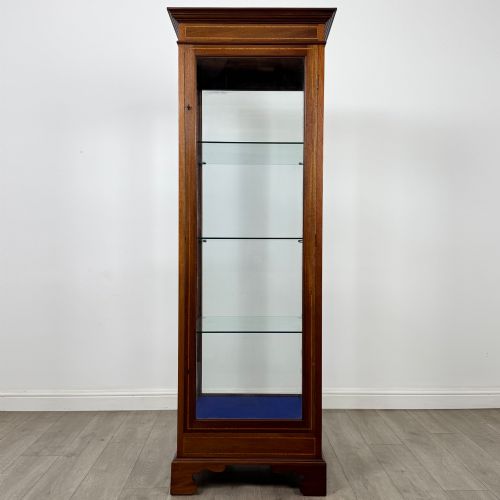


Glazed Retail Counter Showcase
A glazed retail counter showcase displays merchandise within wood and glass frames, offering both security and visibility for shop interiors.
Glazed Retail Counter Showcase
When you search for a glazed retail counter showcase, you encounter commercial fittings designed to sit upon counters or stand independently in shops. The examples found here span the Victorian, Edwardian, and 1930s periods, encompassing styles from Adam Revival to Art Deco.
Most pieces take the form of countertop display cabinets or larger display counters constructed to house confectionery, tea, or general goods. Mahogany and oak dominate the selection, frequently paired with glass panels and mirrored interiors to maximise light.
How they were made
Cabinet makers utilised dense hardwoods such as mahogany and oak to build sturdy frames capable of supporting heavy sheets of glass. Brass fittings often secure the doors and hinges, whilst mirrored glass lines the interior back panels to reflect light through the displayed items.
Commercial workshops applied ebonised finishes, gold leaf, or sign-written branding directly onto the wood or glass to advertise confectionery and goods like Fry's, Rowntree's, and Cadbury's. Joinery methods prioritised clean sightlines and secure access for shop assistants operating behind the counter.
Sweet shop cabinets bearing vintage Rowntree's and Fry's chocolate branding preserved decades of confectionery marketing inside the glass.
What varies in quality
The standard of timber selection and the complexity of the cabinetry distinguish exceptional showcases from standard utility pieces. Fine examples incorporate polished mahogany frames, bevelled glass plates, and intact mirrored backs that survive without silvering loss.
Original commercial branding, such as authentic sign-written chocolate advertising panels, alters the character and commercial history of a piece. The integration of period brass hardware and harmonious proportions further separates standard shop fittings from bespoke commissioned counters.
F. Sage & Co.·E. Pollard & Co. Ltd.
The Glazed Retail Counter Showcase Glossary
- Countertop display cabinet
- A smaller glazed case designed to sit upon a shop counter for customer browsing. These units typically feature rear access doors for the shopkeeper.
- Mirrored interior
- A reflective glass panel fitted to the back of a cabinet. This feature bounces ambient light forward to illuminate the merchandise.
- Adam Style
- A neoclassical design style characterised by symmetry and refined ornamentation. Pieces in this style draw inspiration from classical antiquity.
- Ebonised
- Wood finished with a dark stain or pigment to imitate ebony. This treatment was common on commercial cabinetry of the early twentieth century.
- Shop fitting
- Fixtures and furniture built specifically for commercial retail environments. These items were constructed to withstand heavy daily use in Victorian and Edwardian shops.
Glazed Retail Counter Showcase: Frequently Asked Questions
Where were these glass cases used?
These cabinets served merchants in Edwardian and Victorian shops, tearooms, and confectioners. Retailers used them to protect delicate goods whilst keeping them visible to customers.
They sat upon wooden sales counters or stood independently near the shop entrance to draw the eye.
How do I clean the glass?
Use a gentle glass cleaner applied to a soft cloth rather than directly onto the panel. This prevents liquid from seeping into antique wooden frames or damaging original sign-written lettering.
Take care around mirrored interior backs to protect the delicate silvered coating from moisture ingress.
Are the advertising signs original?
Many chocolate and cocoa signs applied to the glass or wood date from the period of commercial use. Some pieces feature later sign-written decoration added to enhance the mercantile appearance.
Examine the surface wear and integration with the timber to understand the history of the branding.
How do I date a shop showcase?
Examine the timber species, construction methods, and stylistic cues such as Edwardian neoclassical motifs or Art Deco geometry. Hardware like brass latches and hinges also offers clues to the manufacturing era.
Commercial catalogues and maker plaques on the woodwork can confirm the decade of production.