

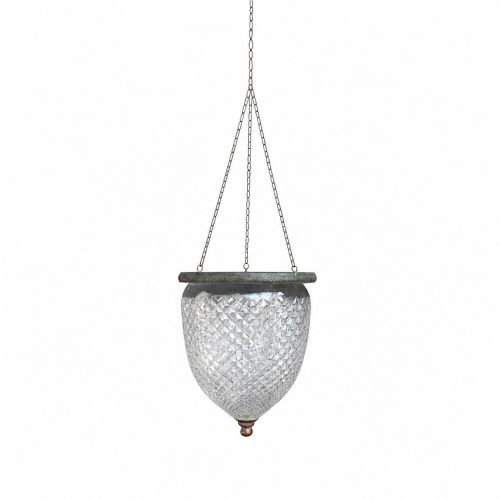
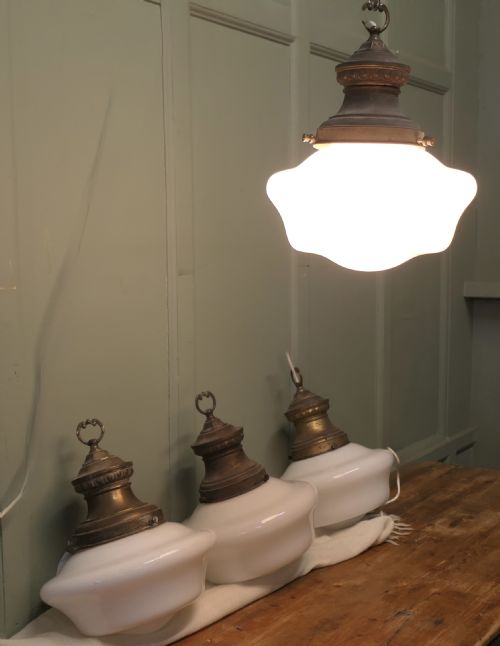
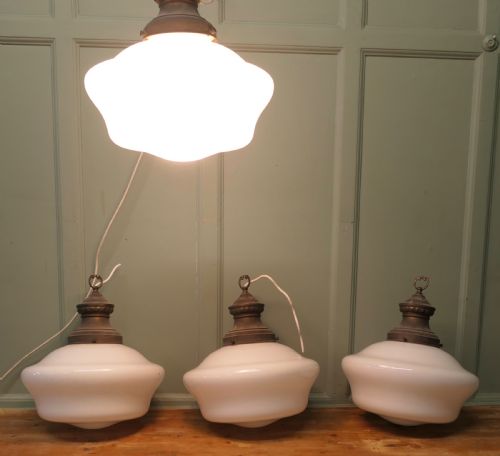
Glass Shade Pendant
A glass shade pendant brings functional illumination and character to a room, pairing historical hand-finished shades with period metalwork.
Glass Shade Pendant
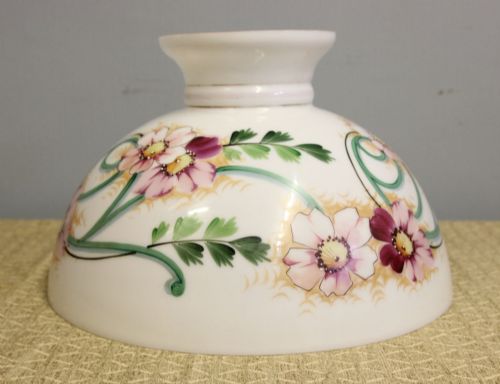
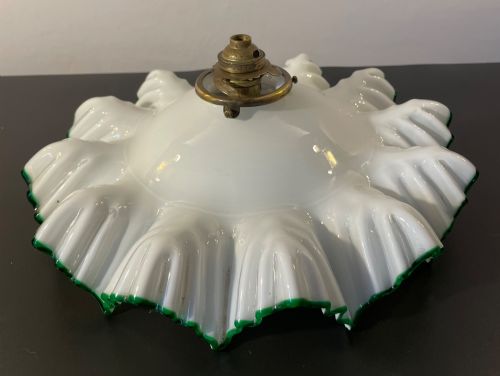
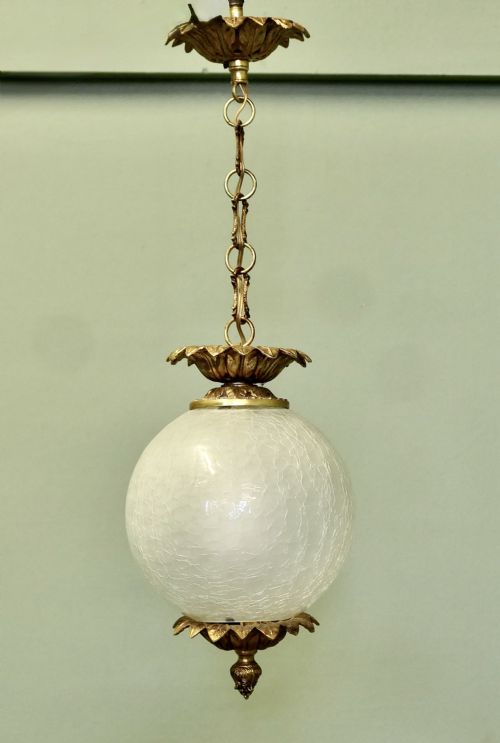
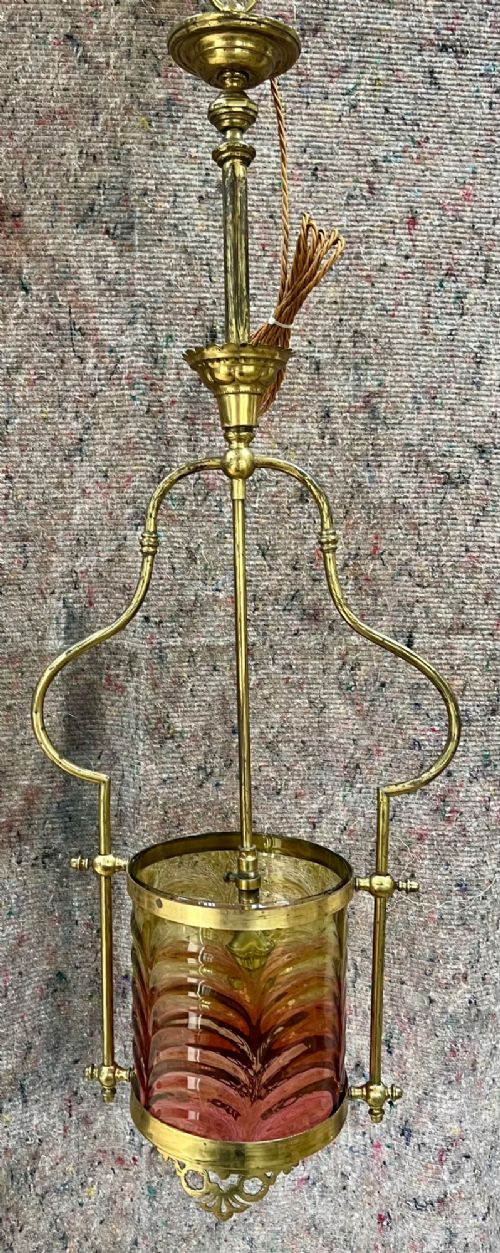
A glass shade pendant combines a hanging ceiling fixture with a decorative glass diffuser, illuminating spaces from above while displaying the craftsmanship of past eras. When searching for a glass shade pendant, buyers encounter examples spanning from the Victorian period through the Edwardian era and into the Art Deco and 1930s decades.
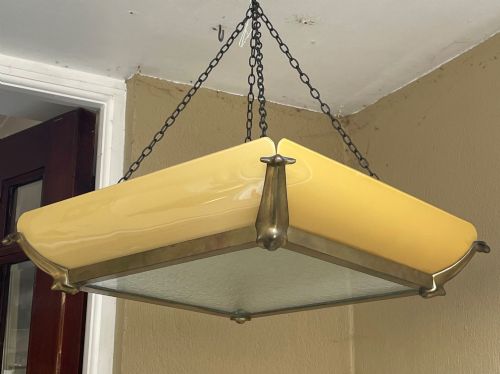
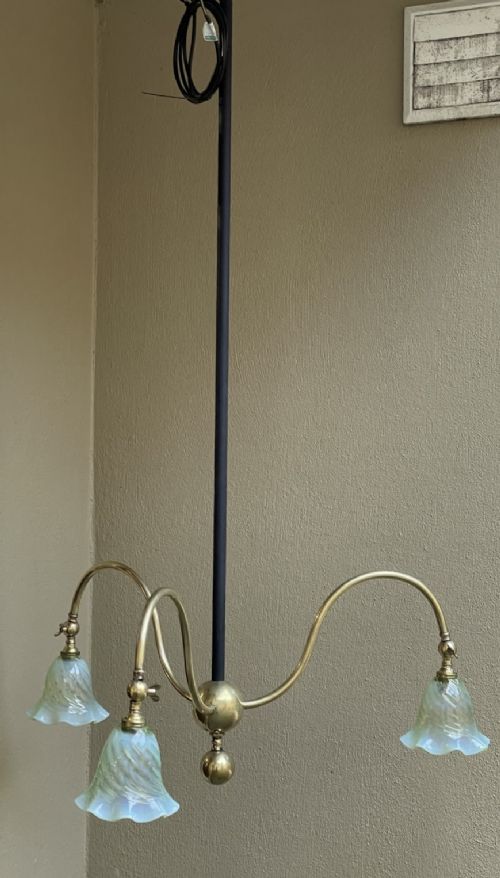
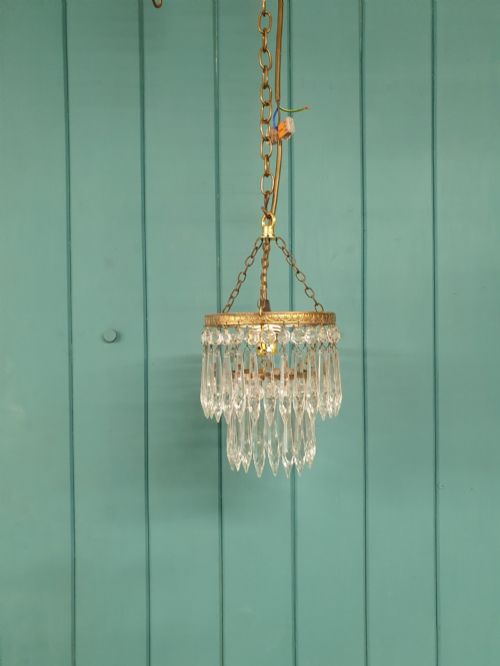
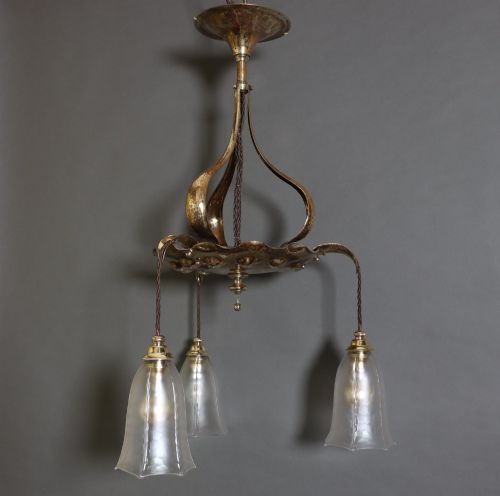
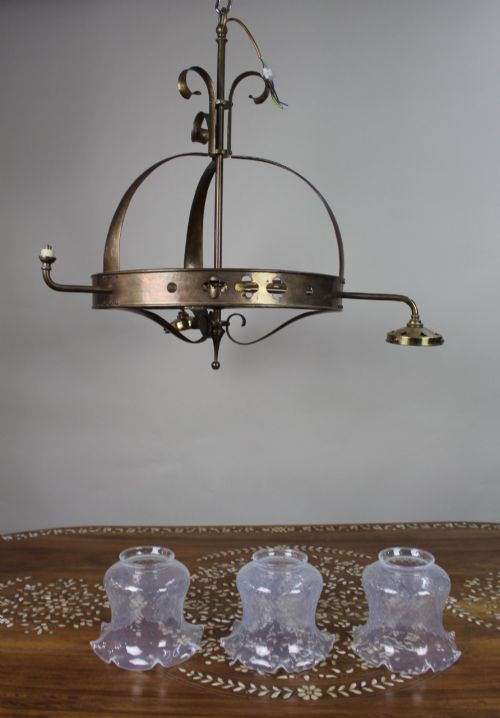
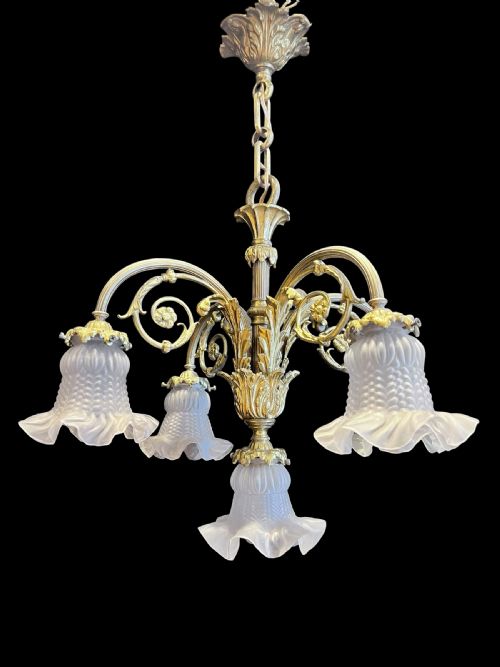
The most frequent variations on this page include Edwardian moonstone glass shades suspended from brass galleries and 1920s opaline glass pendants. These hanging lights appear in diverse forms, ranging from simple brass and cut glass ceiling pendants to elaborate multi-light chandeliers and industrial styles.
Origins stretch across English, French, and American workshops, incorporating diverse aesthetic movements such as Arts and Crafts, Art Nouveau, and Gothic Revival. The selection reflects both domestic lighting needs and commercial installations, including municipal buildings and railway lanterns.
How they were made
Makers formed the glass elements using techniques like moulding, cutting, frosting, and acid-etching to produce opaline, moonstone, crackle, and clear crystal textures. These shades were paired with metal components shaped from brass, copper, silver plate, and iron.
Structural support relied on galleries, chains, and mounting brackets fabricated from durable metals, often complemented by decorative elements such as brass leaf designs or patinated mounts. Fixtures combined these glass and metal parts to secure the lamps safely to ceilings while dispersing light evenly.
Some lucky dining rooms still host gas-era brass pendants quietly masquerading as electricity.
What varies in quality
Quality in these pendants rests upon the weight and clarity of the glass, alongside the integrity and finish of the metalwork. Hand-cut crystal and heavy opaline glass represent a higher standard than thinner pressed alternatives.
The refinement of the supporting gallery, the presence of original chains and fixings, and the precision of decorative metal casting distinguish finer examples from standard production pieces.
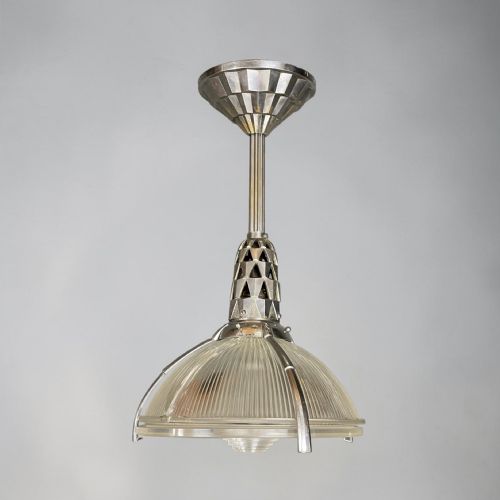
Émile-Jacques Ruhlmann·Holophane
The Glass Shade Pendant Glossary
- Opaline glass
- A milky, translucent glass variant that softens light diffusion and appears frequently in Edwardian and Art Deco lighting fixtures.
- Gallery
- The metal collar or ring that grips the top of a glass lampshade and connects it to the suspension chain.
- Plafonnier
- A ceiling-mounted or closely suspended bowl-shaped glass light fixture that sits flat or near the ceiling.
- Moonstone glass
- An opaque, softly glowing white glass type valued for its atmospheric light distribution.
- Rise and fall
- A mechanical pulley system allowing the pendant light to be adjusted vertically to different heights.
Glass Shade Pendant: Frequently Asked Questions
How do I hang a pendant light?
Pendant lights suspend from ceilings using chains, cords, or rigid rods secured to a mounting bracket or rose. They require proper wiring connection to the household electrical supply.
Heavier fixtures, such as brass and cut glass chandeliers, need secure joist attachment to bear the weight safely.
What periods do these pendants cover?
The available lighting spans from the 19th century and Victorian era through Edwardian designs to Art Deco and 1940s pieces. Each era brings distinct glass textures and metalwork styles.
Early pieces often feature heavy brass galleries and cut crystal, while later twentieth-century examples embrace streamlined opaline and industrial forms.
How were these glass shades used originally?
These shades functioned as interior illumination in domestic rooms, hallways, porches, and commercial spaces. They directed or diffused light downward to brighten specific areas.
Gasoliers and early electric pendants adapted these glass forms to transition homes from gas lighting to electricity.
How do I distinguish Edwardian from Art Deco?
Edwardian fixtures typically feature softer moonstone glass, organic brass leaf motifs, and traditional cut crystal details. They lean towards romantic or revivalist aesthetics.
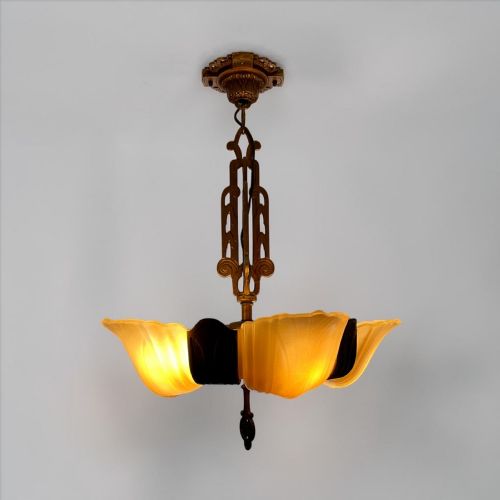
Art Deco pendants favor geometric symmetry, slip shades, crackle glass, and streamlined opaline surfaces reflecting 1930s modernism.