


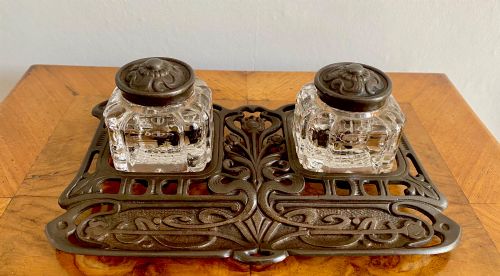


Glass Inkwell Brass Stand
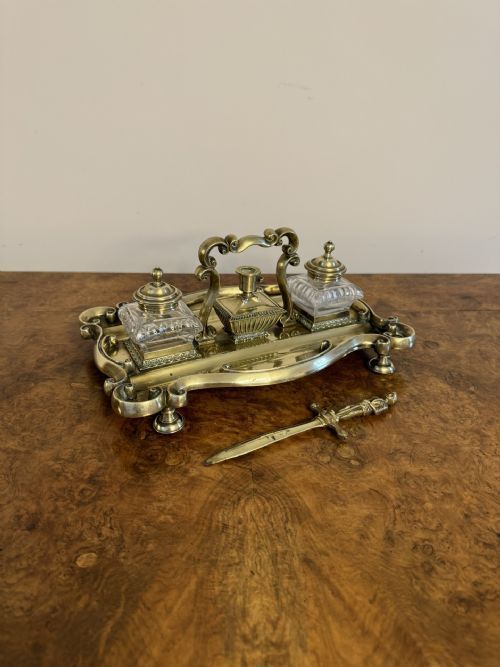
These glass inkwell brass stand pieces combine heavy metal mountings with robust glass reservoirs to organise the nineteenth-century writing desk.
Glass Inkwell Brass Stand
A glass inkwell brass stand serves as the focal point of historical desk accessories, housing liquid ink securely while mounting one or more glass bottles within a metal framework. These items range from simple single-bottle desk tidies to elaborate double-sided sets equipped with drawers, pen trays and multiple reservoirs.
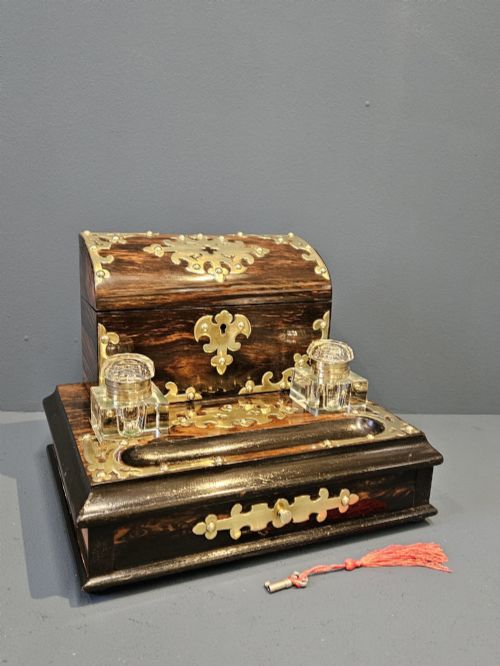
The pieces listed here span the Regency, Victorian and Edwardian eras, with nineteenth-century examples forming the majority of the selection. Materials such as coromandel wood, rosewood, tortoiseshell and solid oak frequently provide the base platform for the brass mounts and glass vessels.
How they were made
Glass reservoirs are formed through heavy moulding or hand-cutting, creating thick walls designed to withstand the daily insertion of steel or quill nibs. Brass stands and mounts provide the structural chassis, often secured to wooden or tortoiseshell bases with small pins or screws.
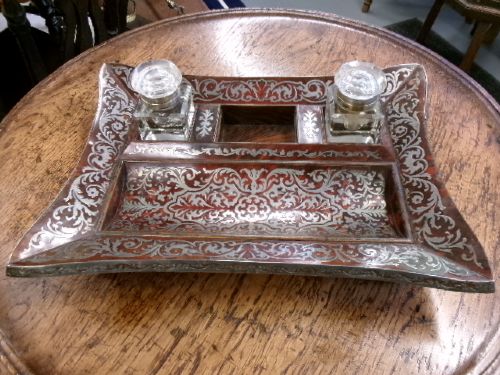
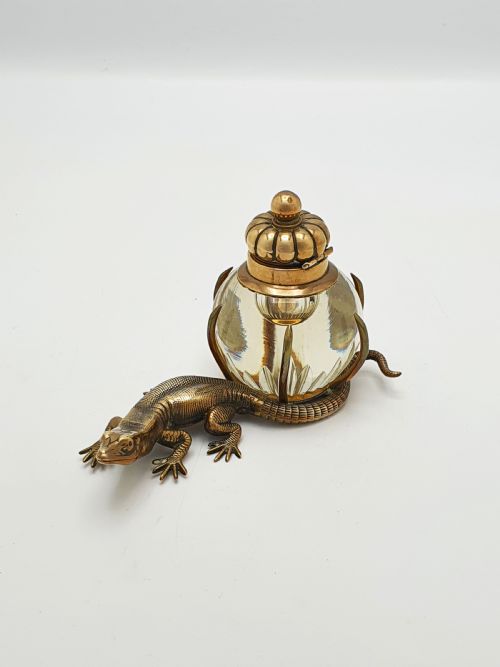
Inlaid brass work, mother-of-pearl detailing and boulle marquetry embellish the surrounding wooden platforms, reflecting meticulous cabinet-making techniques of the period. Gilded bronze and cast brass components demonstrate detailed moulding, seen in figural designs and ornate Art Nouveau frameworks.
What varies in quality
The weight and casting definition of the brass components distinguish high-grade examples from standard production pieces, with crisper surface chasing indicating superior foundry work. The thickness and clarity of the cut glass inserts, along with the retention of their original screw tops or stoppers, materially affect the integrity of the object.
The choice of foundation material dictates the tier of the piece, as dense exotic timbers like coromandel and burr walnut carry higher cabinet-making standards than plain oak. The precision of inlaid brass stringing and the survival of delicate materials such as tortoiseshell further separate standard desk tidies from exceptional sets.
James Cartland & Sons
The Glass Inkwell Brass Stand Glossary
- Inkstand
- A portable tray or stand holding one or more inkwells, often incorporating pen rests and stamp compartments. These items sat centrally on a writing table for daily correspondence.
- Boulle work
- A style of marquetry using brass and tortoiseshell inlaid in contrasting patterns. This technique originates from French cabinet-making traditions adopted in nineteenth-century English desk sets.
- Coromandel wood
- A heavy, durable timber from Asia featuring dark brown grain with dramatic black stripes. Cabinet-makers used this dense material for high-end Victorian writing boxes and inkstands.
- Secessionist
- An artistic movement related to Art Nouveau that rejected historicism in favour of geometric forms and stylised motifs. This design influence appears in Austrian brass and cut glass desk pieces.
- Tortoiseshell
- The mottled brown and amber shell of certain marine turtles utilised for decorative plating. It provides a glossy, translucent background for inlaid brass decoration on luxury desk accessories.
Glass Inkwell Brass Stand: Frequently Asked Questions
What is a glass inkwell brass stand used for?
These pieces held liquid ink and writing implements on a desk for daily correspondence before the invention of the fountain pen.
They kept the workspace tidy by containing the ink reservoir and providing dedicated rests for dip pens.
How do I date a brass and glass inkstand?
Dating relies on observing the timber species, manufacturing style and mounting techniques characteristic of specific nineteenth-century periods.
Regency pieces show clean rosewood and brass inlay, while Victorian examples often utilise heavier cast brass and exotic woods like coromandel.
Are the glass inkwells usually original?
Many surviving desk stands retain their original heavy glass bottles or cut glass inserts, though replacements do occur due to breakage.
Matching the glass shape and collar dimensions to the brass aperture helps determine if the reservoir belongs to the stand.
How should I clean the brass and glass?
Maintenance involves gently dusting the wooden base and wiping the glass reservoirs with a damp cloth.
Harsh metal polishes should be avoided on brass mounts to preserve the historic patina accumulated over the centuries.