
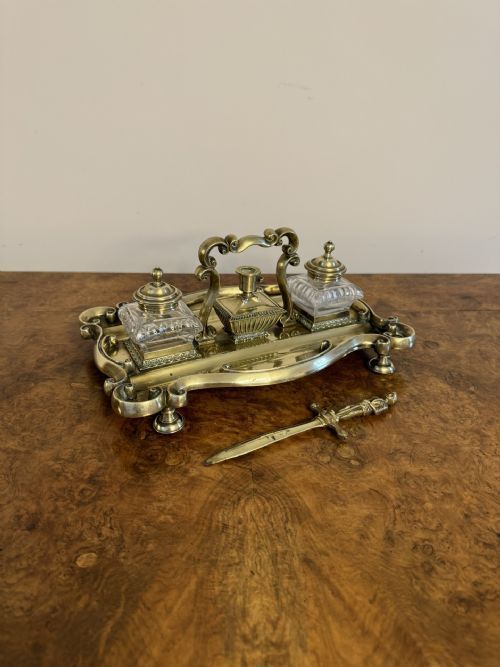


Vintage Brass Pen Tray
A vintage brass pen tray anchors a desk with period weight, bringing functional metalwork and inkwell fittings from the nineteenth century into daily use.
Vintage Brass Pen Tray
A vintage brass pen tray often forms part of a larger desk set, inkstand, or inkwell combination designed to organise writing implements. These desk accessories appear in Victorian, Edwardian, Art Nouveau, and Regency styles, spanning periods from the mid nineteenth century through to nineteen hundred.
Most examples combine solid brass or bronze with fitted glass inserts, mother-of-pearl, or wooden bases such as coromandel, rosewood, and oak. Pieces range from simple brass rests to ornate French champlevé enamel stands and elaborate figural castings featuring animals or historical busts.
How they were made
Foundry casting formed the primary method for shaping the heavy brass, bronze, and copper components, often finished with detailed chasing or gilding. Wood bases in coromandel and rosewood were carefully turned or inlaid to receive the metal trays and glass inkwells.
Specialist techniques included champlevé enamel work on French desk stands and the integration of mother-of-pearl accents into metal and wooden desk tidies.
Some nineteenth-century desk sets feature playing cats or kittens cast in gilded bronze right beside the inkwell.
What varies in quality
The crispness of the metal casting and the depth of the chased ornamentation distinguish standard production desk accessories from superior work. Heavier gauge brass and bronze retain sharper relief in decorative motifs, whereas lighter pieces lose definition in floral or figural details.
The inclusion of original fitted glass inkwells, matching pen rests, and intact wooden or enamel bases elevates the integrity of a desk set.
James Cartland & Sons
The Vintage Brass Pen Tray Glossary
- Champlevé
- An enamel technique where troughs or cells are hollowed out of a metal surface and filled with vitreous enamel before firing. This method creates colourful decorative patterns on French desk stands.
- Coromandel wood
- A dense, dark timber imported from Asia with contrasting light brown grain, frequently utilised for nineteenth-century desk tidies and box bases.
- Inkstand
- A complete desk accessory comprising a tray, one or more inkwells, and integrated pen rests designed to sit centrally on a writing table.
- Gilt bronze
- Bronze metal treated with a thin layer of gold or gold-coloured wash to impart a bright, reflective metallic finish. This material appears on decorative nineteenth-century desk sets.
Vintage Brass Pen Tray: Frequently Asked Questions
What is a brass pen tray used for?
These trays hold dipping pens, fountain pens, and small writing implements on a desktop to keep the writing surface tidy.
They frequently accompany inkwells and letter racks as part of a coordinated desk set.
How do I clean antique brass?
Gentle dusting with a dry or slightly damp cloth preserves the aged surface and natural patina accumulated over the decades.
Avoid aggressive chemical polishes that strip the historical character from nineteenth-century metalwork.
Are inkwells removable from the tray?
Many desk stands feature fitted glass inkwells that lift directly out of their metal or wooden housings for cleaning and refilling.
Some simpler pen trays omit the inkwell entirely and function solely as a rest for writing implements.
How do I date a brass desk set?
Stylistic indicators such as Art Nouveau curves or Regency rosewood inlays help place a piece within the nineteenth or early twentieth century.
Maker marks, registration numbers, and construction methods also provide clues to the exact period of manufacture.