


Glass Haberdashery Cabinet
A glass haberdashery cabinet organises small wares behind clear panels for retail display, combining practical storage with robust commercial construction.
Glass Haberdashery Cabinet
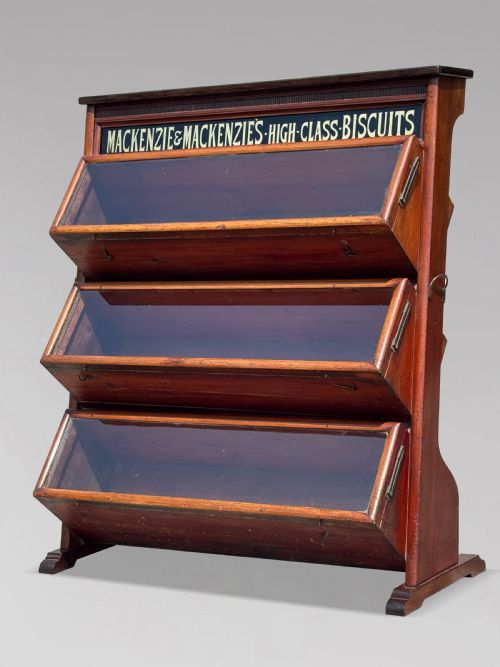
A glass haberdashery cabinet serves as a retail display unit designed to exhibit small dry goods, textiles, and curiosities to customers. These fixtures originate primarily from commercial contexts spanning the Victorian era through the 1930s.
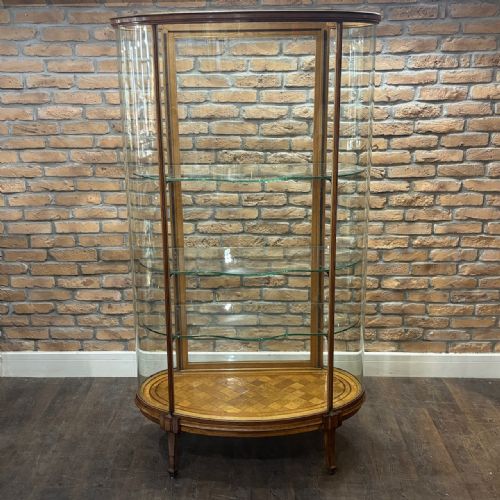
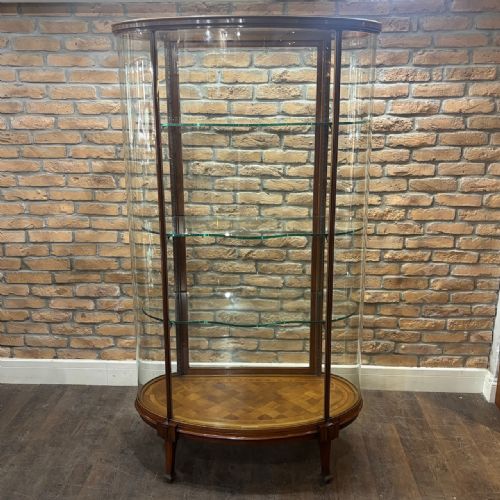
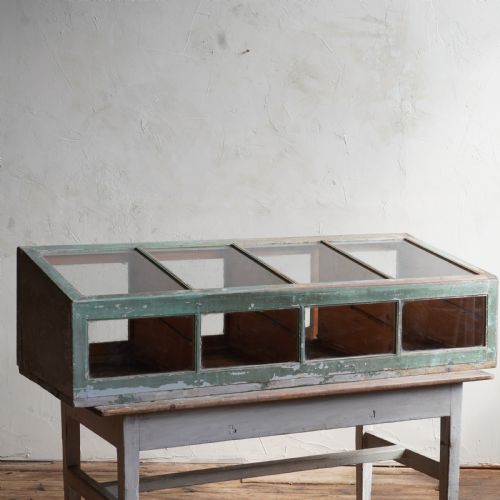
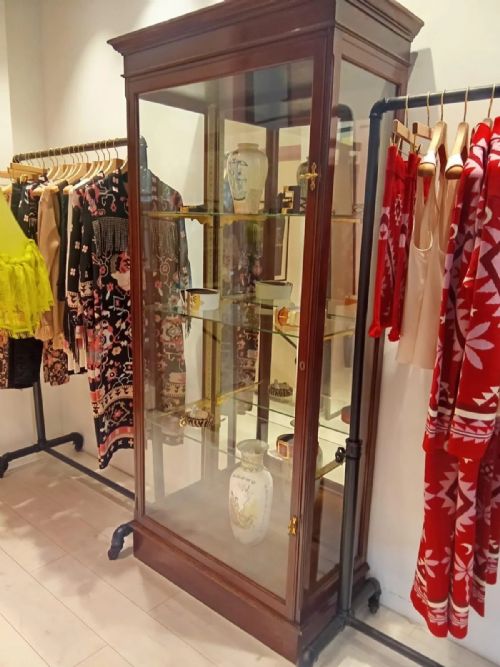
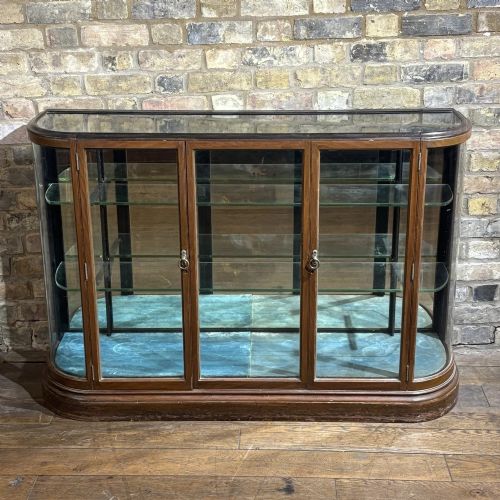
The pieces appearing on this page encompass shop counters, countertop display cases, and upright cabinets constructed for trade use. Mahogany and oak dominate the timber framework, paired with extensive glass panels to maximise visibility from every angle.
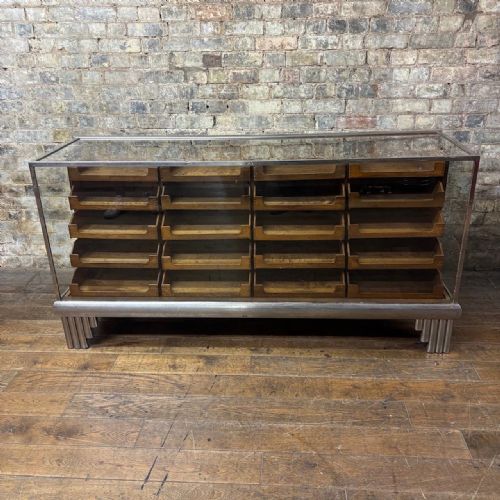
Commercial styles shift from heavy Victorian joinery to lighter Edwardian frames and streamlined 1920s and 1930s designs incorporating chrome and aluminium. Buyers encounter both large floor-standing counters and smaller tabletop variants suited for intimate displays.
What varies in quality
Construction methods determine the structural integrity of each cabinet, distinguishing standard utility shop fittings from bespoke joinery produced by specialised storefront outfitters. Heavier timbers, sophisticated framing joints like mortise and tenon, and intact original mirror plates elevate a piece.
The degree of commercial wear and subsequent restoration work alters the character of individual examples. Units retaining their original hardware, uncompromised glass panels, and authenticated maker details command greater historical interest among collectors.
Listings feature pieces spanning the Victorian era through the 1930s, utilising mahogany, oak, brass, chrome, and aluminium.
F. Sage & Co·Dudley & Co·John Stow Ltd·Saml. Elliott & Sons·Ermen & Roby
The Glass Haberdashery Cabinet Glossary
- Vitrine
- A glass-fronted display cabinet used for showcasing objects or merchandise. These enclosures protect contents from dust while offering complete visual access.
- Bow end
- A curved cabinet end, often fashioned with bent glass. This rounded shape softens corners and improves sightlines in crowded retail environments.
- Countertop
- A smaller display case designed to sit upon a shop counter. These units placed high-value goods directly at eye level beside the point of sale.
- Ebonised
- Timber treated with a dark finish to imitate ebony. This technique provided a formal, uniform appearance popular in late commercial furniture.
- Haberdashery
- The retail trade dealing in small articles of dress and sewing. Cabinets built for this purpose typically relied on numerous shallow drawers and compartments.
Glass Haberdashery Cabinet: Frequently Asked Questions
What is a glass haberdashery cabinet?
A glass haberdashery cabinet is a commercial storage and display unit originally utilised in shops to organise and exhibit small merchandise. They rely on transparent panels and timber frames to protect goods while keeping them visible.
Modern buyers repurpose these pieces within domestic interiors to display collections, textiles, and tableware while maintaining an organised, period aesthetic.
How do I date a shop display cabinet?
Dating relies upon examining the timber choices, construction methods, and hardware styles present in the piece. Victorian examples often feature heavier mouldings and dark finishes, whereas 1920s and 1930s variants introduce chrome, aluminium, and simplified geometric lines.
Maker stamps, brass plaques, and registered design numbers embedded in the timber or metalwork provide further chronological markers.
Where were these cabinets used?
These fixtures stood in late nineteenth and early twentieth-century retail shops, draperies, apothecary stores, and exhibition spaces. They occupied prominent positions on sales counters or along shop walls to encourage customer browsing.
Commercial establishments relied on these sturdy cases to secure delicate stock from handling while ensuring optimal illumination.
How do I clean and maintain antique glass?
Maintenance requires gentle cleaning solutions applied with soft cloths to avoid scratching fragile antique glass or damaging aged wooden frames. Ammonia-free glass cleaners prevent degradation of historic mirror silvering and surrounding finishes.
Careful handling of sliding doors and heavy glass panels prevents chipping along the vulnerable unpolished edges.