
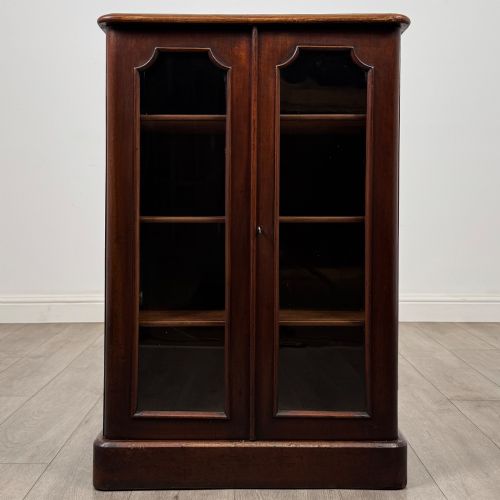
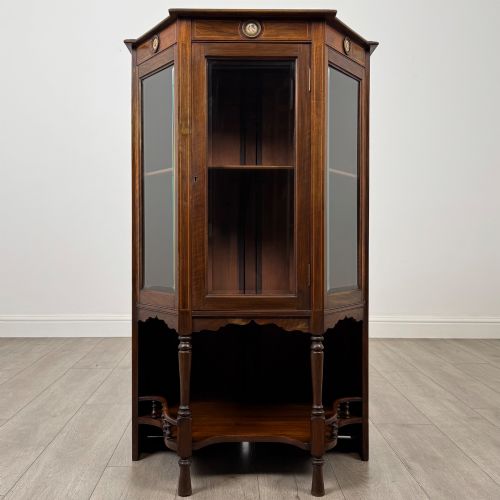


Glass Front Collector Cabinet
A glass front collector cabinet brings together fine timbers and clear glazing to protect and display small treasures.
Glass Front Collector Cabinet
A glass front collector cabinet functions as a secure home for specimens, curiosities, and small antiques. When buyers search for this phrase, they encounter pieces originating from the nineteenth and early twentieth centuries, spanning the Victorian and Edwardian eras alongside French Louis XV style influences.
The physical formats vary from wall hanging units and counter top models to table cabinets and large freestanding furniture. The evidence shows specialised forms including microscope slide cabinets, specimen cabinets, and letter boxes adapted for display.
Mahogany, oak, walnut, burr walnut, and kingwood form the primary structural timbers, frequently paired with brass hardware and fabric interiors. Most examples on this page date from the Victorian period through to nineteen-ten.
Materials and construction methods
Cabinet makers utilised dense hardwoods such as mahogany, oak, and walnut to build sturdy frames capable of supporting heavy glass doors and multiple internal drawers. Burr walnut and kingwood veneers appear on finer examples, sometimes enhanced with French marquetry inlay.
Glazing allows unimpeded viewing of the contents while protecting delicate items from dust and handling. Brass handles, hinges, and locks provide both functional security and decorative contrast against the dark wood surfaces.
Several nineteenth-century cabinets retain their original microscopic slides, preserving tiny invisible worlds hidden inside the drawers for over a century.
Judging quality and craftsmanship
The grade of timber selection and the precision of veneer work separate standard utilitarian storage from finer decorative pieces. Cabinets featuring burr walnut or intricate marquetry inlay generally represent higher tiers of nineteenth-century craftsmanship.
Internal configuration also dictates quality, with multi-drawer setups designed for specialised storage demanding greater joinery skill than simple open shelving. The inclusion of original working keys and quality brass mounts further distinguishes better examples.
The Glass Front Collector Cabinet Glossary
- Display cabinet
- A piece of furniture featuring glass panels designed specifically to exhibit objects rather than conceal them. These range from wall-mounted units to large floor-standing furniture.
- Burr walnut
- A highly prized timber grain obtained from the wart-like growths on walnut trees, creating swirling patterns. Cabinet makers utilised these veneers on prominent exterior surfaces.
- Kingwood
- A dense, heavy exotic wood with dark violet and brown stripes, frequently used in high-end marquetry and fine French furniture. It emerged during the eighteenth century and remained popular through later revival periods.
- Microscope slide cabinet
- A specialised storage unit containing numerous shallow drawers built to hold glass slides for scientific specimens. These compact cabinets often feature secure locking mechanisms.
- Marquetry
- The art of applying decorative veneer pieces of various woods to a structural panel to create intricate pictures or geometric patterns. Makers applied this technique to surfaces on select French style cabinets.
Glass Front Collector Cabinet: Frequently Asked Questions
What were glass front collector cabinets used for?
These cabinets served to store and display delicate objects such as geological specimens, botanical samples, and small antiques.
Collectors utilised specialised drawers and glass doors to protect their items from dust while allowing clear visibility for study or admiration.
How do I date a Victorian collector cabinet?
Dating relies on examining the timber species, construction techniques, and hardware styles characteristic of the nineteenth century.
Victorian pieces often feature solid mahogany or walnut construction, hand-cut dovetails in the drawers, and specific brass lock designs.
Where should I place a wall hanging cabinet?
Wall mounting requires locating a sturdy stud or using appropriate masonry fixings to support the weight of the timber and glass.
Placement should avoid direct sunlight to protect internal fabric linings and sensitive organic specimens from fading.
What is the difference between a vitrine and a display cabinet?
A vitrine typically denotes a glass-sided cabinet influenced by French decorative styles, often featuring marquetry inlay and kingwood veneers.
Standard display cabinets frequently adopt simpler British forms in oak, walnut, or mahogany without the elaborate French ornamentation.