





Antique Oak Specimen Chest
An antique oak specimen chest organises natural history or small treasures with timber density and practical compartmentalisation.
Antique Oak Specimen Chest
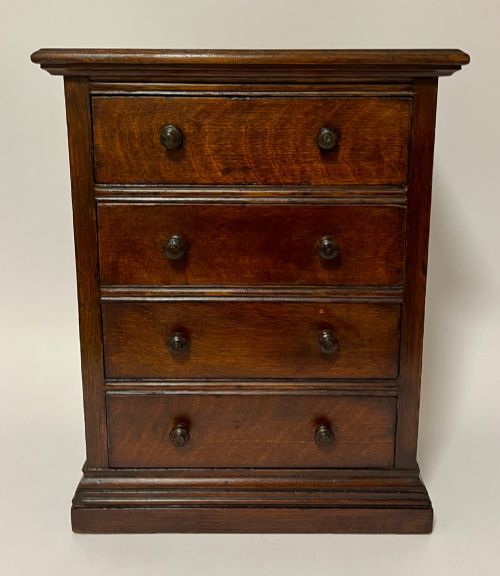
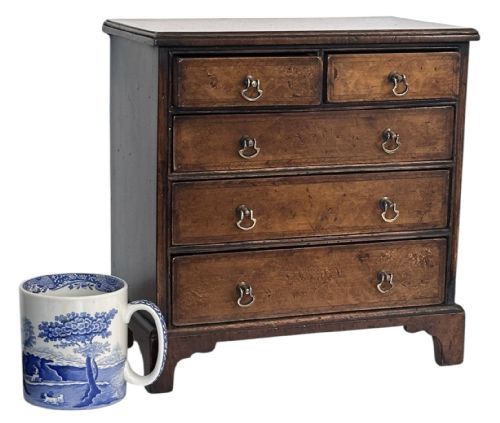
An antique oak specimen chest provides orderly storage across multiple shallow drawers designed to hold natural history collections, coins, or small curiosities. When searching for an antique oak specimen chest, buyers encounter table-top cabinets, miniature chests of drawers, and tall filing units spanning the eighteenth, nineteenth, and early twentieth centuries.
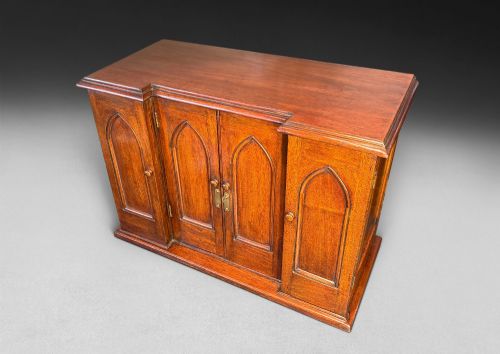
The materials and styles reflect domestic and scientific utility from Georgian, Victorian, and Edwardian periods. Examples range from rustic spice cabinets and Gothic revival table-top cases to Arts and Crafts sentry chests and Wellington cabinets in figured English oak.
Most pieces date from the nineteenth century, utilising dense oak alongside secondary timbers like pine, fruitwood, and mahogany. These functional items frequently incorporate brass handles, glass doors, and locking mechanisms to secure valuable contents.
Construction and materials
Makers constructed these cabinets primarily in solid oak, occasionally deploying walnut, mahogany, and fruitwood for drawer linings or decorative panels. Secondary softwoods such as pine appear on internal drawer carcases and backboards.
Joinery relies on traditional techniques to ensure stability across multiple drawers and narrow proportions. Brass hardware, steel locks, and occasional glass panels complete the structural assembly of these functional storage pieces.
One tiny medical carrying chest survived the journey into the twentieth century alongside towering plan chests.
Judging the range
Quality separates through the selection of timber figures and the precision of the internal drawer construction. Highly figured English oak and robust locking mechanisms elevate certain pieces above simpler utility boxes.
The Antique Oak Specimen Chest Glossary
- Specimen chest
- A multi-drawer cabinet designed for organising small objects, natural history samples, or coins. These units feature shallow drawers to display contents systematically.
- Wellington chest
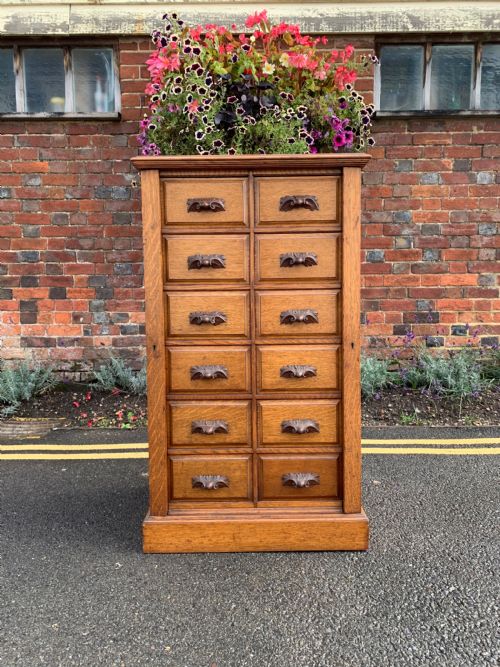
- A tall, vertical chest of drawers secured by a hinged locking stile that fastens over the drawer edges. This design originated in the nineteenth century for safe storage.
- Table-top cabinet
- A compact storage case proportioned to sit on a desk or table surface. They often house multiple small drawers or a glazed front.
- Gothic Revival
- A nineteenth-century design style incorporating medieval architectural motifs such as pointed arches and heavy mouldings. It appears frequently on Victorian cabinet work.
- Arts and Crafts
- A design movement emphasising honest construction, handcraftsmanship, and simple materials. Cabinets from this tradition display straightforward joinery and minimal ornamentation.
Antique Oak Specimen Chest: Frequently Asked Questions
What did people store inside?
These cabinets originally held geological specimens, botanical samples, insects, coins, or small valuable trinkets. Collectors utilised the shallow drawers to organise delicate items systematically.
Over time, owners adapted them to store correspondence, jewellery, or sewing supplies while keeping the contents secure behind locked doors.
How do I date an oak chest?
Dating relies on observing construction methods, timber selection, and hardware styles across different eras. Georgian pieces tend to show rustic joinery and simple brass pulls, while Victorian and Edwardian examples often feature locking mechanisms and tighter timber figures.
Style indicators such as Gothic Revival motifs or Arts and Crafts simplicity further narrow the production period between the eighteenth and early twentieth centuries.
Are keys usually included?
Many surviving cabinets retain their original working locks, and some listings explicitly mention an included key. However, historical use meant keys were frequently misplaced over generations.
Cabinets with locking stiles, such as Wellington chests, rely on the mechanism to keep all drawers secure simultaneously.
Can I use one for jewellery?
The shallow drawers and compartmentalised layout make these chests well suited for modern jewellery storage. The timber construction protects delicate items from light and dust.
Linings vary between bare wood and historical fabric, allowing owners to adapt the interior spaces for contemporary use.