


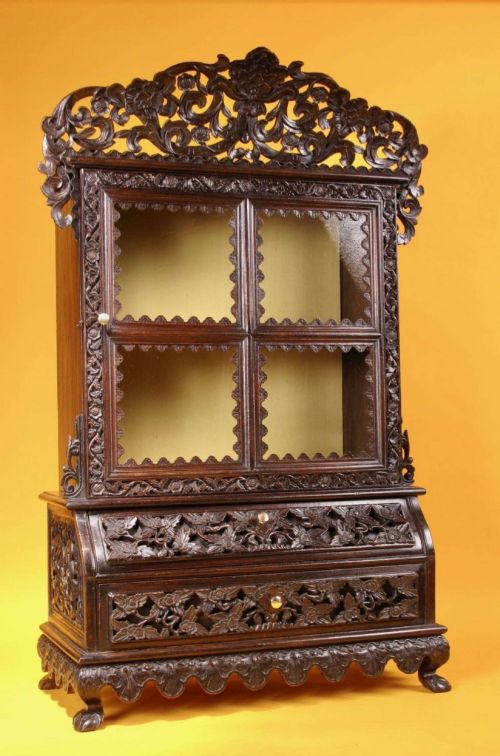
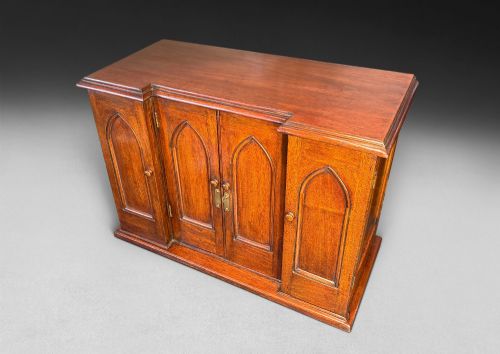
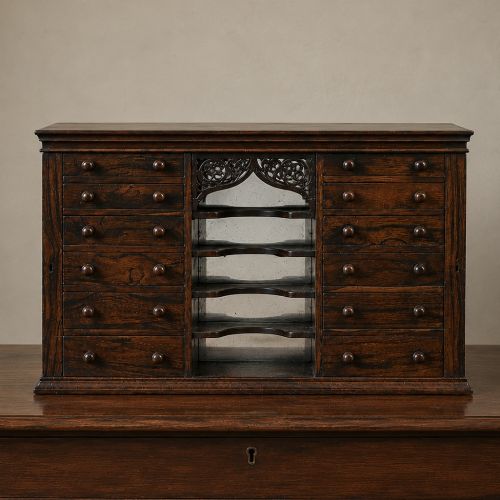
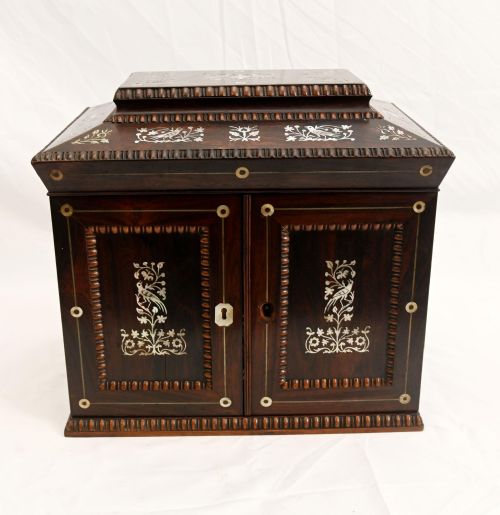


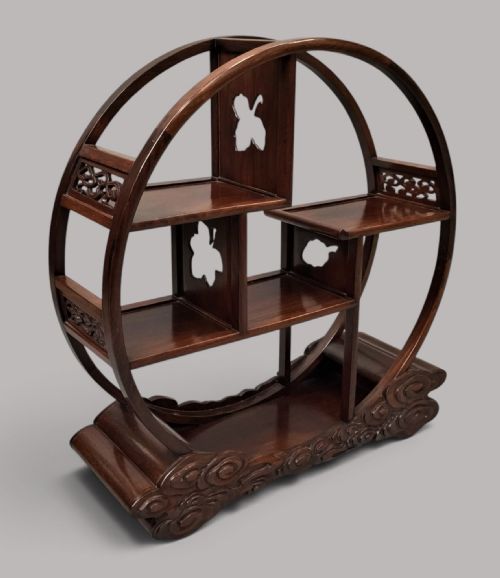


Carved Wood Tabletop Cabinet
A carved wood tabletop cabinet brings intimate storage and striking craftsmanship to a room, holding everything from miniature treasures to documents.
Carved Wood Tabletop Cabinet
When you search for a carved wood tabletop cabinet, you are looking at small-scale furniture designed to sit upon desks, tables, or chests rather than stand upon the floor. These pieces serve various storage needs, appearing as miniature linen presses, display cases, collectors' cabinets, and jewellery chests.
The versions you are most likely to meet on this page date primarily from the nineteenth century, with Victorian examples alongside Regency pieces, earlier seventeenth-century works, and items from around nineteen hundred. They take diverse regional forms, including Anglo-Indian designs, Chinese regional pieces, and Spanish folk art.
Makers constructed these cabinets for functional desktop organisation and specialised display. Their compact proportions allowed owners to secure valuable papers, specimens, or personal ornaments close at hand.
How they were made
Carpenters and cabinetmakers utilised solid timbers such as oak, rosewood, walnut, hardwood, and softwood to build the primary structures. Detail was achieved through intricate surface carving and occasionally polished veneers.
Designers incorporated contrasting elements of brass for hardware, alongside glass panels, mirrored glass, and bone or mother-of-pearl inlays. Interior fittings varied widely to suit the specific purpose of each cabinet, from games boxes to home altars.
Carved Wood Tabletop Cabinet Retail Price Guide 2026
Typical asking prices for carved wood tabletop cabinet among the pieces listed under this phrase on Sellingantiques today, from the lower quarter to the upper quarter. They describe what is for sale here now, not the wider market.
Periods represented reach from the seventeenth century through Regency and Victorian eras to the early twentieth century.
What varies in quality
The standard of a carved wood tabletop cabinet rests upon the crispness of its surface carving and the selection of timber. Dense hardwoods and richly figured woods like burr walnut or rosewood indicate greater material investment.
Construction quality shows in the fit of drawers, the operation of locks, and the integrity of internal glazing or mirrored glass. Finer examples maintain original brass fittings and intact decorative inlays without structural compromise.
The Carved Wood Tabletop Cabinet Glossary
- Collectors Cabinet
- A small piece of furniture fitted with multiple shallow drawers or compartments designed to store small specimens, coins, or natural history items. These cabinets often feature locking doors to protect delicate contents.
- Wellington Chest
- A tall, narrow chest of drawers secured by a locking hinged side pilaster that bars the drawers from opening. This form appeared during the Regency period.
- Home Altar
- A devotional structure for domestic worship, often taking the form of a cabinet or shrine with painted or polychromed surfaces. Spanish folk art examples show distinct regional religious iconography.
- Miniature Furniture
- Scale models or small versions of larger furniture forms, such as linen presses or chests, produced by makers to demonstrate skill or to serve as compact tabletop storage. These items replicate the joinery of full-size pieces.
- Anglo-Indian
- A descriptive term for decorative arts and furniture produced in India under British influence during the nineteenth century. These pieces combine traditional Indian carving techniques with European furniture forms.
Carved Wood Tabletop Cabinet: Frequently Asked Questions
What fits inside these cabinets?
These cabinets suit the storage of small collectables, jewellery, documents, and tabletop curiosities. Interiors range from open display shelves to fitted drawers and game sets.
Their compact size makes them practical for organising desk accessories or displaying small objects of interest without taking up floor space.
How do I place one in a room?
A tabletop cabinet sits securely upon sturdy surfaces such as sideboards, desks, chests of drawers, or larger tables. Positioning them at eye level or slightly below allows the carved details to be easily seen.
Ensure the supporting surface is level and deep enough to accommodate the full depth of the cabinet base and any opening doors.
How do I date a piece?
Dating relies on identifying stylistic periods such as Gothic Revival, Regency, or Victorian, along with wood choices like rosewood or oak. Construction methods, hardware types, and glass characteristics also provide chronological clues.
Comparing the carving style and regional motifs against documented examples helps narrow down the decade or century of manufacture.
Were these made for travel?
Most tabletop cabinets were intended for stationary domestic use in studies, libraries, or parlours rather than frequent travel. Some specialised versions, such as games boxes or fitted chests, included secure locks for safekeeping.
Their weight and delicate glass or mirrored elements mean they are best kept in a fixed location once placed.