

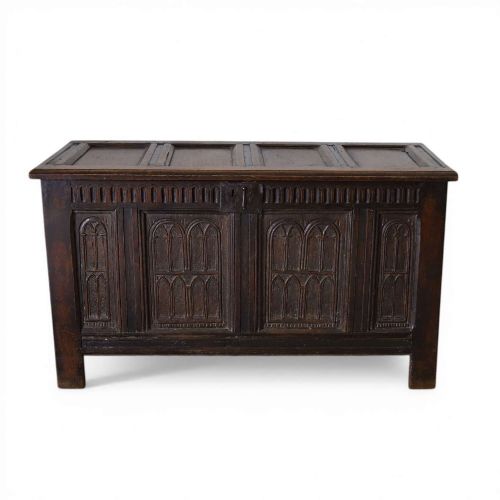
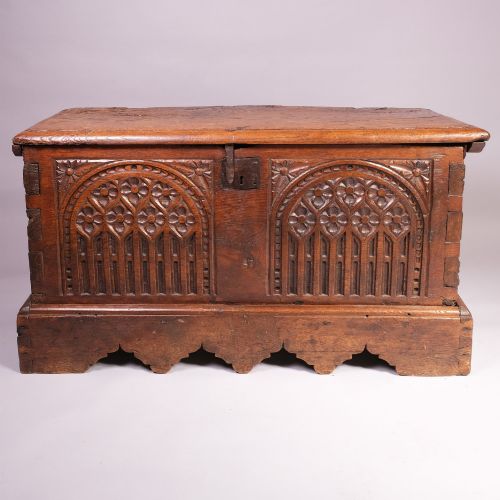


Gothic Tracery Oak Chest
These gothic tracery oak chest pieces combine robust timber construction with pointed arch ornament, offering genuine historical presence for any room.
Gothic Tracery Oak Chest
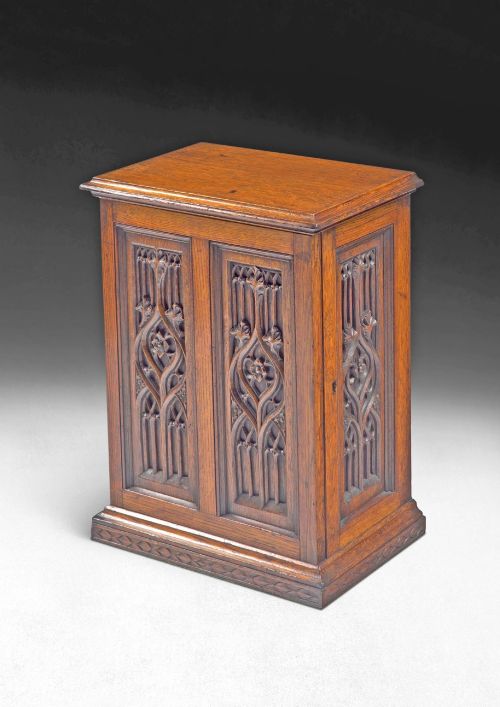
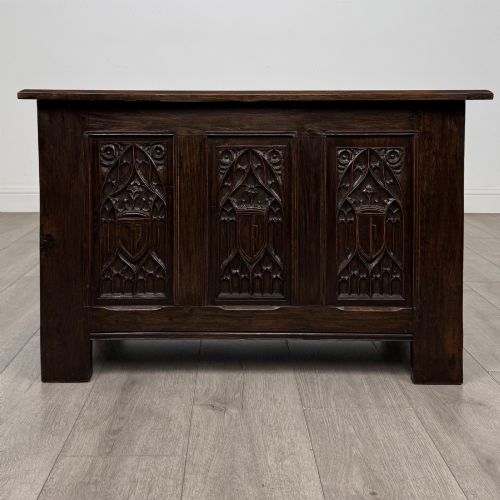
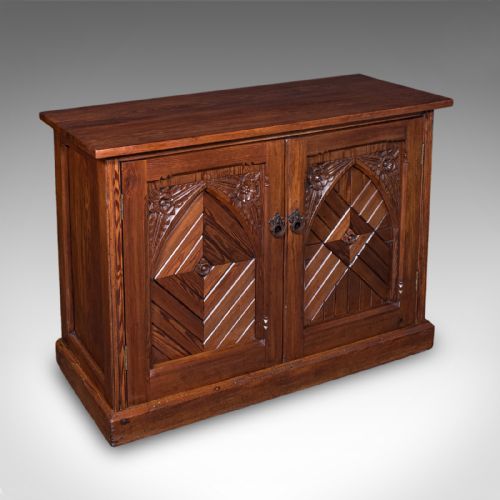
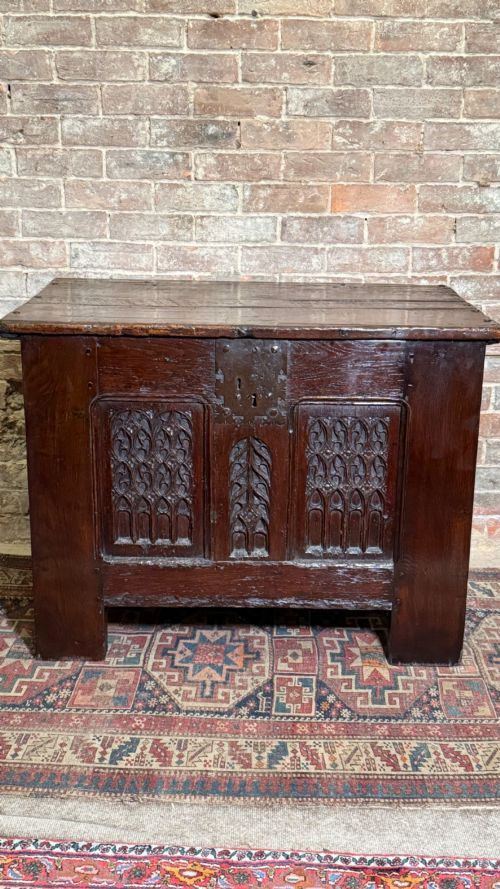
When you search for a gothic tracery oak chest, you encounter robust storage furniture spanning centuries from medieval coffins to Victorian revival cabinets. The pieces listed on this page range from early examples in pre-sixteenth century oak and elm to later nineteenth century interpretations.
The form primarily takes the shape of heavy coffers, storage chests, and blanket boxes alongside occasional bedside cabinets and deed boxes. Oak remains the central material defining these structural storage pieces, often complemented by chestnut or elm.
You are most likely to meet heavily carved panels displaying architectural motifs such as pointed arches and geometric tracery. These designs bridge centuries of craftsmanship, connecting medieval ecclesiastical work with nineteenth century revival pieces.
How they were made
Makers utilised solid timbers primarily in oak, complemented by chestnut, elm, and pine for internal or secondary sections. Iron components such as strap hinges and locks provided both structural reinforcement and security.
Construction relied upon heavy panel framing and hand carving to shape the distinctive architectural tracery. Artisans cut and fitted joints by hand, integrating pegged construction on the earlier coffers and chests.
Gothic Tracery Oak Chest Retail Price Guide 2026
Typical asking prices for gothic tracery oak chest among the pieces listed under this phrase on Sellingantiques today, from the lower quarter to the upper quarter. They describe what is for sale here now, not the wider market.
Listings on this page span multiple centuries, incorporating oak, chestnut, elm, pine, and iron across various styles from the medieval era through the Victorian revival.
What varies in quality
The depth and crispness of the hand carving separate standard storage boxes from exceptional examples. Tracery executed with sharp, confident chisel work demonstrates superior craftsmanship compared to softer or shallower ornamentation.
The integrity of the original timber framing and the proportion of replacement parts dictate the overall authenticity of the piece. Surviving period ironwork and unaltered structural joins elevate the standing of any coffer or cabinet.
The Gothic Tracery Oak Chest Glossary
- Tracery
- Openwork ornamentation in stone or wood, consisting of interlocking ribs that form geometric patterns. It originates from medieval cathedral architecture and translates directly onto the panels of these chests.
- Coffer
- A large wooden chest traditionally used for storing valuables, documents, or textiles. Early examples feature heavy timber boards secured with iron hardware.
- Gothic Revival
- An architectural and decorative style spanning the eighteenth and nineteenth centuries that revived medieval forms. It heavily influenced Victorian cabinet makers creating ecclesiastical style storage.
- Strap hinge
- A long, flat metal hinge fixed to the exterior surface of a chest door or lid. These iron fittings provided vital strength to heavy wooden joints.
Gothic Tracery Oak Chest: Frequently Asked Questions
What is a gothic tracery oak chest?
It is a heavy storage piece built from timber and decorated with architectural motifs inspired by medieval window patterns. These items range from early coffer forms to later revival cabinets.
They serve as both functional furniture and historical artefacts, displaying hand carved panels that reflect different periods of woodworking tradition.
How were these chests used historically?
Historically, these heavy containers secured valuable household goods, church documents, and textiles. Their robust construction and iron locks kept contents safe from theft and damp conditions.
Over the centuries, their utility shifted from secure transport and storage to decorative display pieces within domestic interiors.
How do I live with a gothic tracery oak chest?
Placing these heavy timber pieces requires stable indoor humidity away from direct heat sources to protect the old wood. Their flat tops allow them to function as display surfaces or occasional tables.
They anchor a room with dark wood tones and sculptural carving, pairing naturally with both traditional and modern minimalist spaces.
How do I tell periods apart?
Early pieces from the medieval and pre-sixteenth century eras display primitive board construction and pegged joints with heavy ironwork. Later nineteenth century revival items often show machine sawn elements alongside more uniform carved tracery.
Examining the tool marks on the timber and the style of the joinery reveals whether a piece originates from the primary period or the later revival.