


Glass Counter Display Cabinet
A glass counter display cabinet turns retail history into daily utility, framing goods behind clear panes to elevate any interior.
Glass Counter Display Cabinet
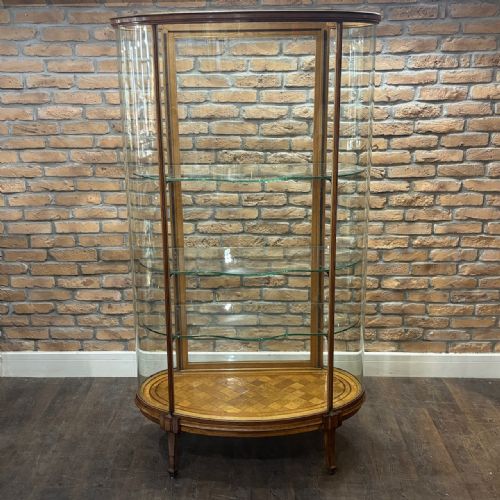
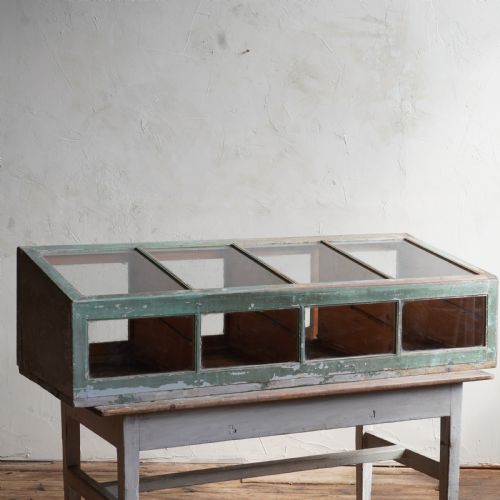
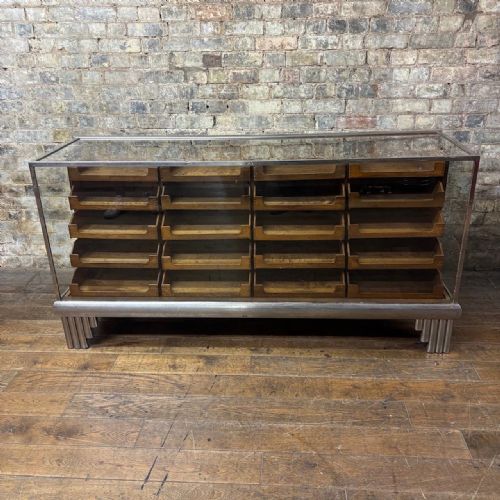
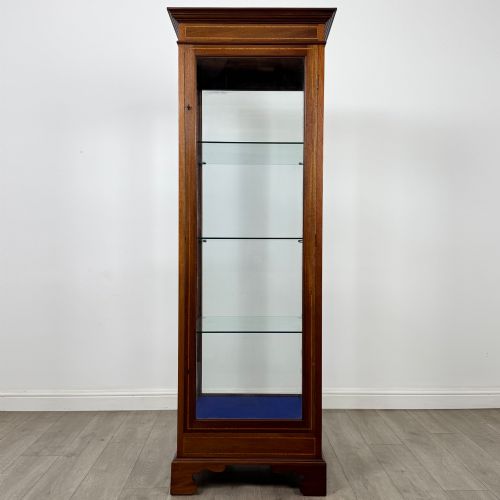
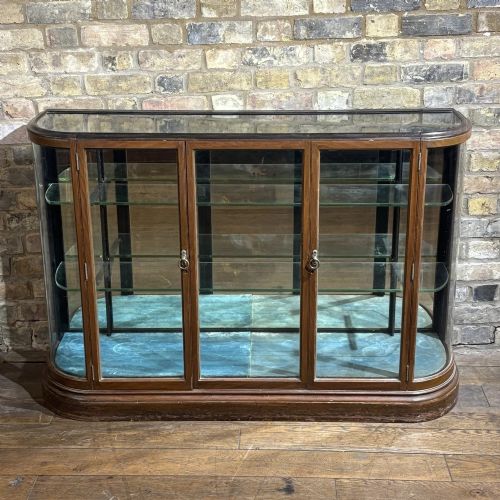
A glass counter display cabinet serves as a functional showcase originating from commercial and retail spaces spanning the Victorian era through the 1930s. Buyers encounter table-top versions, large shop counters, and tall freestanding units designed to exhibit goods securely.
The selections on this page draw from periods including the late nineteenth century, the Edwardian years, and the Art Deco movement. These pieces range from small apothecary and confectionery tabletop cases to substantial commercial counters in oak and mahogany.
Materials and construction
These cabinets utilise timber frames such as mahogany and oak, paired with generous sheets of glass to maximise visibility from all sides. Structural stability relies on joinery suited to heavy daily use in busy shops.
Metal elements including brass, aluminium, and chrome appear in framing, corners, and hardware. Mirrored interiors and velvet linings are integrated to reflect light and cushion delicate goods.
Available forms range from compact tabletop cases to large freestanding haberdashery counters and pharmacy units.
Assessing construction and retention
Quality rests in the integrity of the timber framing and the clarity of the original glass panes. Superior examples maintain uncompromised joinery and authentic hardware without extensive timber replacement.
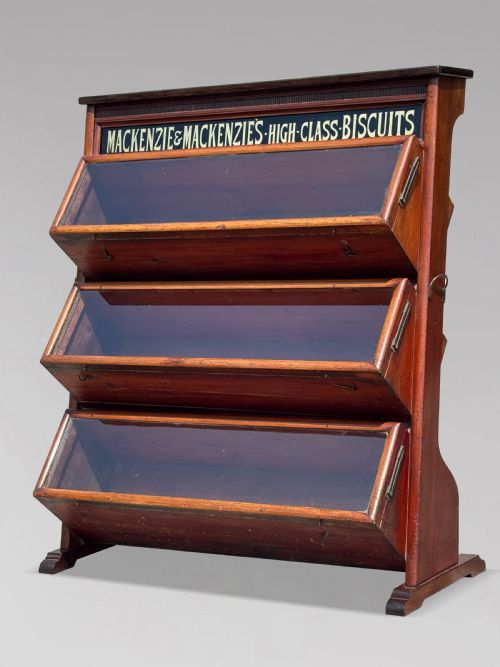
Commercial provenance influences distinction, particularly pieces bearing maker plaques or branded advertising panels for confectioners and chemists. The refinement of decorative details, such as bow ends or ebonised finishes, elevates specific pieces.
F Sage & Co·Dudley & Co·John Stow Ltd·Saml Elliott & Sons
The Glass Counter Display Cabinet Glossary
- Vitrine
- A glass display case or cabinet used for exhibiting objects. These structures prioritise visibility through glazed doors and panels.
- Haberdashery cabinet
- A set of drawers or a counter designed for storing and displaying sewing materials and textiles. They frequently incorporate glass fronts or tiered pull-out trays.
- Bow end
- A curved cabinet end that creates a rounded glass profile. This shaping softens the rectangular geometry of traditional shop counters.
- Countertop display cabinet
- A compact showcase designed to sit upon existing shop furniture. These smaller units positioned goods at eye level for customers.
- Ebonised
- Wood finished to resemble ebony through dark staining and polishing. This treatment provides a stark, formal appearance.
Glass Counter Display Cabinet: Frequently Asked Questions
How do I clean a glass counter display cabinet?
Use a gentle glass cleaner on the panes and a soft cloth for the wooden or metal frames. Avoid harsh chemical sprays that might damage aged timber finishes or original mirror silvering.
Take care around joints and hardware to prevent moisture from seeping into unsealed wood. Regular dusting maintains the clarity of the glass without wearing down historical surfaces.
Can I use a shop display counter at home?
These cabinets adapt readily to domestic settings for organising collections, glassware, or books. Their glass panels allow items to remain visible while protected from dust.
Placement depends on the scale of the piece, as table-top models fit standard furniture whereas full counters require dedicated floor space. Measure clearances carefully to ensure doors and drawers open fully.
How do I distinguish Edwardian from Victorian cases?
Victorian display pieces often utilise heavier timbers and darker finishes, reflecting nineteenth-century taste. Their construction prioritises robust utility and dense ornamentation.
Edwardian designs tend to feature lighter mahogany or oak framing with cleaner geometric lines. These later pieces often incorporate brighter metal fittings and streamlined glass housings.