
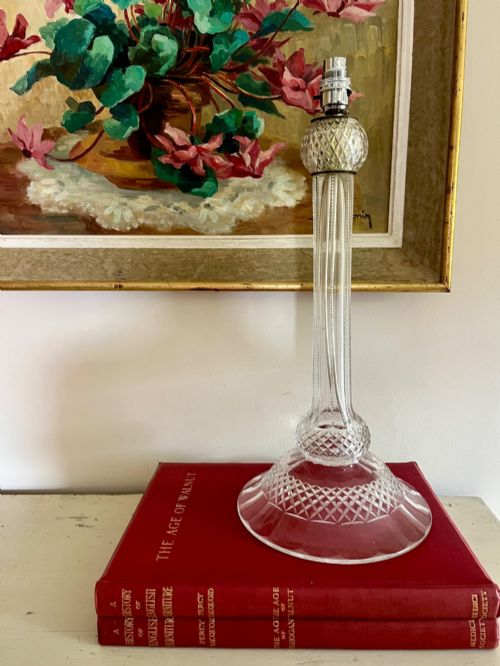


Glass Candlestick Light
These glass candlestick light pieces combine luminous brilliance and structural metalwork, bringing period atmosphere and reflected flame to any interior.
Glass Candlestick Light
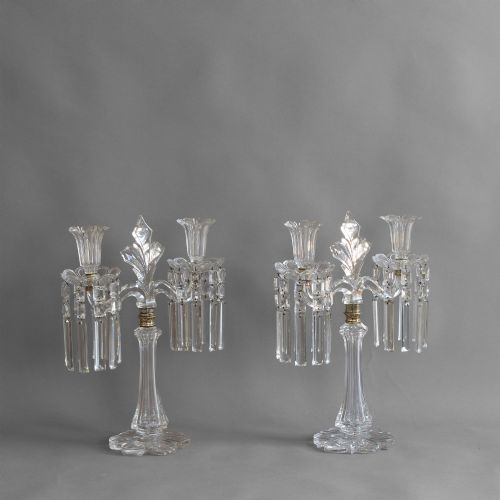
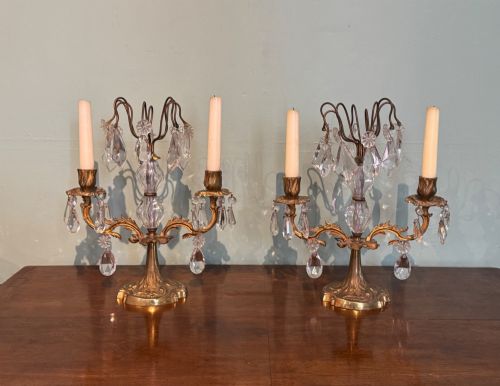
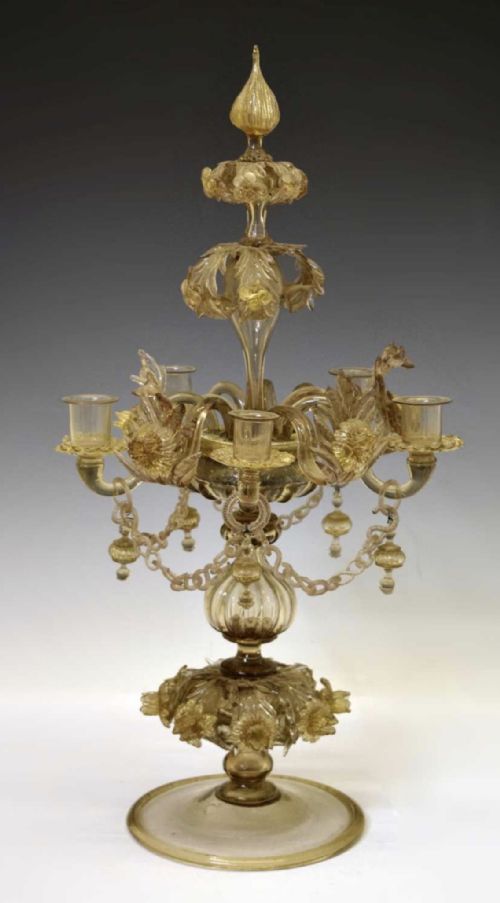
A glass candlestick light brings together transparent or coloured glass components with metal mounts, creating functional illumination for tables and mantelpieces. Buyers encounter various configurations, from simple single-stem candlesticks to multi-branch candelabra and decorative mantel lustres hung with glass drops. The selection spans the nineteenth century through the early twentieth century, incorporating Victorian, Regency, Edwardian, and Art Deco design movements.
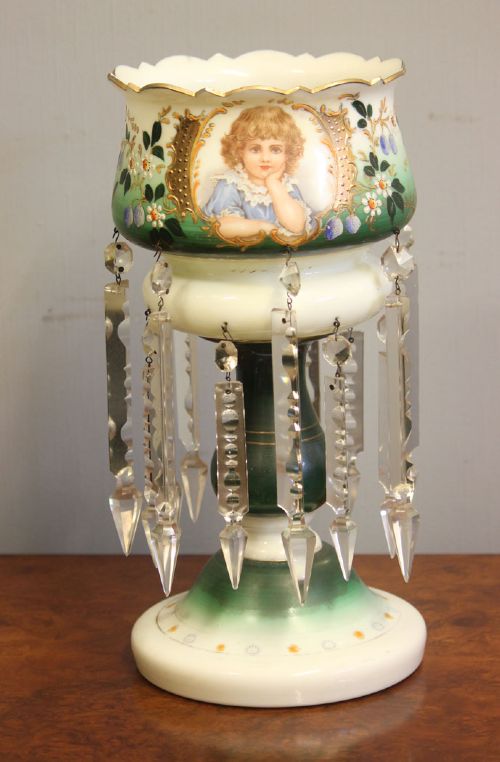
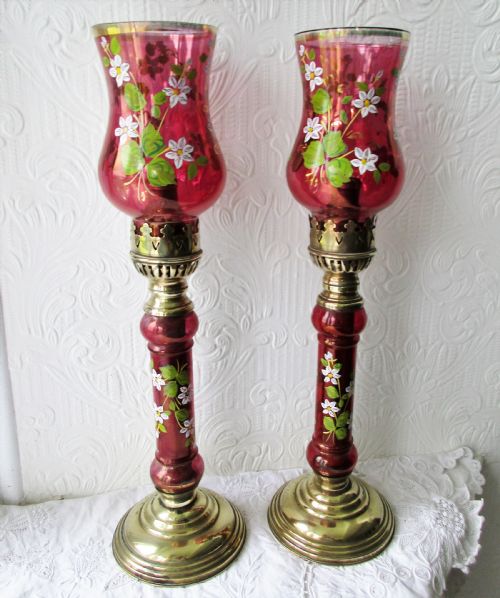
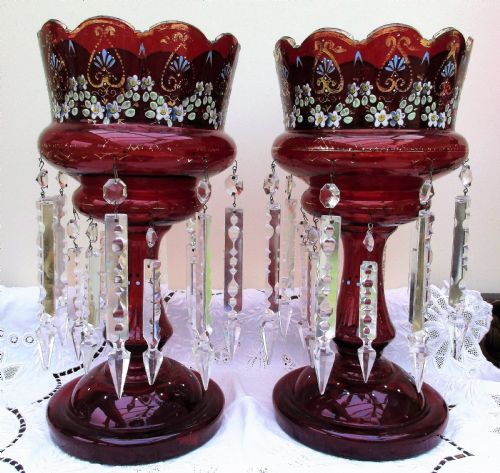
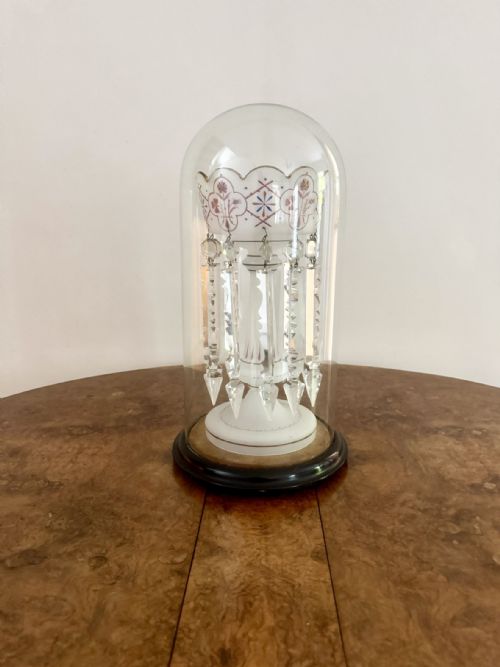
The most common forms on this page include pairs of mantel lustres and table lamps featuring cut glass, ruby glass, or opaline components. Many examples integrate brass, gilt bronze, or silver plating to support the glass shafts and nozzles. Pieces often incorporate glass chimneys, storm shades, or hanging lustres that diffuse and reflect candle or lamp light.
Materials and Construction
Glass production for these items relies on blowing, moulding, and cutting techniques, yielding clear crystal, satin glass, opaline, and deeply coloured ruby or cranberry glass. Artisans shaped molten material into bodies, stems, and hanging lustres, frequently employing wheel-cutting to create faceted surfaces that catch the light. Molten batches took on rich hues through the addition of metallic oxides, producing distinctive red, blue, and green tones.
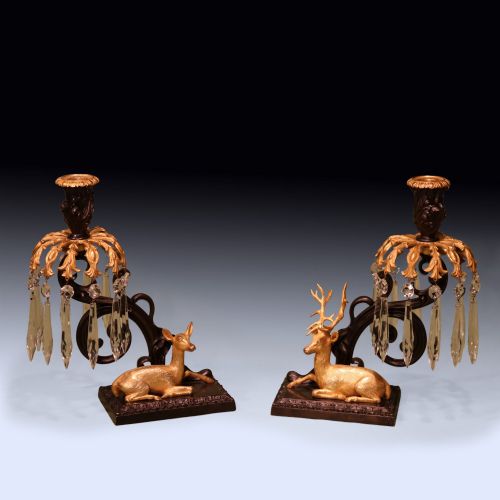
Metalworking formed an essential counterpart to the glass components, utilising brass, bronze, ormolu, and silver plating to create stable bases, sockets, and mounts. Makers secured glass shafts into metal collars or combined them with weighted bases for stability, occasionally incorporating patented elements like oil burners or specialised shade fittings.
Some mantel lustres doubled as sweet-dishes when the candle nozzle was lifted out, proving the Victorians loved dual-purpose tableware.
Evaluating Quality
Quality rests upon the clarity and depth of the glass, the precision of any hand-cut facets, and the integrity of the metal mounts. Superior pieces display crisp, sharp facet cutting without distortion, alongside evenly coloured glass free from unintended cloudiness or bubbles.
The harmony between the glass body and its metal or gilt bronze mounts dictates the overall refinement of the object. Weight, stability, and the presence of a complete set of matching hanging prisms or original glass chimneys distinguish the finest examples in the range.
R Lalique·Clarke
The Glass Candlestick Light Glossary
- Lustre
- A decorative mantel ornament featuring a central vase or candlestick body hung with long glass crystal prisms. These hanging drops catch and refract candlelight or ambient room illumination.
- Opaline
- An opaque or translucent glass developed in soft pastel shades or vivid colours. It provides a smooth, porcelain-like appearance popular in nineteenth-century decorative lighting.
- Cricklite
- A patented candle-lamp system utilising a Clarke's design with specialised thick cut glass shades and brass stands. These assemblies provided safe, enclosed table illumination during the Victorian era.
- Ormolu
- Gilt bronze produced by applying a mercury and gold amalgam to a bronze base, then firing to leave a rich golden layer. It provides durable ornamentation on nineteenth-century mounts.
Glass Candlestick Light: Frequently Asked Questions
What is a mantel lustre?
A mantel lustre is a decorative glass ornament designed to sit on a fireplace mantel, usually featuring a central stem fitted with hanging crystal prisms.
These pieces were made to sparkle in the flickering light of nineteenth-century rooms, combining ornamental glass bodies with functional candle sockets.
How do I date a glass lamp?
Dating relies on examining the manufacturing techniques, the style of the metal mounts, and the specific tint or cut of the glass. Victorian pieces often combine heavy brass with rich ruby glass, while later Edwardian and Art Deco examples show cleaner lines and moulded crystal.
Matching the mounting style, such as rococo revival casting or early twentieth-century electrical conversions, helps narrow the production period.
Were these electrified originally?
Most of these pieces were made for candles or burning oil rather than electricity, dating from eras before domestic power was widespread. Many surviving examples retain their original candle sockets, peg oil lamps, or glass chimneys.
Owners frequently adapt them for modern table use by running discrete internal wiring through the hollow stems without altering the antique metalwork.
What is cranberry glass?
Cranberry glass is a rich pinkish-red transparent material created by adding gold chloride to the molten glass batch. It became extremely popular during the Victorian period for decorative tableware and mantel lustres.
The intense colour ranges from pale rose to deep crimson depending on the gold concentration and the specific furnace temperature used by the glassmaker.