
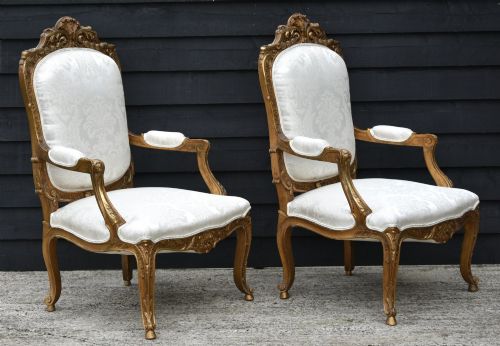
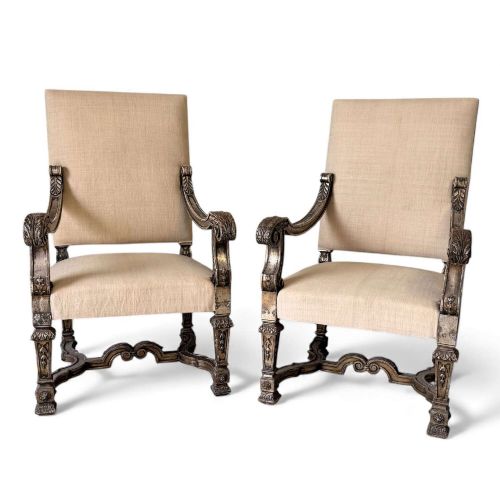
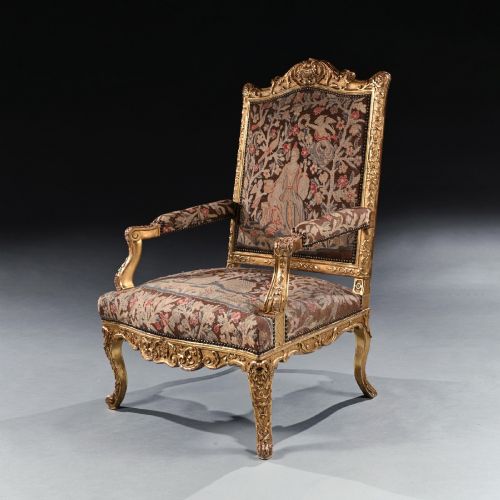
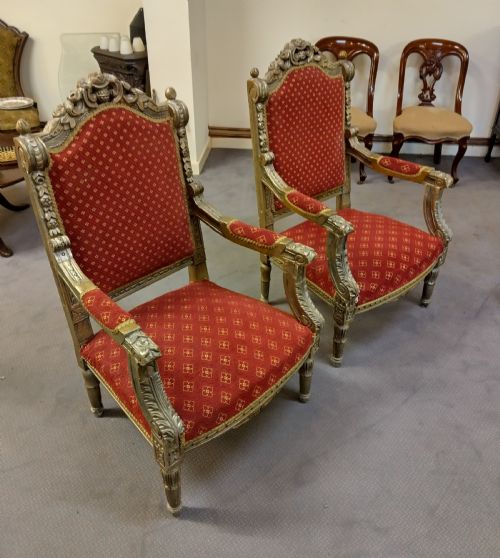
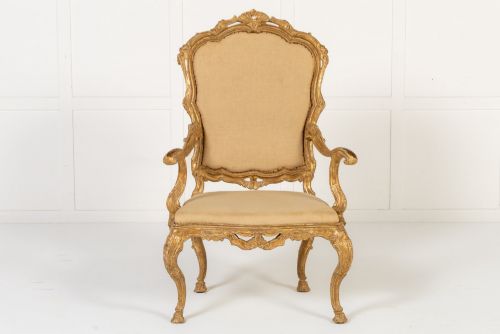


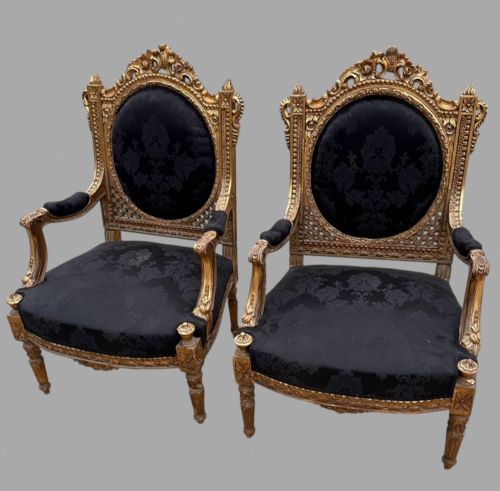


Giltwood Throne Armchair
These giltwood throne armchair pieces combine carved wood and rich upholstery to anchor a room with undeniable presence.
Giltwood Throne Armchair
A giltwood throne armchair is a substantial seating form designed to command attention through scale and surface gilding. When you search for a giltwood throne armchair, you encounter heavy frames built for formal spaces rather than casual lounging.
The pieces appearing on this page span the eighteenth and nineteenth centuries, alongside later revivals up to nineteen-twenty. French and Italian influences dominate the selection, bringing carved details and upholstered seats into domestic interiors.
Most examples survive as pairs, offering symmetrical impact for placement in grand reception rooms or hallways. The forms lean heavily on Rococo, Baroque, and Regence styles, featuring high backs and generous arm rests.
Materials and construction
Makers built these frames using timber such as beech and general wood, shaping the solid structures to support elaborate hand-carved ornamentation. Artisans applied gold leaf or gilt finish over the wooden base, creating the luminous surface characteristic of these chairs.
Upholstery forms a vital part of the construction, utilising damask, linen, tapestry, and various traditional fabrics fixed to the seats and backs. The textiles provide both colour and texture, complementing the metallic sheen of the carved wooden frames.
Several pairs are grand enough to make ordinary visitors hesitate before sitting down, demanding an audience rather than a quiet read.
What separates the finest pieces
The depth and crispness of the wood carving dictate the visual hierarchy among these seats, separating deeply undercut foliage and scrolls from flat, mechanical moulding. Master carvers achieved a fluid movement in the timber that lesser workshops simply traced.
The integrity of the original gilt finish and the quality of the underlying gesso layers determine the surface character over centuries of survival. Weight and proportion also separate ambitious large-scale commissions from standard commercial production.
The Giltwood Throne Armchair Glossary
- Giltwood
- Timber coated with gold leaf or metal leaf applied over a prepared gesso ground. This technique creates a luminous, reflective surface that defines the aesthetic of formal European seating.
- Fauteuil
- An open-armed wooden armchair with upholstered seat and back, originating in France. The arms typically feature padded elbow rests while the sides remain open.
- Regence
- A transitional stylistic period bridging French Baroque and Rococo. It introduces lighter, more curving asymmetrical lines to furniture design.
- Damask
- A reversible figured fabric woven on a loom, commonly utilised for rich upholstery. The pattern contrasts warp-face and weft-face satin weaves.
- Baroque
- A theatrical style of design characterised by exuberant ornamentation, heavy scrolling, and dramatic scale. It forms the foundation for many grand throne armchair designs.
Giltwood Throne Armchair: Frequently Asked Questions
How do I clean a giltwood frame?
Dust the carved wooden surfaces gently with a soft, dry brush to prevent accumulating dirt within the recessed details. Avoid liquid cleaners and chemical solvents entirely, as these substances lift the delicate gold leaf.
Keep the chair away from direct sunlight and damp environments to protect the fragile gesso and wood underneath. Professional conservation is necessary if the gilding begins to flake or separate from the timber.
Were these chairs used for sitting?
These large armchairs served primarily as state seating or decorative markers of status rather than everyday reading chairs. Their upright proportions and rigid backs reflect the formal posture demanded by historic interiors.
Today, they function effectively as focal points in drawing rooms, studies, or bedrooms. Pairing them with softer modern seating balances their imposing scale within a contemporary home.
How can I tell eighteenth century from nineteenth century pieces?
Eighteenth-century examples display hand-cut joinery and carving techniques specific to period tool marks and organic wood movement. The proportions and weight of the timber often feel integrated and purposeful to the original design.
Nineteenth-century revival pieces frequently adopt heavier proportions and machine-assisted preparation while copying earlier styles like Baroque and Rococo. Examining the underside and the wear patterns on the gilding helps clarify the actual age of the frame.
Why do some chairs have silver gilt?
Silver gilt involves applying silver leaf rather than gold leaf to the wooden frame, often treated with a yellow lacquer to mimic gold. This technique provided an alternative metallic lustre valued by Italian workshops.
Over time, silver leaf oxidises differently than gold, developing a deeper, slightly muted tone across the carved surfaces. This variation creates a distinct visual texture compared to standard giltwood.