
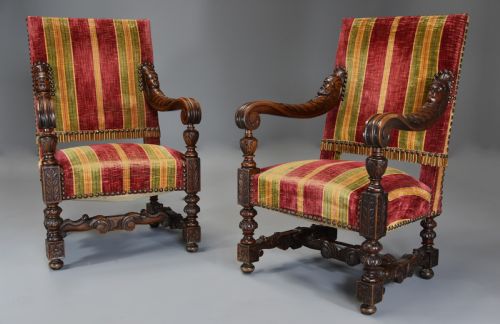


French Baroque Armchair
A french baroque armchair brings dramatic proportion and carved presence to a room, offering deep seats and commanding silhouettes rooted in centuries of European craft.
French Baroque Armchair
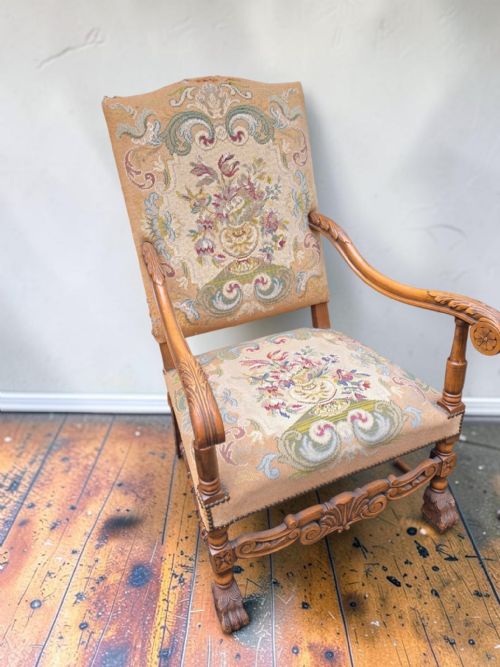
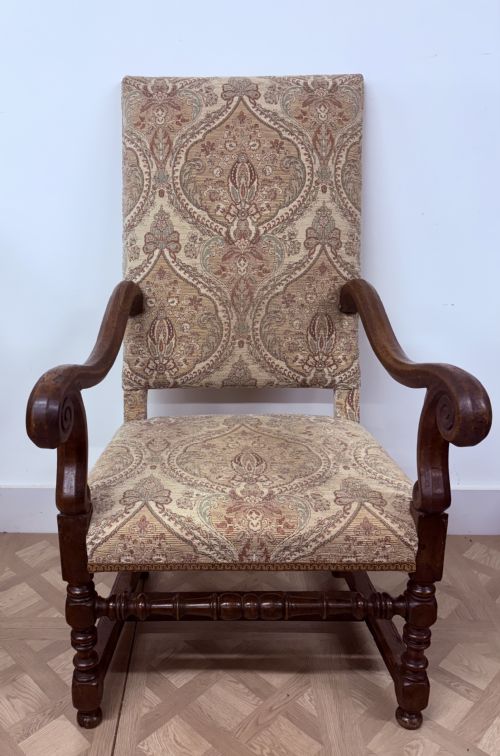
A french baroque armchair represents a formidable seating tradition spanning from the late seventeenth century into later revival periods, drawing on opulent design codes. These seats appear in substantial walnut and gilded finishes, often upholstered in heavy tapestry or needlework.
The examples gathered here range from authentic seventeenth-century pieces to nineteenth-century revivals and early twentieth-century interpretations. Buyers encounter open armchairs, large throne forms, and elbow chairs featuring elaborate carvings.
Originating from grand domestic interiors and chateaux aesthetics, these armchairs command attention through sheer scale and sculptural woodwork. Each piece demonstrates the enduring appeal of baroque revival forms in historic and eclectic settings.
Materials and Construction
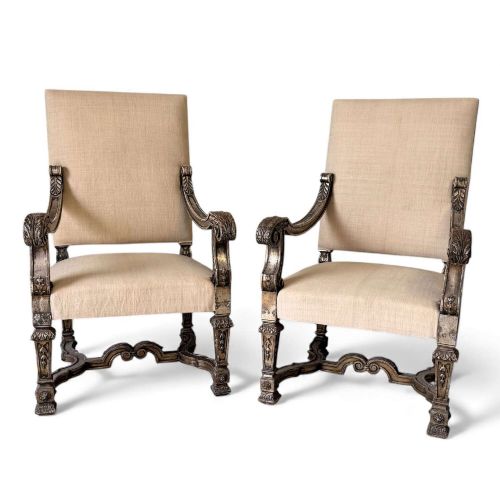
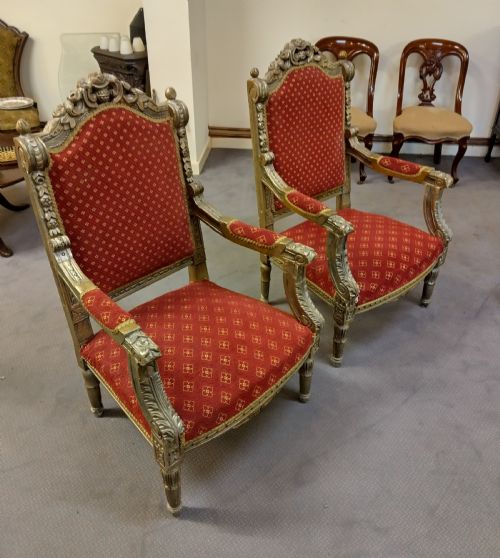
Makers relied primarily on solid walnut as the structural timber, valued for its strength in supporting deep relief carvings and substantial frames. Artisans also utilised giltwood and gilt finishes to achieve the shimmering surfaces demanded by baroque taste.
Upholstery played a central role in construction, employing heavy tapestry, wool needlepoint, leather, and emerald silk secured with brass tacks. Textile application transformed functional wooden armframes into luxurious seats of status.
French Baroque Armchair Retail Price Guide 2026
Typical asking prices for french baroque armchair among the pieces listed under this phrase on Sellingantiques today, from the lower quarter to the upper quarter. They describe what is for sale here now, not the wider market.
Listings feature walnut and giltwood structures upholstered in tapestry, leather, and silk across periods spanning from the seventeenth century to the early twentieth century.
Assessing Quality and Execution
The distinction between ordinary and exceptional pieces rests in the depth and crispness of the wood carving. Superior armchairs exhibit finely detailed ornamentation on the arms and legs, whereas lesser examples show softer, more mechanical execution.
Material integrity and period cohesion also dictate standing, with solid walnut frameworks and period needlework or tapestry elevating a piece. The harmony between the gilded or polished wood and the chosen upholstery fabric defines the overall visual success.
The French Baroque Armchair Glossary
- Baroque Revival
- A nineteenth-century artistic movement that recreated the grand scale and ornate motifs of seventeenth-century baroque design. It inspired furniture makers to produce heavily carved walnut and giltwood seating.
- Giltwood
- Timber coated with a thin layer of gold leaf or metallic finish to create a brilliant, reflective surface. This treatment was favoured on formal ceremonial armchairs.
- Needlepoint
- A type of counted thread embroidery stitched on canvas, frequently used for durable and decorative upholstery on historic chairs. It often depicts floral or figural scenes.
- Tapisserie
- Woven textile used for wall hangings and heavy furniture upholstery. It introduces rich colour and texture to large armchair frames.
French Baroque Armchair: Frequently Asked Questions
How do I place a large armchair?
These imposing seats require generous floor space to allow their carved frames and sweeping arms proper visibility. Position them away from cramped corners where the silhouette might be obscured.
Pairing a large armchair with simpler surrounding furnishings helps balance the visual weight of the room without overcrowding the space.
Are these chairs comfortable for daily use?
The generous proportions and deep seats offer a solid resting place, though historic cushioning differs markedly from modern upholstery standards. Expect firm support rather than sink-in softness.
Using them as statement reading chairs or occasional seating suits their robust wooden construction and supportive fabric panels.
How can I distinguish period pieces from revivals?
Examine the timber ageing, joinery methods, and tool marks visible on the underside of the frame. Seventeenth and eighteenth-century pieces show hand-cut joinery and natural wear patterns accumulated over generations.
Nineteenth-century revival pieces often display machine-assisted precision in the carving and standardised construction techniques typical of later workshops.
What maintenance do upholstered wooden chairs need?
Keep wooden frames conditioned with appropriate wax or polish to prevent the timber from drying out, particularly in centrally heated rooms. Protect gilded surfaces from excessive moisture and abrasive cleaning cloths.
Vacuum tapestry and needlepoint gently with a soft brush attachment to remove dust without disturbing delicate wool fibres.