


Louis XIV Armchair
A louis xiv armchair brings monumental French Baroque grandeur to a room through heavy carved woodwork and rich upholstery.
Louis XIV Armchair
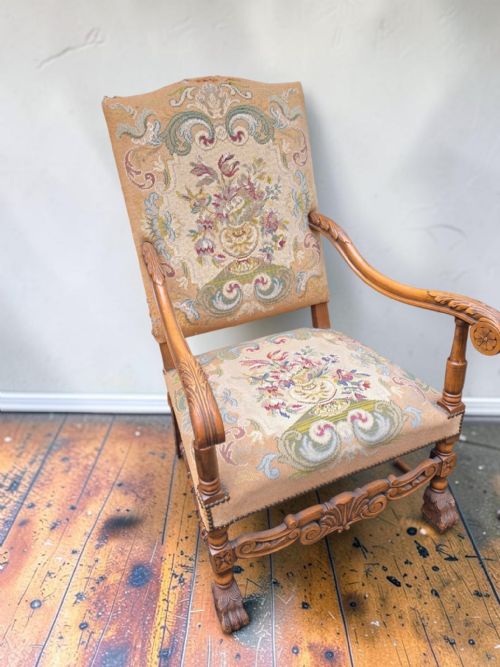
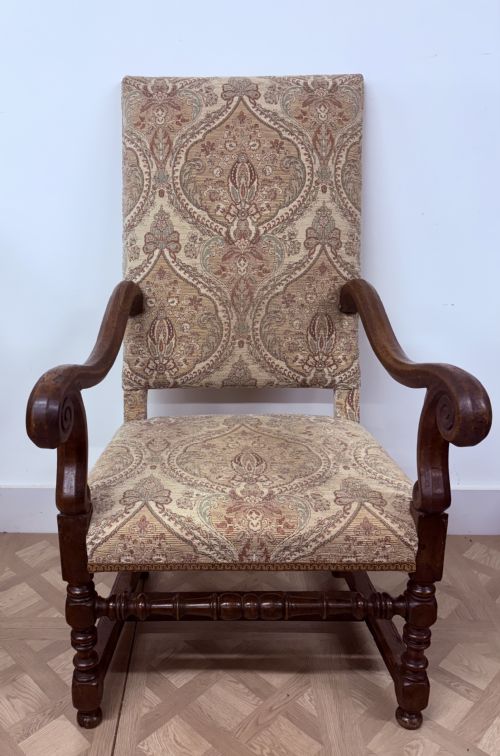
A louis xiv armchair is a commanding seating form defined by upright proportions, substantial armrests, and robust frames. These pieces appear in styles ranging from French Baroque and Louis XIV Style to French Provincial, English Country House, and French Regence. Surviving examples span the 17th century through the 19th century, alongside revival pieces from 1870, 1880, 1900, and 1910.
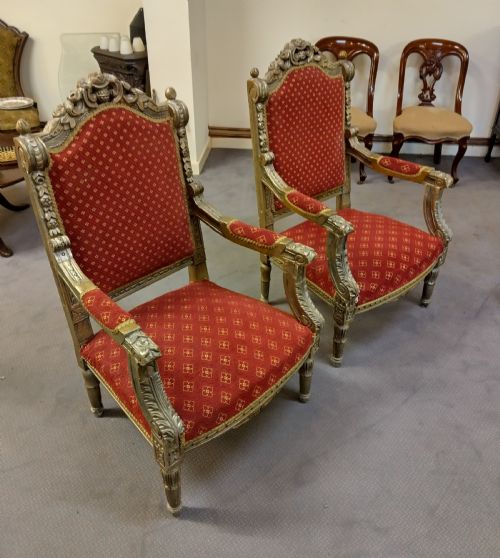
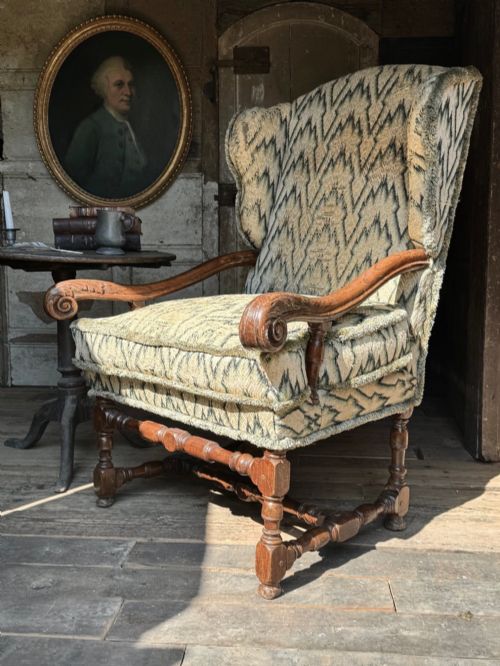
The selections available here include walnut frames, giltwood finishes, and oak wingback forms. Many examples feature open armchair designs or throne proportions suited for formal reception rooms. The upholstery varies from wool tapestry and needlepoint to emerald silk and modern fabric secured with brass tacks.
How they were made
Makers constructed the structural frames from solid timbers such as walnut and oak, shaping the wood into upright posts and curved stretchers. Carvers applied detailed ornamentation directly onto the show frame to create elaborate surface textures and architectural profiles. Gilt finish was often applied to the woodwork to achieve a brilliant metallic appearance.
Upholstery required heavy textiles including tapestry, wool, and silk secured tightly to the frame using brass tacks. Needlework panels depicting historical or floral scenes were frequently worked by hand before being mounted onto the seat and backrest.
The listings span the seventeenth, eighteenth, and nineteenth centuries, alongside revival pieces from the late Victorian and Edwardian eras.
What varies in quality
The depth and crispness of the carved detail on the show frame distinguish standard productions from superior works. Frames executed with deeply undercut foliage and crisply defined scrollwork demonstrate a higher level of joiner and carver skill.
The choice of covering material and the integrity of the underlying upholstery substantially alter the character of the piece. Authentic period needlepoint or heavy tapestry elevates a chair compared to simpler modern fabrics.
The Louis XIV Armchair Glossary
- Show frame
- The exposed wooden structure of an armchair that remains visible around the upholstered sections. It displays the primary carving and finish.
- Giltwood
- Timber coated with a thin layer of gold leaf or metallic paint to create a lustrous golden surface. This finish was favoured for grand ceremonial furniture.
- Needlepoint
- Hand-stitched embroidery worked on a stiff open-weave canvas foundation. It often depicts elaborate figurative or botanical scenes on seat covers.
- Wingback
- An upholstered chair form featuring protective side panels attached to the backrest. These wings historically blocked draughts in large rooms.
- Tapestry
- A heavy hand-woven textile featuring pictorial designs. It serves as a durable and decorative covering for formal seating.
Louis XIV Armchair: Frequently Asked Questions
What is a louis xiv armchair?
A louis xiv armchair is a grand seating form originating in seventeenth-century France, characterised by a high back, substantial armrests, and heavy carved woodwork. Revival versions from later centuries also emulate this imposing monumental style.
These pieces function primarily as statement seating in principal rooms, providing both architectural presence and upholstered comfort.
How were they used historically?
Historically, these armchairs were positioned in state apartments and reception rooms to project status and authority during formal audiences. Their imposing scale reflected the rigid etiquette of the French court.
Occupants of high rank sat in these chairs while others stood, making the furniture an essential marker of social hierarchy.
How do I live with one?
Living with a louis xiv armchair requires balancing its strong visual weight with the surrounding interior. Placing it as a focal point in a drawing room or study allows the carved woodwork and textile covering to be appreciated.
Protecting antique textiles from direct sunlight and heavy daily wear ensures the upholstery survives in good condition.
How do I tell periods apart?
Differentiating periods depends on examining the joinery, timber patination, and the specific style of the carved ornament on the frame. Seventeenth-century examples display authentic age-related wear to the walnut, whereas nineteenth-century revival pieces often exhibit machine tooling and heavier proportions.
Looking closely at the construction methods inside the seat rails helps clarify the actual date of manufacture.