

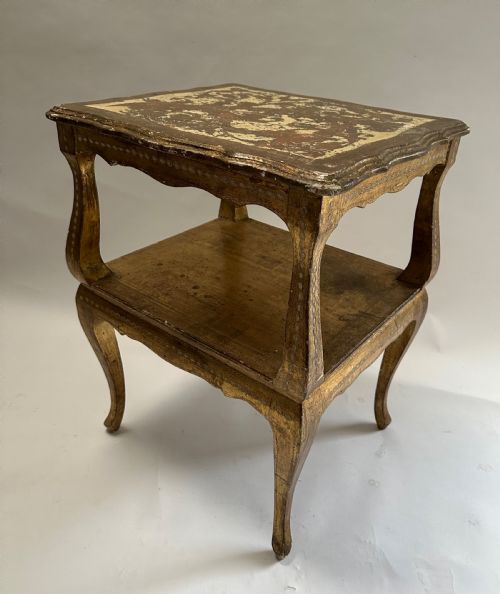
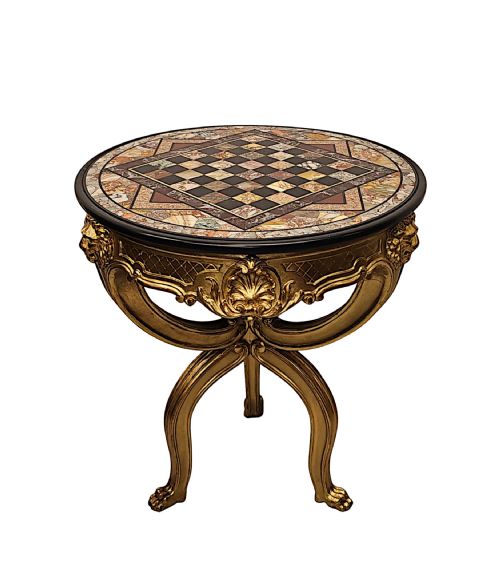
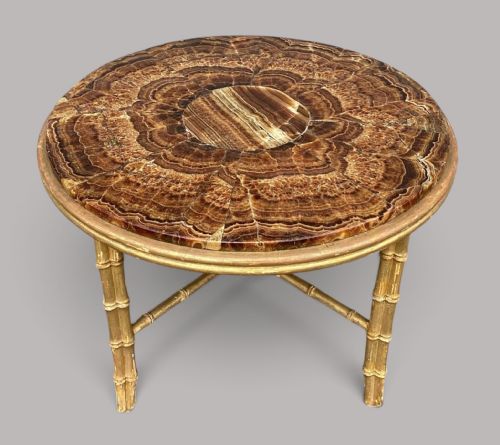
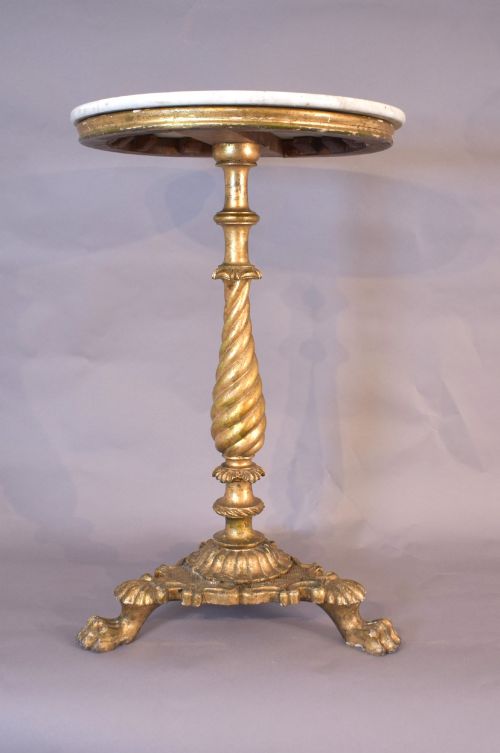




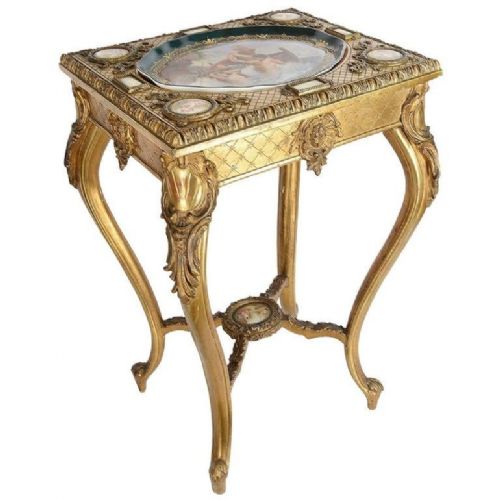
Giltwood Occasional Table
A giltwood occasional table brings instant warmth and metallic theatre to a room through carved surfaces and classical proportions.

Giltwood Occasional Table
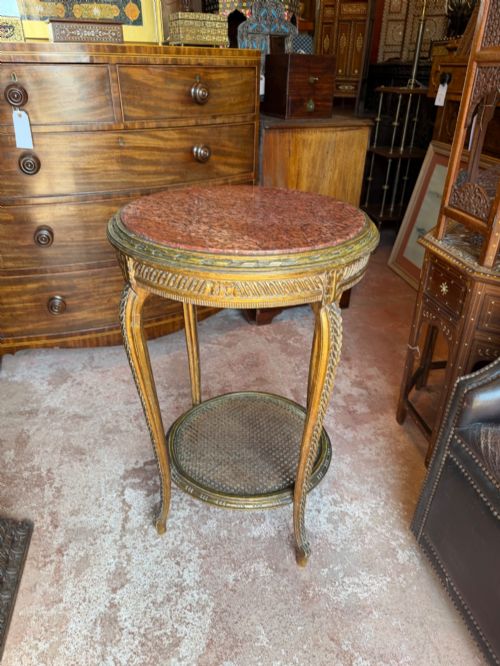
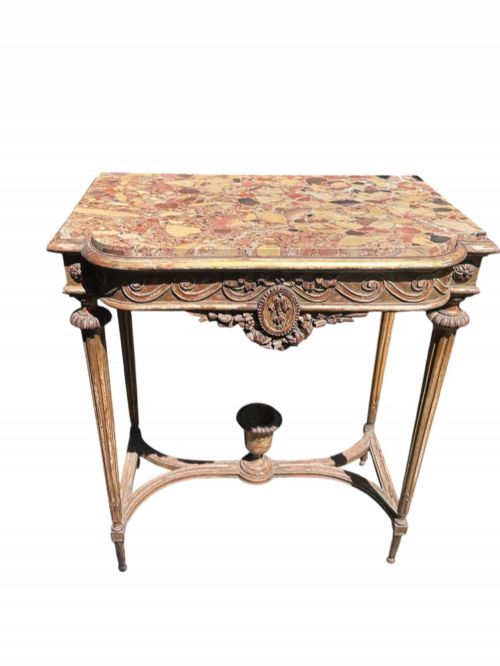
A giltwood occasional table functions primarily as a decorative surface or plant stand within French Chateau, Victorian, and Regency interiors. These pieces appear in forms ranging from side tables and centre tables to urn stands, coffee tables, and wine tables.
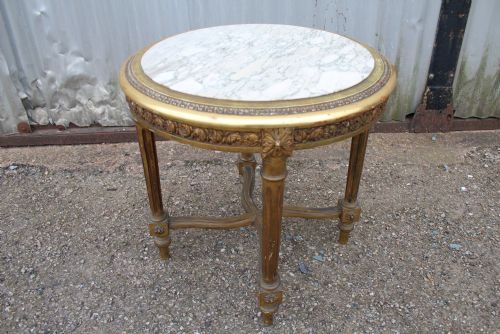
Buyers meet nineteenth-century French designs most frequently on this page, often featuring circular marble tops and tripod supports. Styles span Louis XVI, Louis XVI style, French neoclassical, and French rococo revival alongside Victorian examples.
Materials and construction methods
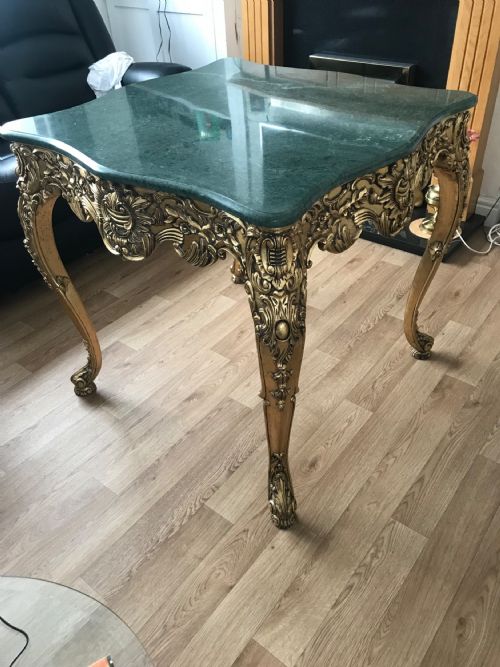
Craftsmen built these tables using wood frameworks finished with gesso and gold leaf to create the characteristic metallic sheen. Many examples incorporate carved wooden frames supporting polished stone surfaces.
The material palette extends beyond basic timber and gilt to include amboyna, onyx, solid green marble, red velvet, and porcelain mounts. Structural elements often showcase detailed flower mouldings, carved swan motifs, and bobbin turnings.
Giltwood Occasional Table Retail Price Guide 2026
Typical asking prices for giltwood occasional table among the pieces listed under this phrase on Sellingantiques today, from the lower quarter to the upper quarter. They describe what is for sale here now, not the wider market.
Certain nineteenth-century tables arrive with secret porcelain mounts and red velvet inserts, proving that Victorian parlour items loved a hidden flourish.
Evaluating quality and execution
Quality rests in the crispness of the wood carving and the depth of the gilding applied over the gesso layers. Superior pieces display finely articulated details like flower mouldings and figural supports rather than cast resin substitutes.
The selection of the top also dictates standard, where thick polished green marble, onyx, or figured amboyna elevate the piece far beyond simpler wooden surfaces.
The Giltwood Occasional Table Glossary
- Giltwood
- Timber that has been coated with gold leaf or metal leaf over a prepared gesso ground. This finish provides the bright metallic appearance characteristic of these decorative furnishings.
- Gesso
- A plaster-like mixture applied to wood surfaces as a smooth base before applying gold leaf. It allows carvers to achieve sharp relief details beneath the gilding.
- Tripod table
- A freestanding small table supported by a central pillar above three feet. This configuration appears frequently among nineteenth-century examples.
- Gueridon
- A small French table, often circular, designed to hold a candle, vase, or decorative object. The term originates from seventeenth-century furniture forms.
Giltwood Occasional Table: Frequently Asked Questions
Where should I place an occasional table?
These tables suit corners, hallways, or beside seating areas where a compact surface is needed for lamps or decorative objects. Their finished backs and detailed carving also allow them to sit centrally in a room.
Because many feature delicate marble tops and gilded finishes, keep them away from heavy daily wear or areas with high moisture.
How do I clean a marble top?
Wipe the marble surface gently using a soft, damp cloth with mild, pH-neutral soap. Avoid acidic cleaners, vinegar, or harsh chemicals that can etch or dull the polished stone.
Dry the surface thoroughly afterwards to prevent water marks on older stone.
What is the difference between Louis XVI and Regency styles?
Louis XVI style draws from French neoclassical restraint, featuring straight fluted legs, symmetrical classical motifs, and giltwood frames. Regency design reflects early nineteenth-century British taste, often incorporating exotic timbers like amboyna alongside classical gilt details.
Both styles prioritize architectural proportion and refined decorative carving.