
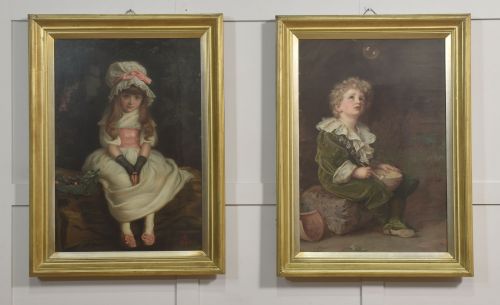
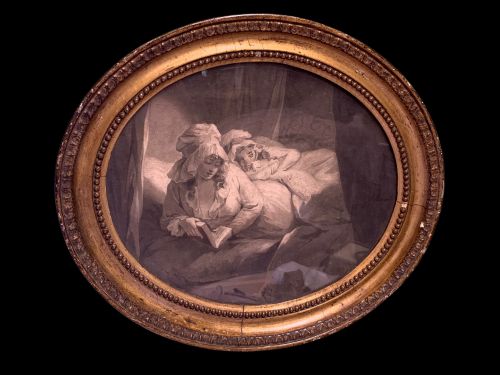
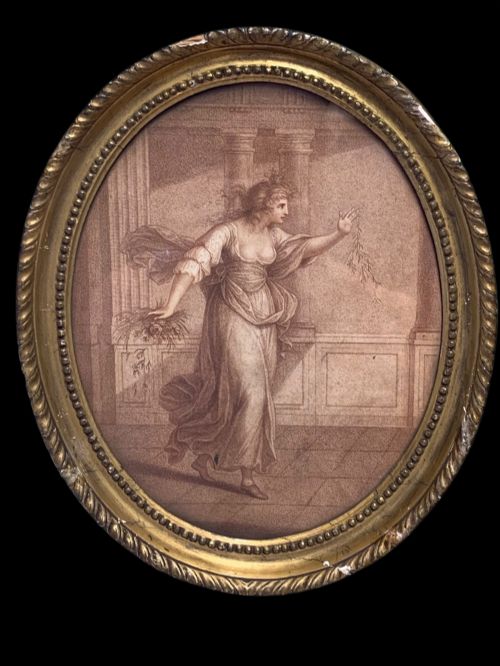
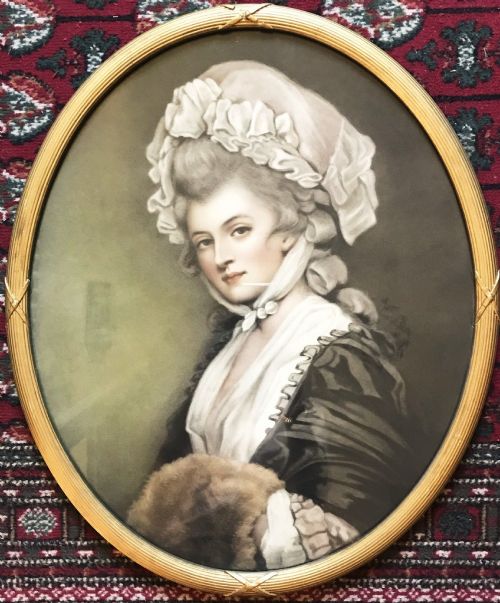


Giltwood Framed Prints
These giltwood framed prints combine period imagery with gilded surrounds, offering collectors a way to bring antique wall art into any room.
Giltwood Framed Prints
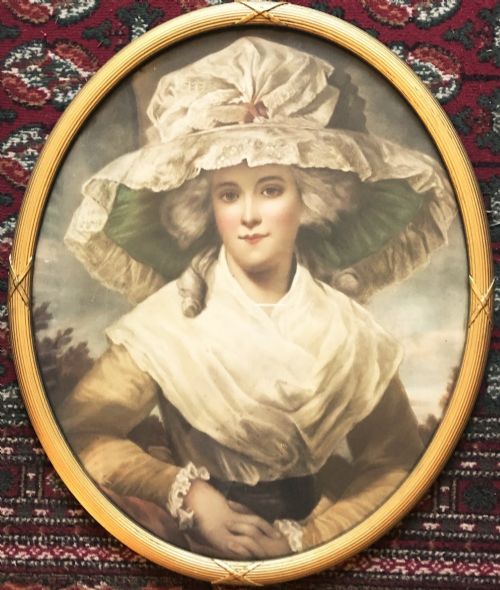
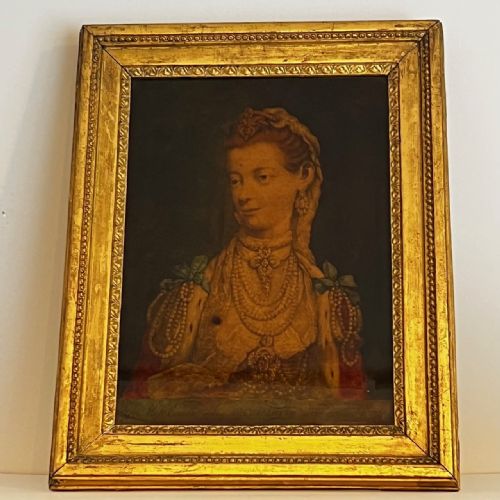
Giltwood framed prints encompass a diverse range of wall art housed within gilded wooden surrounds, spanning from the eighteenth century through to the Edwardian period. When you search for giltwood framed prints, you encounter formats such as stipple engravings, mezzotints, lithographs, and reverse glass prints.
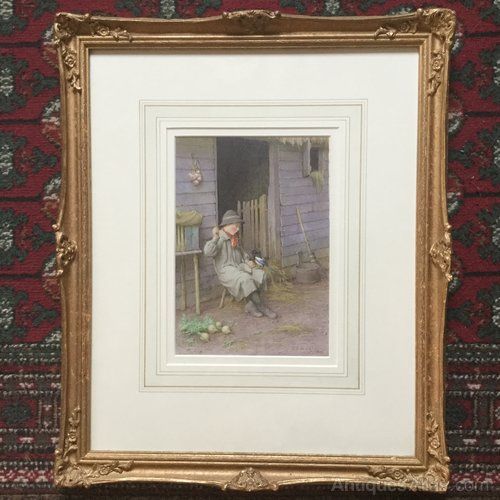
The selection ranges from Georgian and Regency examples to Victorian and Edwardian pieces, including portraits, classical scenes, and botanical subjects. Many items feature period frames enclosing paper prints, watercolours, or engravings under glass.
You will find matched pairs and sets alongside single large portrait prints and narrative works. The framing often matches the period of the artwork, utilising gesso and gold leaf to create ornate or scroll-mounted visual impact.
Materials and construction
Makers formed the surrounds from wood, applying layers of gesso to build up decorative moulding before gilding the surface with gold leaf or gilt. This technique created the bright reflective finish characteristic of period frames.
The artworks themselves utilise paper as a base for engraving, etching, lithography, and watercolour techniques, occasionally protected behind glass or dome-fronted glazing. Some pieces incorporate ebonised wood details alongside the deep giltwood mounts.
The inventory includes stipple engravings, lithographs, and reverse glass prints housed within ornate giltwood frames.
Evaluating quality and execution
Quality rests in the crispness of the impression on the paper and the depth of hand-finishing on the surrounding giltwood frame. Finer examples display intricate gesso moulding and well-preserved gold leaf rather than flat, uniform modern paint.
The relationship between the print and its frame dictates visual cohesion, with period-matched combinations commanding greater interest. The skill evident in hand-coloured lithographs or early mezzotints further elevates the piece.
Charles Edward Wilson·Frank Moss Bennett·Adam Buck·Henry Corbould
The Giltwood Framed Prints Glossary
- Giltwood
- Wood that has been coated with gold leaf or a gilt finish. It forms the primary decorative border for many antique works on paper.
- Gesso
- A plaster-like mixture applied to wood frames to create raised ornamentation before gilding. This ground layer allows for sharp, sculptural details.
- Mezzotint
- A printmaking process of the intaglio family where the plate is roughened to achieve rich tonal gradations. It produces soft, velvety dark areas.
- Chrystoleum
- A photograph or print made transparent and hand-coloured from the back, then mounted under convex glass. This technique creates a luminous, three-dimensional effect.
- Reverse glass print
- An image applied directly to the reverse side of glass, often seen in Georgian and Regency interior decoration. The smooth glass surface protects the pigment underneath.
Giltwood Framed Prints: Frequently Asked Questions
How do I date a giltwood frame?
Dating relies on the construction techniques of the wood and gesso, alongside the profile of the moulding. Georgian and Regency frames often feature different decorative motifs compared to Victorian or Edwardian examples.
Examining the backboards, fixings, and the type of gold leaf applied provides further clues to the manufacturing era.
Are these prints original to their frames?
Many pieces retain their period frames, which have housed the artwork for generations. However, some items bring together a period print and a contemporary frame of the same era.
Checking for uniform wear between the artwork and the surrounding giltwood helps determine if they have a long association.
How should I hang and light them?
Giltwood frames require stable wall fixings capable of supporting the combined weight of the wood, glass, and paper. Position them away from direct sunlight to protect delicate watercolours and paper from fading.
Gentle ambient lighting highlights the gold leaf without generating excessive heat that could damage the gesso or the print beneath.
What is a reverse glass print?
A reverse glass print involves transferring or painting an image directly onto the back of a glass panel. This method was popular during the Georgian and Regency periods for decorative wall pieces.
The glass protects the image surface while imparting a glossy finish that catches the light differently than paper.