






Giltwood Coffee Table
A giltwood coffee table brings gilded elegance and classic marble or wood surfaces into a room, offering both decorative presence and practical low-level service.

Giltwood Coffee Table
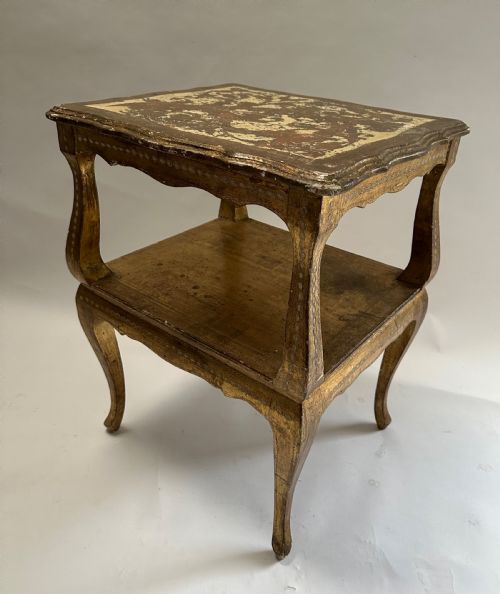
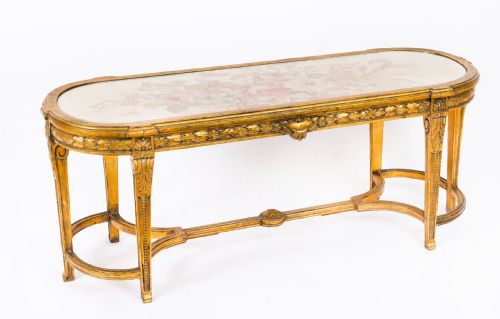
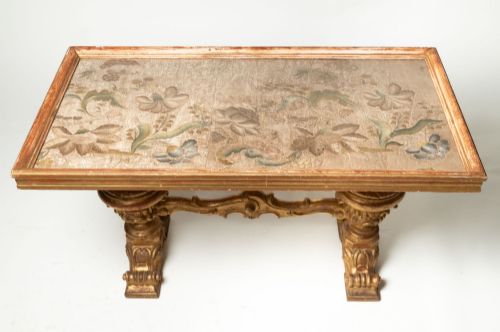
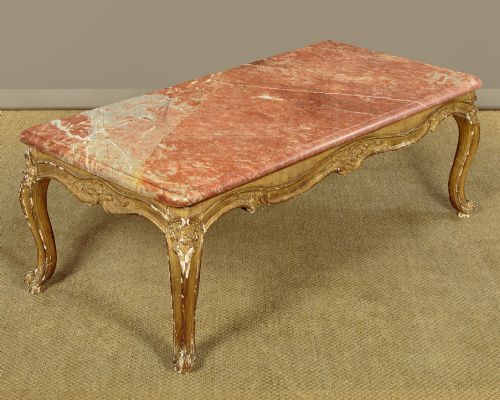
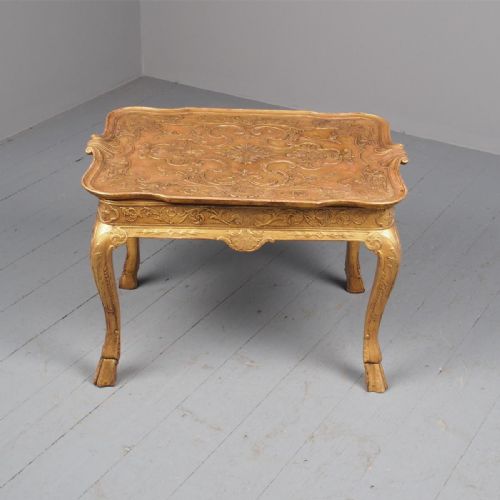
A giltwood coffee table provides a low surface for daily use, drawing upon historic forms ranging from French revival styles to Italian baroque designs. When searching for a giltwood coffee table, buyers encounter diverse iterations including adapted side tables, low occasional tables, and grand centre tables.
The inventory spans from the nineteenth century into the twentieth century, incorporating periods like the Georgian era, Regency, and various revival movements. These pieces often feature carved wooden frames finished with gold leaf or gesso, frequently paired with stone tops.
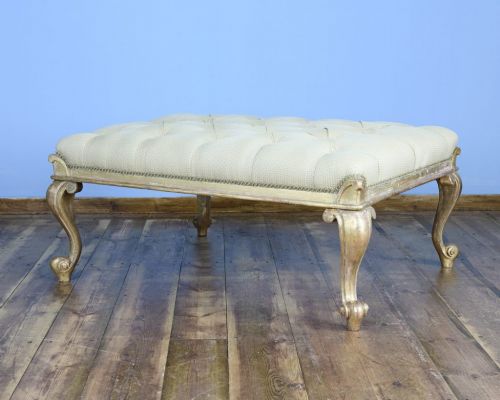
Lower table heights predominate, transforming older occasional pieces, footstools, and low stools into functional coffee tables suited to modern seating arrangements. French and Italian influences dominate the aesthetic, presenting ornate carved details alongside simpler classical proportions.
Materials and construction
Craftsmen built these tables using wood frames coated in gesso before applying fine gold leaf or paint finishes to achieve the characteristic metallic sheen. Many examples incorporate solid timber structures beneath the gilt surface, utilising materials such as oak and walnut alongside patinated and ebonised elements.
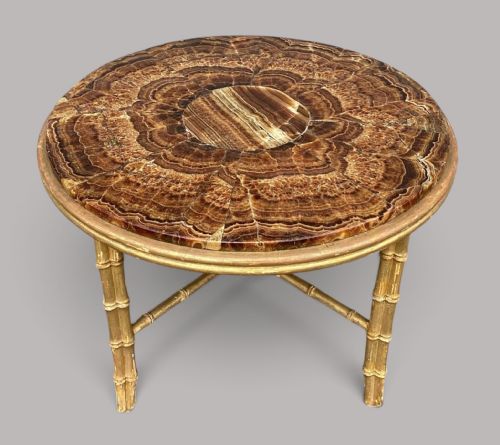
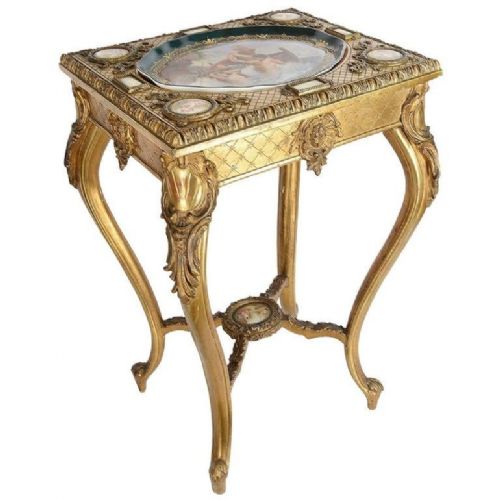
Surface tops frequently showcase heavy decorative stones, including marble, Siena marble, onyx, and malachite, sometimes complemented by glass or porcelain mounts. The combination of carved giltwood frames and cool stone tops defines the structural integrity and visual weight of the pieces.
Giltwood Coffee Table Retail Price Guide 2026
Typical asking prices for giltwood coffee table among the pieces listed under this phrase on Sellingantiques today, from the lower quarter to the upper quarter. They describe what is for sale here now, not the wider market.
Materials recorded across the inventory include giltwood, marble, gold leaf, gesso, glass, wood, paint, onyx, malachite, and porcelain.
Assessing craftsmanship and execution
Quality reveals itself in the depth and crispness of the wood carving on the gilt frame, where hand-tooled details surpass mechanical production. The application of gold leaf and gesso displays varying levels of finesse, influencing how light reflects across the ornamented surfaces.
The choice and thickness of the inset top, whether high-grade marble, onyx, or porcelain panels, contribute significantly to the overall solidity and visual impact. Integration between the historic frame and any adapted low-level structure demonstrates the skill applied during conversion or preservation.
The Giltwood Coffee Table Glossary
- Giltwood
- Wood that has been coated with gold leaf or gold paint. This technique creates a bright, reflective metallic finish historically associated with luxury furniture.
- Gesso
- A plaster-like mixture applied to wood surfaces as a base for gilding. It provides a smooth ground that artisans can carve into intricate relief details before applying gold leaf.
- Siena marble
- A distinctive yellow-gold marble quarried in Italy, featuring dark veining. It appears frequently on grand classical tables.
- Centre table
- A freestanding piece designed to be viewed from all sides, often positioned in the middle of a room. Many examples feature robust architectural bases.
- Occasional table
- A small, movable table intended for specific, intermittent uses rather than heavy, permanent placement.
Giltwood Coffee Table: Frequently Asked Questions
Are these tables converted from older furniture?
Many low tables listed under this category originate as nineteenth-century or early twentieth-century side tables, occasional tables, or footstools that have been reduced in height to function as coffee tables.
This adaptation allows historic furniture forms to meet contemporary interior requirements while retaining their original carved frames and surface materials.
What maintenance do marble and gilt surfaces need?
Marble tops require simple cleaning with a damp cloth and mild soap, avoiding acidic substances that can etch the stone polish. Giltwood frames benefit from gentle dusting with a soft, dry brush to protect the delicate gold leaf application.
Preventing exposure to excessive moisture and direct sunlight helps preserve both the metallic finish and the underlying wood structure over time.
How do I identify French revival styles?
French revival pieces often display characteristic Louis XVI or Rococo motifs, including curved cabriole legs, floral carvings, and acanthus leaf details. These designs emphasise ornate symmetry and decorative elegance drawn from eighteenth-century royal aesthetics.
The presence of Aubusson textile elements or specific painted finishes further connects these tables to traditional French decorative arts.
Can these tables handle heavy daily use?
The structural stability depends largely on the timber frame and the weight of the inset stone top. Sturdy wood construction and solid marble inserts provide a durable surface for everyday items.
Careful placement away from high-traffic hazards protects the delicate carved gilding along the edges and legs from accidental impacts.