

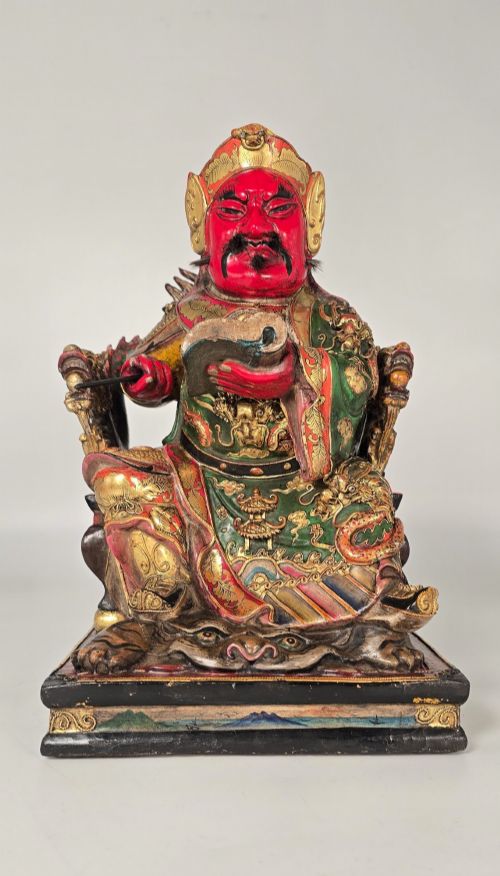


Gilt Wood Statue
A gilt wood statue brings sculptural presence into a room, catching the light across carved surfaces finished in gold leaf.
Gilt Wood Statue
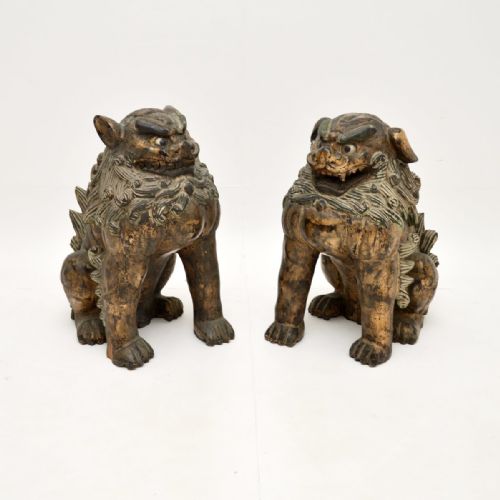
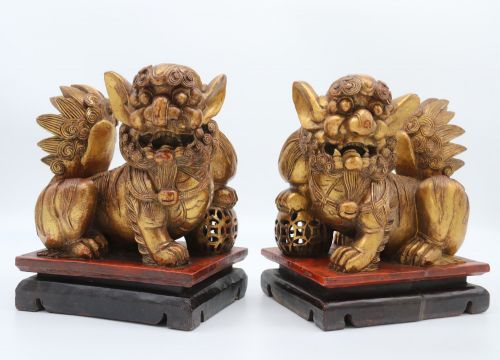
When you search for a gilt wood statue, you encounter carved wooden figures finished with gold leaf, gesso, and polychrome paint from various centuries. These pieces encompass religious subjects, temple guardians, decorative animals, and mythological figures originating from European and Asian workshops.
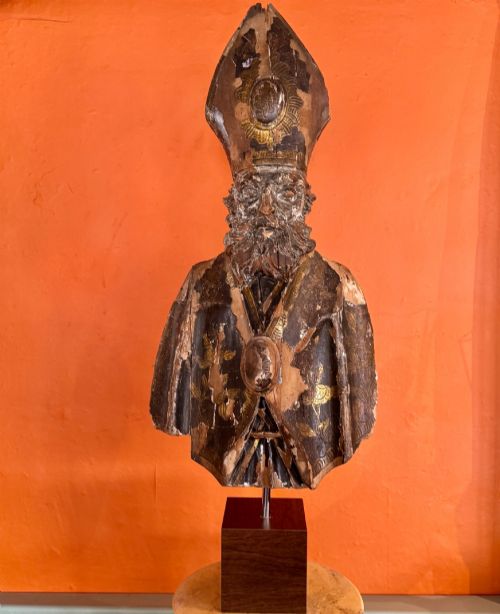
The versions most commonly met on this page include Italian ecclesiastical busts, Venetian figures on stands, and Chinese Buddhist statues carved from wood. European examples often date from the seventeenth and eighteenth centuries, while Asian Buddhist sculptures frequently represent nineteenth-century or earlier traditions.
Forms range from large temple guardians and reclining Buddhas down to smaller devotional saints, angels, and decorative architectural elements like eagles and swans. Each piece reflects the aesthetic and religious priorities of its specific period and region, whether Italian Baroque or Chinese traditional.
How they were made
Many surfaces received additional polychrome paintwork or lacquer over the gilding, combining metallic brilliance with rich colour. The application of gold leaf required skilled hands to lay delicate metal sheets over sizing agents on the prepared wood base.
Several figures hold positions of permanent readiness, including reclining Buddhas, temple guardians, and waiters balancing trays.
What varies in quality
Proportion and stance also separate finer works from rigid or static examples, particularly in complex figures such as temple guardians, angels, and human subjects. The harmony between the underlying wood structure and the decorative finish determines the visual impact of the sculpture.
The Gilt Wood Statue Glossary
- Gesso
- A plaster-like mixture applied to a wooden substrate as a smooth base for gilding and painting. It allows intricate details to be carved or modelled before the application of gold leaf.
- Polychrome
- The practice of decorating architectural elements, sculpture, and pottery in a variety of colours. In these pieces, paint often complements or underlies the gilt surfaces.
- Shabti
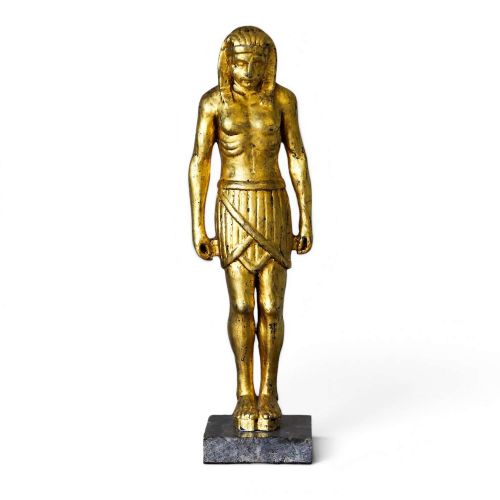
- A funerary figurine used in ancient Egyptian religion intended to act as a servant for the deceased in the afterlife. Examples found in later collections often reflect Grand Tour enthusiasm for antiquities.
- Ecclesiastical
- Relating to the Christian Church or its clergy, often describing items created for use within religious settings or shrines. These pieces frequently depict saints, bishops, and biblical figures.
- Parcel-gilt
- A term describing an object where only certain areas are gilded while other parts show exposed wood or painted surfaces. This technique highlights specific decorative details against a contrasting background.
Gilt Wood Statue: Frequently Asked Questions
How do I clean a gilt wood statue?
Dust surfaces gently with a soft, dry brush to prevent accumulation without disturbing fragile gold leaf. Avoid liquid cleaners and chemical solvents entirely.
Keep pieces away from direct sunlight and fluctuating humidity to protect the underlying wood and gesso layers from cracking.
Where were these statues originally displayed?
European examples often stood in churches, private domestic shrines, or grand reception rooms as devotional or decorative focal points. Asian figures frequently originated in temples or domestic altars.
Today, collectors place them on mantelpieces, dedicated stands, or granite bases to highlight their sculptural forms.
How can I tell the period of a carved statue?
Examine the tool marks, the composition of the gesso underneath the gold leaf, and the natural ageing of the timber. Stylistic clues such as Baroque curves or Qing Dynasty clothing conventions also point to specific eras.
Comparing the wear patterns on the polychrome and gilt surfaces helps confirm age.
What is a Grand Tour figure?
Grand Tour pieces are souvenirs acquired by wealthy travellers touring cultural sites in Europe and the Mediterranean during the eighteenth and nineteenth centuries. These items often replicated classical sculptures or Egyptian antiquities.
They represent a distinct collecting tradition focused on education and classical taste.