

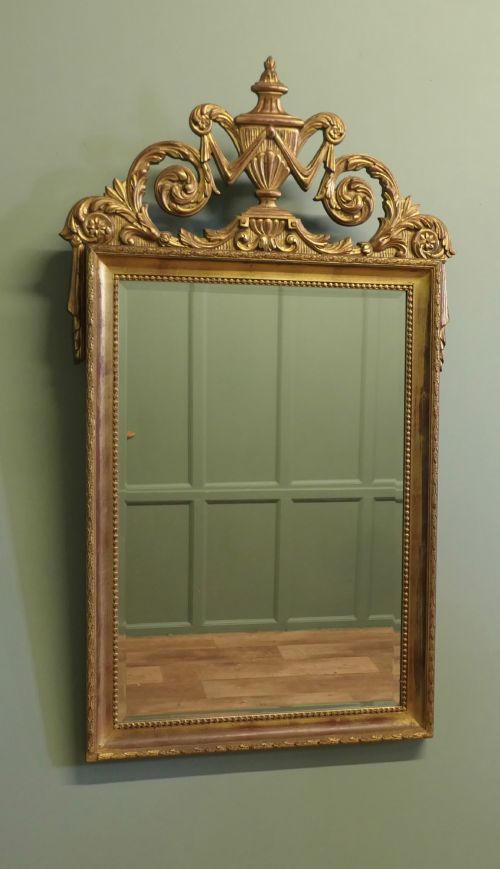
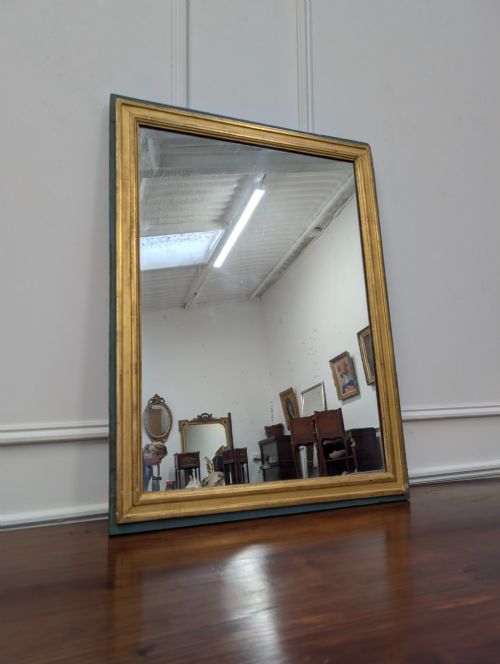
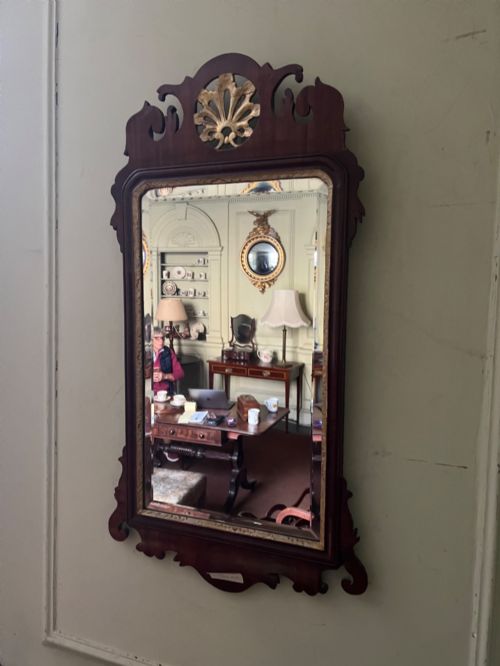
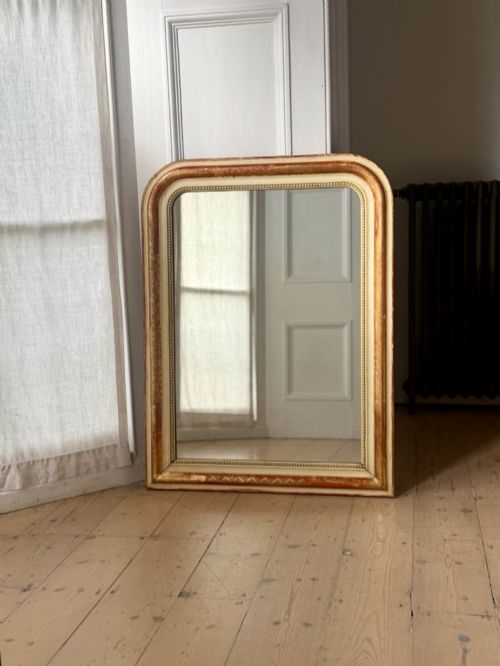
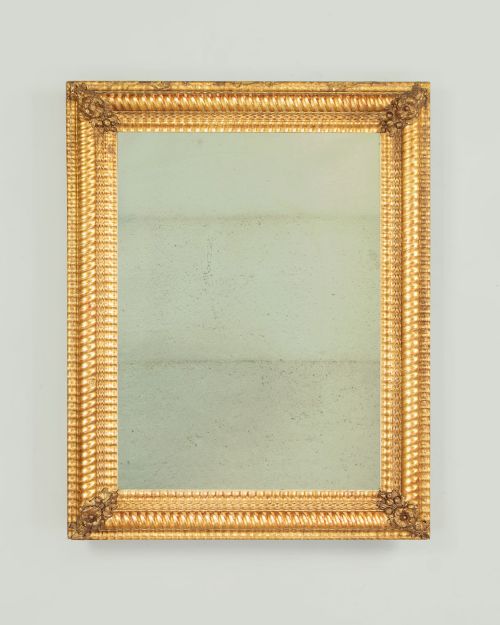
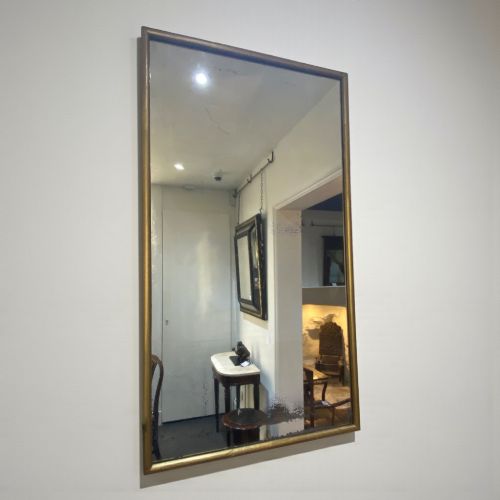
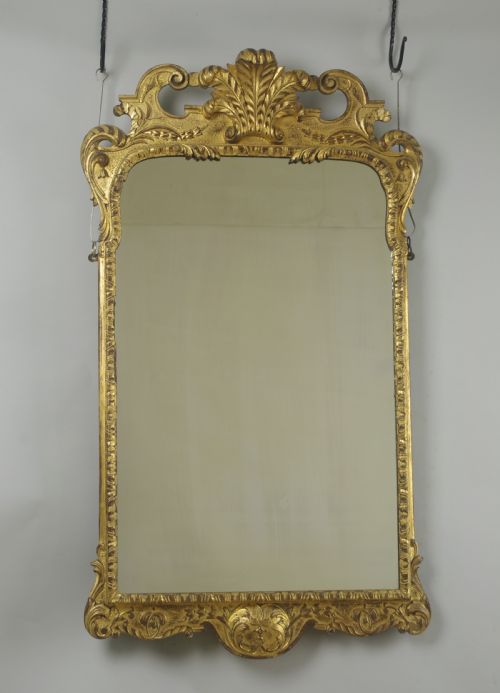
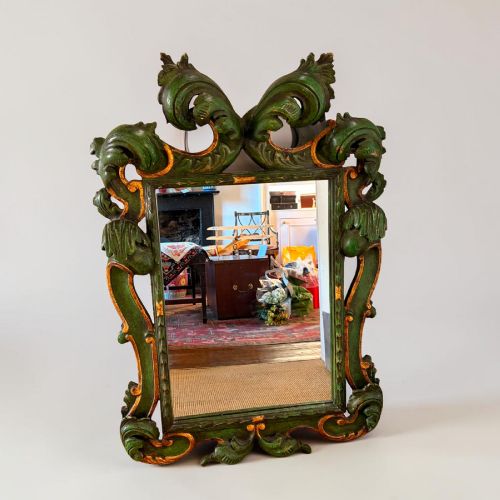
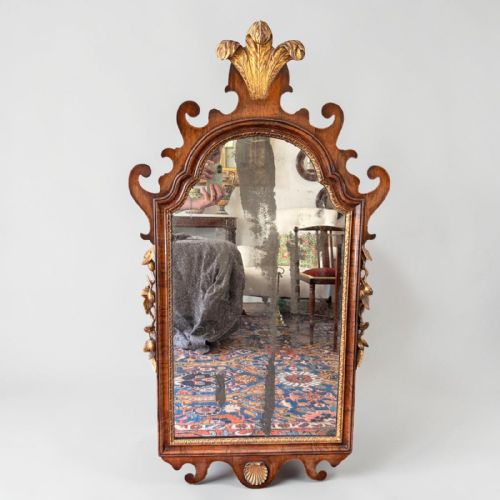
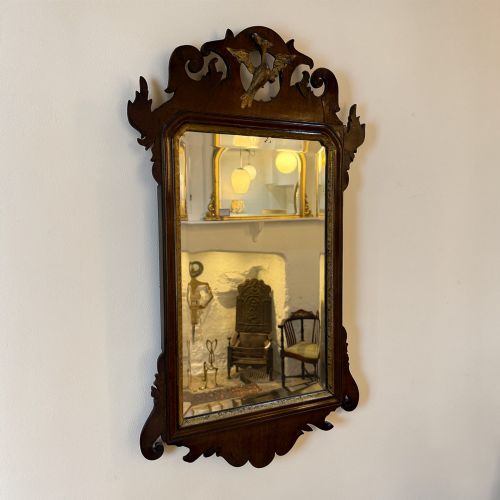
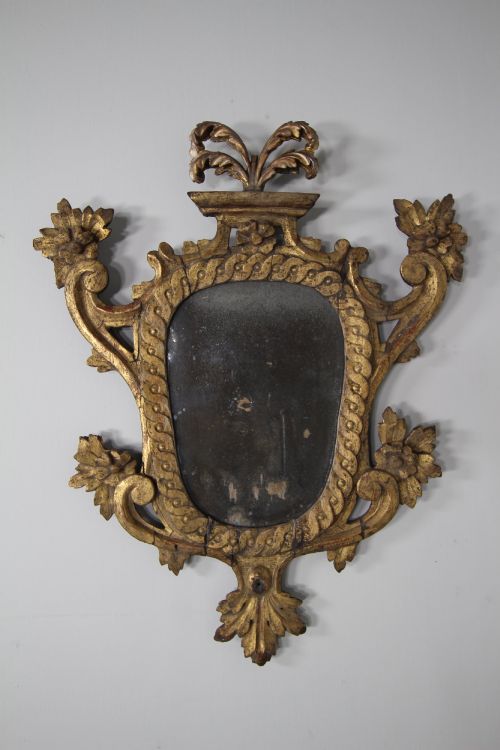
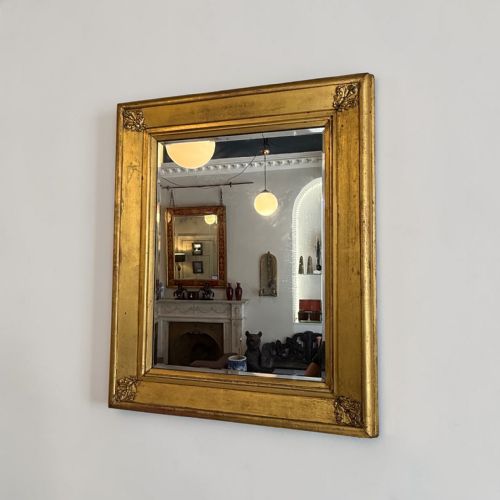
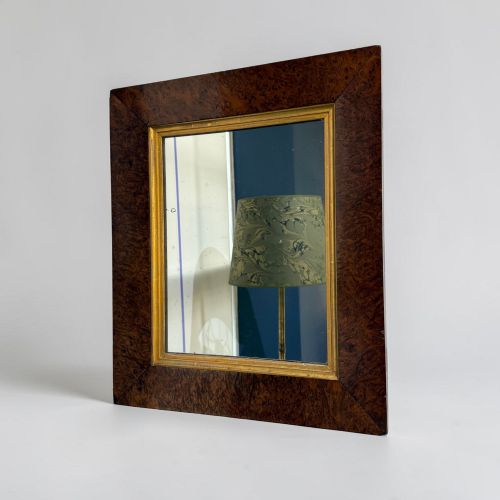
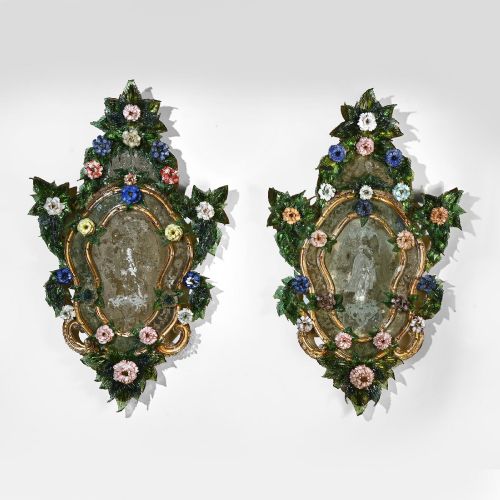
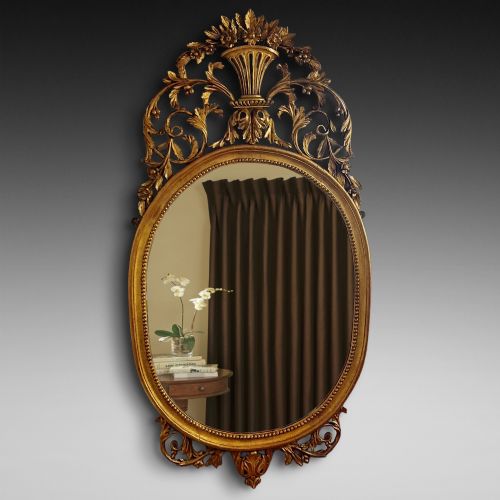
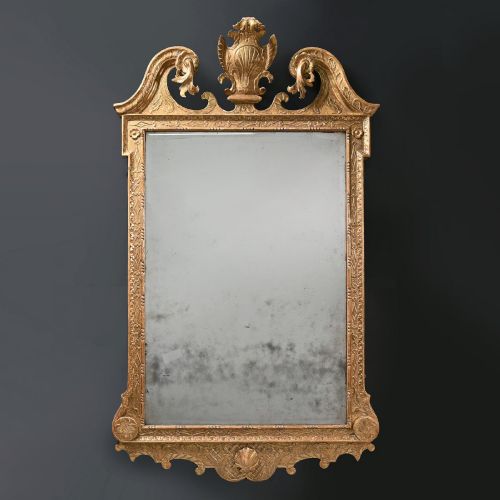
Gilt Wood Looking Glass
A gilt wood looking glass brings warmth and reflected light to a room, drawing the eye with carved detail.
Gilt Wood Looking Glass
A gilt wood looking glass is a wall hanging mirror framed in carved timber coated in gold leaf or gesso, designed to brighten domestic interiors. These decorative objects range from compact Georgian designs to large Victorian pieces made for overmantles and piers.
The selection on this page draws heavily from eighteenth and nineteenth century periods, alongside revival styles. Buyers encounter various forms including Italian Rococo frames, Chippendale fretwork mirrors, and neoclassical wall mirrors.
Origin points span English workshops, French ateliers, and Italian centres such as Venice and Florence. Walnut and mahogany woods appear alongside carved timber carcasses, often paired with original mirror glass.
Materials and construction methods
Craftsmen shaped frames from carved wood, walnut, mahogany, and gesso to create intricate relief work before applying gold leaf or parcel gilt finishes. Many examples utilise traditional joinery and hand-carved ornamentation typical of Georgian and Victorian workshops.
Mirror plates consist of glass, sometimes featuring hand engraving or historic silvering that shows age through oxidation. Wooden carcass structures support delicate surface decoration, whether finished with bright gilding or subtle parcel gilt accents on dark timber.
Gilt Wood Looking Glass Retail Price Guide 2026
Typical asking prices for gilt wood looking glass among the pieces listed under this phrase on Sellingantiques today, from the lower quarter to the upper quarter. They describe what is for sale here now, not the wider market.
Listings feature eighteenth and nineteenth century pieces, encompassing Georgian, Victorian, Regency, and Italian Rococo styles.
Assessing quality in antique mirrors
Quality rests in the crispness of the hand-carved wood and the depth of the gesso relief beneath the gold leaf. Finer pieces demonstrate superior proportion, balanced symmetry in stylistic motifs, and minimal disturbance to the original gilding.
The integrity of the glass plate also dictates worth, as original mirror glass with natural foxing holds greater character than modern replacements. Expert execution in fretwork frames and robust timber construction separate standard production from masterwork pieces.
Benjamin Goodison·William Kent
The Gilt Wood Looking Glass Glossary
- Giltwood
- Timber decorated with gold leaf applied over a prepared gesso ground. This finish provides the characteristic metallic brilliance seen on period frames.
- Gesso
- A plaster-like mixture applied to carved wood to create a smooth surface for gilding. It allows craftsmen to model sharp decorative details.
- Parcel gilt
- A finish where portions of an object are gilded while other areas reveal the natural wood beneath, such as walnut or mahogany.
- Pier mirror
- A tall looking glass designed specifically to hang on the wall space between windows. These mirrors often match console tables below them.
- Fretwork
- Ornamental design created by cutting patterns through thin wood using a fretsaw. This technique defines Chippendale style frames.
- Overmantle mirror
- A wide looking glass made to sit directly above a fireplace mantelpiece. They dominate the wall space in nineteenth century interiors.
Gilt Wood Looking Glass: Frequently Asked Questions
How do I hang a heavy antique mirror?
Heavy carved timber and gesso frames require secure wall fixings anchored directly into structural studs or masonry. Professional mirror hangers utilise heavy-duty D-rings and steel wire rated well above the weight of the piece.
Ensuring the weight distributes evenly across the frame prevents stress on historic joints and historic wood.
What is the difference between gesso and carved wood?
Carved wood refers to the structural timber frame shaped directly by hand tools, whereas gesso is a plaster mixture applied over the wood to build up fine relief details. Artisans carve the primary motifs into the timber before smoothing and refining delicate ornamentation with gesso.
Both materials work together beneath the gold leaf finish on traditional looking glasses.
Should I replace foxed mirror glass?
Original mirror glass displaying age spots, oxidation, and foxing is generally preserved by collectors as evidence of authenticity. Replacing the plate with modern glass removes the historic charm and visual depth characteristic of antique pieces.
Only severe damage that obscures the reflection entirely warrants consideration of a replacement plate.
How do I clean a giltwood frame?
Giltwood surfaces require gentle dusting with a soft, dry brush to remove particles without disturbing fragile gold leaf or flaking gesso. Water, chemical solvents, and modern cleaning sprays damage the delicate metallic finish instantly.
Professional conservators should handle any deeper cleaning or consolidation of loose ornament.