

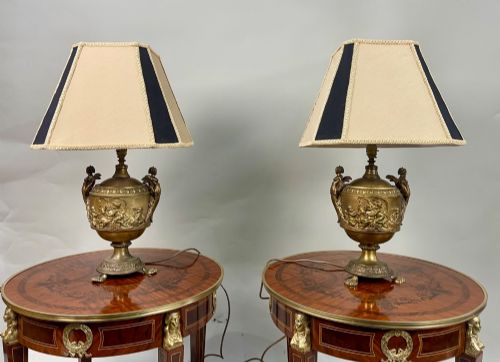
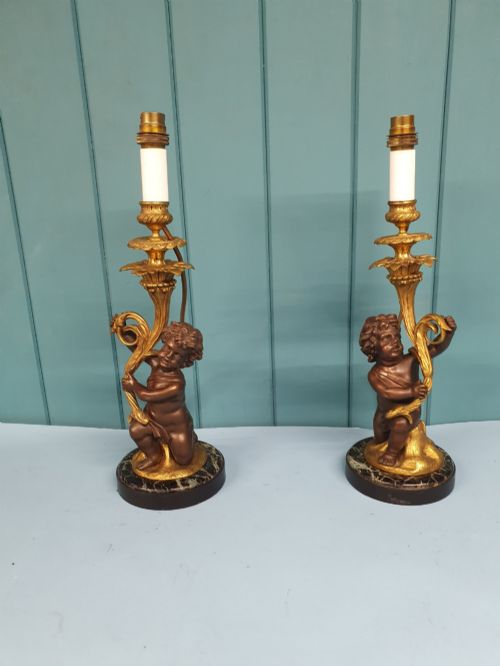
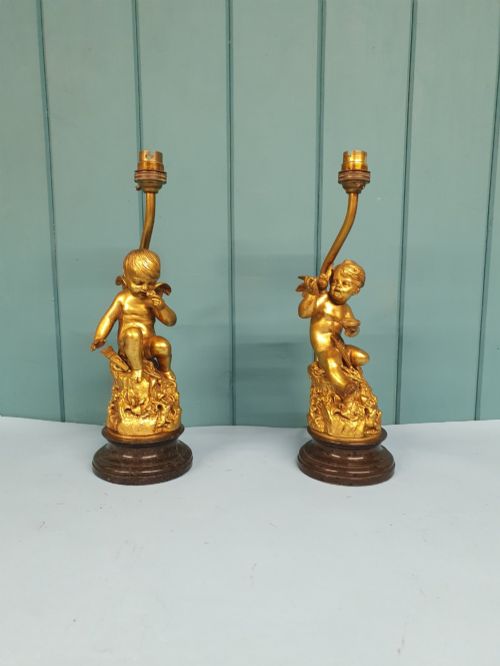
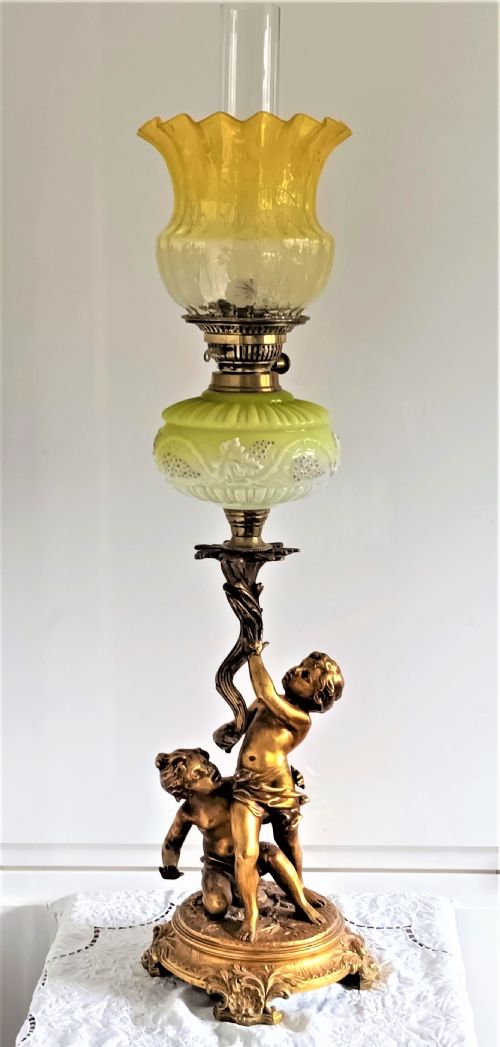




Gilt Putti Table Lamp
A gilt putti table lamp brings sculptural presence and warm illumination to a room through cast metal and figural charm.
Gilt Putti Table Lamp
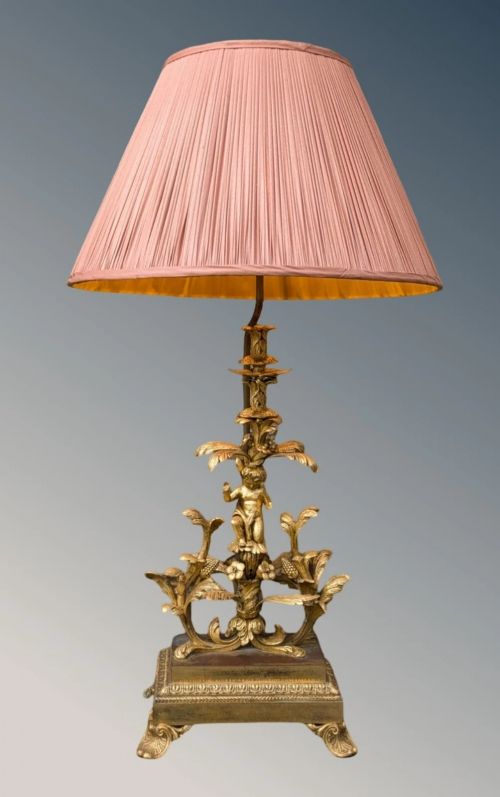
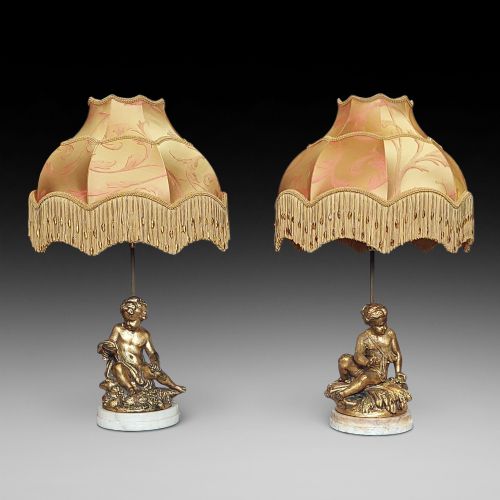
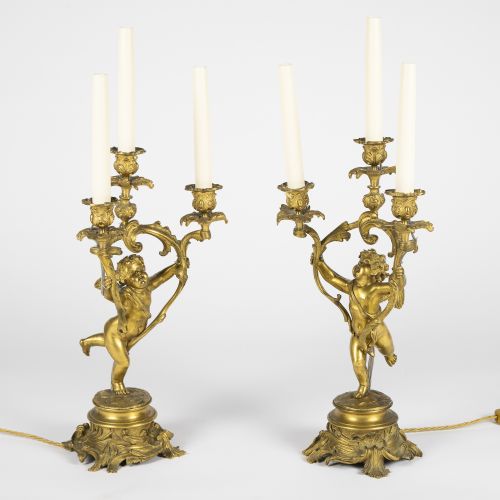
A gilt putti table lamp combines figural cherub or putti motifs with gilded metalwork, offering a distinctive sculptural form for interior lighting. When examining a gilt putti table lamp, buyers encounter various formats ranging from converted 19th-century oil lamps to candelabra and figural statuettes adapted for electricity.
The pieces on this page span the Victorian era, the late 19th century, and the early 20th century, drawing heavily on French Rococo Revival, Louis XVI, and French Empire styles. Many examples originate from France and Italy, featuring paired or single configurations mounted on marble or alabaster bases.
Object types include dedicated table lamps, candelabra with multiple lights, and porcelain-bodied lamps complemented by fabric shades or gilt toleware components. The physical scale ranges from modest mantel pieces to monumental floor-standing or large table models.
Assessing Quality and Execution
Material selection and mounting integrity further distinguish the range, with heavier gilt bronze and ormolu demonstrating superior weight and durability compared to lighter gilt brass or plated metal. The harmonious integration of marble or porcelain bases and the retention of original gilding significantly influence the overall character of the object.
Gilt Putti Table Lamp Retail Price Guide 2026
Typical asking prices for gilt putti table lamp among the pieces listed under this phrase on Sellingantiques today, from the lower quarter to the upper quarter. They describe what is for sale here now, not the wider market.
Design influences on this page draw heavily from French Rococo Revival, French Empire, and Louis XVI styles.
The Gilt Putti Table Lamp Glossary
- Putti
- Plural of putto, representing plump, winged infant figures frequently depicted in art and decorative objects from the Renaissance onwards.
- Ormolu
- Finely chopped gold applied to a bronze base using a mercury amalgamation technique, producing a bright, durable golden finish.
- Toleware
- Enamelled or lacquered sheet metal items, often painted by hand and utilised for decorative lamp components or shades.
- Candelabra
- Branched lighting fixtures designed to hold multiple candles or bulbs, often converted for electrical table use.
- Rococo Revival
- A decorative style popular in the 19th century that mimics the asymmetrical scrolls, curves, and naturalistic motifs of the 18th-century French movement.
Gilt Putti Table Lamp: Frequently Asked Questions
What is a putto?
A putto is a representation of a small, chubby child, often winged, derived from classical art and frequently seen in 19th-century decorative metalwork.
These figures add a playful yet classical sculptural element to the design of lamps and candelabra.
How do I date these lamps?
Dating relies on stylistic clues such as Rococo Revival curves, Louis XVI symmetry, and the specific metal casting techniques used by 19th-century workshops.
Component materials like marble bases and historical wiring methods also provide indicators of age.
Were these originally electric?
Most of these pieces started life as oil lamps, candelabra, or bronze statuettes before being adapted for modern electrical use in later periods.
Conversions often happened decades after initial manufacture to suit changing domestic lighting needs.
How should I clean gilded metal?
Dusting gently with a soft, dry cloth is the safest way to maintain gilded surfaces without damaging the fragile metallic finish.
Harsh chemical polishes must be avoided entirely because they can strip away the historical gilt layer.