
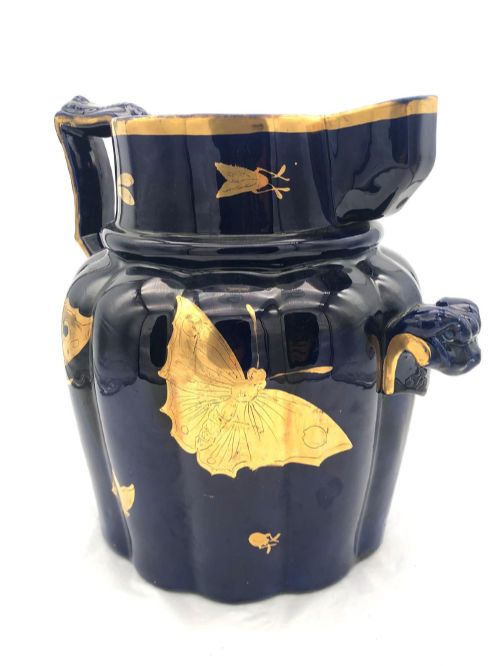
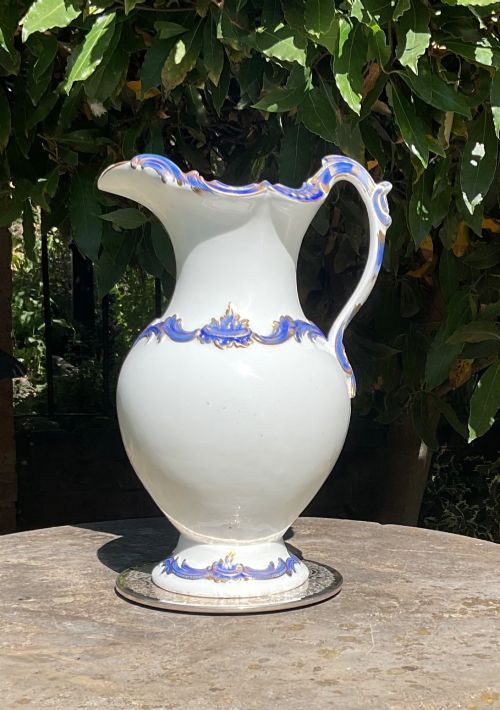
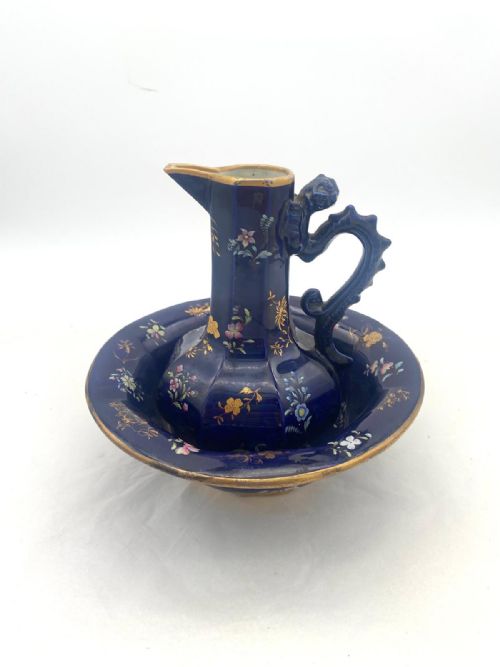
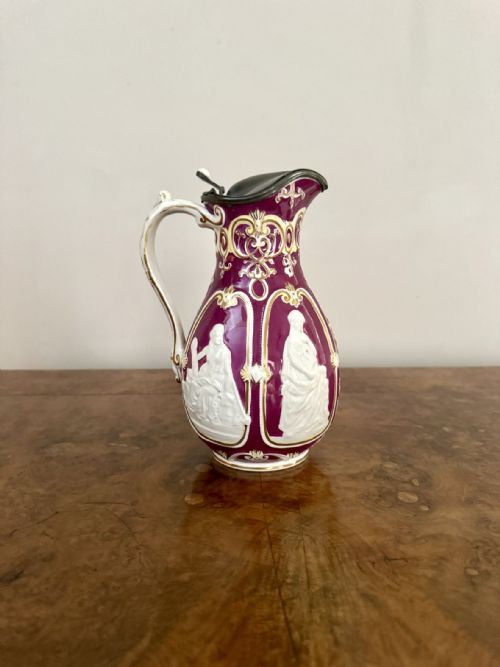


Gilt Porcelain Water Jug
These gilt porcelain water jug examples bring tactile elegance to a room, offering functional artistry from the Georgian, Victorian, and Edwardian eras.
Gilt Porcelain Water Jug
When you search for a gilt porcelain water jug, you encounter functional vessels ranging from individual table pitchers to grand wash set ewers. The selection on this page centres primarily on Victorian and Georgian creations alongside later pieces.
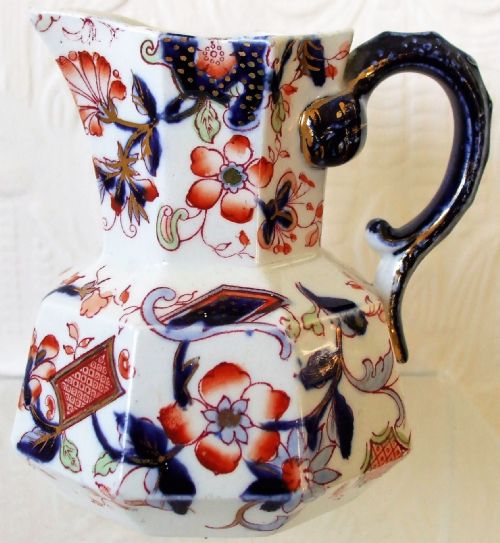
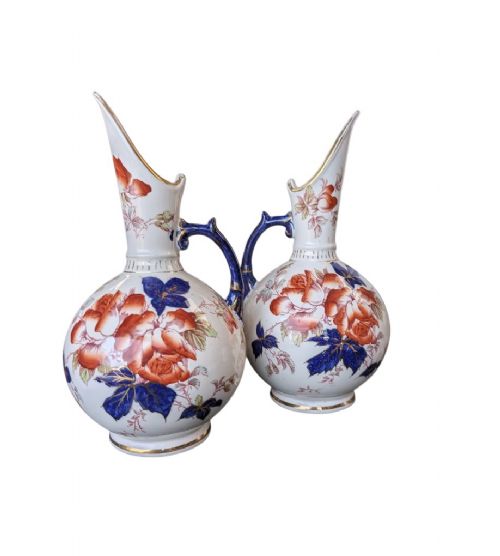
These items manifest in various forms including octagonal jugs, hydra shapes, and decorative ewers. Makers utilised hard-paste porcelain, earthenware, and ironstone to shape these water jugs.
Origin points span English factories such as Royal Worcester and Chamberlain Worcester, as well as continental and Japanese Imari workshops. Buyers find both standalone pitchers and complete jug and basin sets.
Materials and methods of construction
Potters shaped these vessels from fine porcelain, earthenware, and ironstone using traditional moulding and throwing techniques. Artisans then applied enamel decoration and surface gilding in gold leaf or gold gilt.
Firing took place in high-temperature kilns to set the body and glaze before painters added intricate armorial crests or botanical motifs. Final gilding layers received burnishing to achieve varied surface textures.
Some Victorian jugs sport dragon-like hydra handles that make pouring water feel like taming a mythological beast.
Discerning the fineness of execution
Quality rests in the crispness of the porcelain moulding and the precision of the hand-painted details. Superior pieces display carefully weighted handles, such as the classical hydra form, and evenly preserved gold leaf.
Factory attribution significantly influences standing, with pieces bearing marks from established porcelain works demonstrating superior ceramic bodies and refined enamel work.
Masons Ironstone·Keeling and Co·Royal Worcester·Chamberlain Worcester·Doulton Burslem·Coalport·Crown Derby
The Gilt Porcelain Water Jug Glossary
- Ewer
- A large jug or pitcher with a wide spout and handled body, historically used for pouring water. Ewers frequently serve decorative purposes in later domestic settings.
- Gilding
- The application of gold leaf or gold dust to the surface of porcelain. This decorative technique highlights handles, rims, and painted heraldry.
- Hydra jug
- A ceramic pitcher featuring a distinctive serpent-form handle. The shape derives from classical antiquity and recurs in nineteenth-century porcelain production.
- Armorial
- A ceramic design displaying a family coat of arms or crest. These bespoke commissions denote high-status ownership during the Georgian period.
- Hard-paste porcelain
- A dense, durable ceramic material fired at very high temperatures. It forms a vitrified body that resists scratching and absorbs no moisture.
Gilt Porcelain Water Jug: Frequently Asked Questions
How were water jugs used historically?
These vessels served practical washing and serving functions in bedrooms and dining rooms across the Georgian and Victorian eras. They held fresh water for personal hygiene or table service.
Larger examples formed part of wash sets accompanied by matching basins. Smaller versions functioned as tableware pitchers for water or other beverages.
Can I use these antique jugs for daily service?
Most pieces function safely for serving liquids, provided you handle them with care. Hand washing protects the delicate enamel and gold leaf from detergent damage.
Victorian ironstone and porcelain bodies remain robust, but historic gilding responds poorly to modern dishwashers. Displaying them safely preserves their decorative integrity.
How do I identify a Georgian piece from a Victorian one?
Georgian examples often display neoclassical shapes and hand-painted armorial crests typical of the late eighteenth and early nineteenth centuries. Their porcelain bodies tend to show lighter, refined throwing.
Victorian iterations frequently embrace bolder revival styles like the Rococo Revival or Aesthetic Movement. Markings on the base often help confirm the specific production decade.
What does an armorial crest on a jug signify?
An armorial crest indicates that the piece was commissioned specifically for a titled family or landed estate. Potters painted these heraldic symbols by hand onto the porcelain surface.
Such commissioned items represent the upper tier of domestic tablewares from the period. They provide direct provenance linking the vessel to its original owner.