




Gilt Painted Room Divider
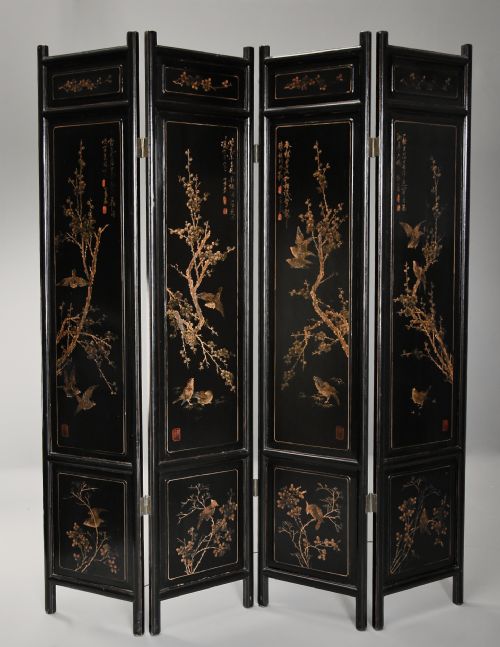
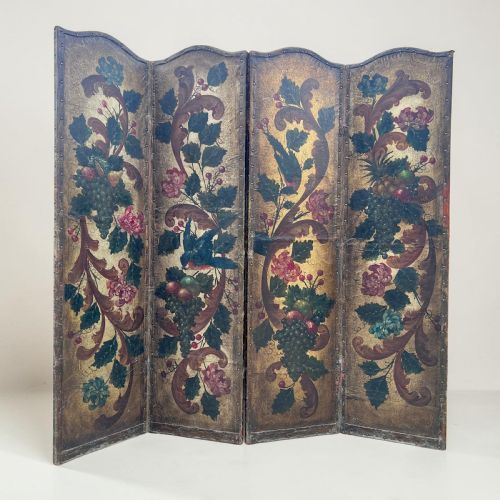
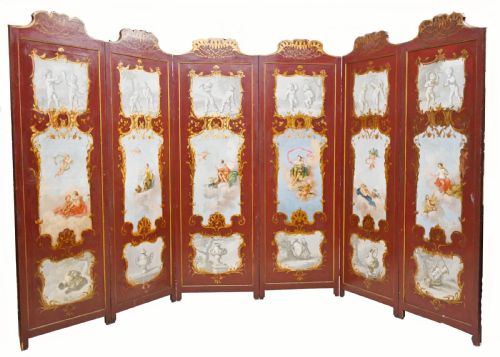
These gilt painted room divider pieces bring architectural division and hand-painted artistry to a space, offering both utility and dramatic presence.
Gilt Painted Room Divider
A gilt painted room divider provides both functional zoning and striking decorative presence within a traditional interior scheme. When you search for this phrase, you encounter multi-fold screens and freestanding panels designed to separate spaces or adorn walls.
The selection spans periods from the eighteenth century to the early twentieth century, drawing on diverse origins such as French, Dutch, Chinese, and Japanese traditions. Folding screens dominate the current selection, constructed with multiple leaves for flexible placement.
Construction and materials
Makers utilised timber frames to support panels of leather, lacquer, or wood, providing a sturdy foundation for intricate decorative schemes. Artisans applied oil paint and gold leaf to create luminous surfaces, often combining lacquerwork with delicate hand-painted motifs.
Techniques range from embossed leather work to traditional Japanese lacquer application and Chinese black lacquered finishes. Giltwood and gilt leaf details highlight carved elements and borders, catching the light across the folds of each screen.
Screens often double as fire screens, proving that keeping warm in an eighteenth-century room required a solid barricade against the draft.
Assessing quality and execution
Superior examples display exceptional dexterity in the hand-painted brushwork and the depth of the gilding applied to the leather or wood. The integration of the panels within the overall frame structure demonstrates the maker's joinery skill and attention to stability.
Finer pieces exhibit sophisticated stylistic coherence, whether channelling Rococo Revival curves or authentic Chinoiserie and Japanese export aesthetics. The richness of the materials, from embossed Cordoban leather to deep black lacquer, elevates the visual impact of the divider.
Paul Sormani
The Gilt Painted Room Divider Glossary
- Chinoiserie
- European decorative style reflecting Chinese artistic influences, frequently seen in painted lacquer screens depicting figures and landscapes.
- Cordoban leather
- Heavy leather decorated with embossed designs and gilding, originating in Spain and frequently utilised for durable folding screens.
- Giltwood
- Timber that has been coated with gold leaf or a gold-coloured finish to simulate solid gold enrichment.
- Lacquer
- Protective and decorative finish applied in multiple layers to wood, capable of being polished to a high sheen.
- Rococo Revival
- Nineteenth-century design movement favouring asymmetrical scrolls, naturalistic ornament, and ornate gilt frames.
Gilt Painted Room Divider: Frequently Asked Questions
What is a gilt painted room divider?
A gilt painted room divider is a hinged, multi-fold screen decorated with gold leaf or metallic paint over wood, leather, or lacquer.
These pieces serve to separate interior spaces or act as decorative wall art, combining practical zoning with ornate visual appeal.
How do I date an antique screen?
Dating relies on examining the construction methods of the wooden frame, the materials used for the panels, and the stylistic vocabulary.
Period characteristics such as Rococo Revival curves or eighteenth-century Chinoiserie motifs provide reliable clues to the exact era of manufacture.
Where were these screens made?
The pieces originate from various European centres including France, the Netherlands, and Spain, alongside Asian export workshops in China and Japan.
Makers adopted local materials like Cordoban leather or black lacquer to suit the aesthetic preferences of their respective markets.
How do I care for antique leather screens?
Care involves protecting the painted and gilt surfaces from direct sunlight and maintaining stable humidity levels to preserve the leather or wood.
Gentle dusting with a soft, dry cloth prevents the accumulation of grime without risking abrasion to the delicate metallic leaf.