


Oriental Privacy Screen
An oriental privacy screen offers architectural division and decorative depth, bringing historical craftsmanship into modern rooms.
Oriental Privacy Screen
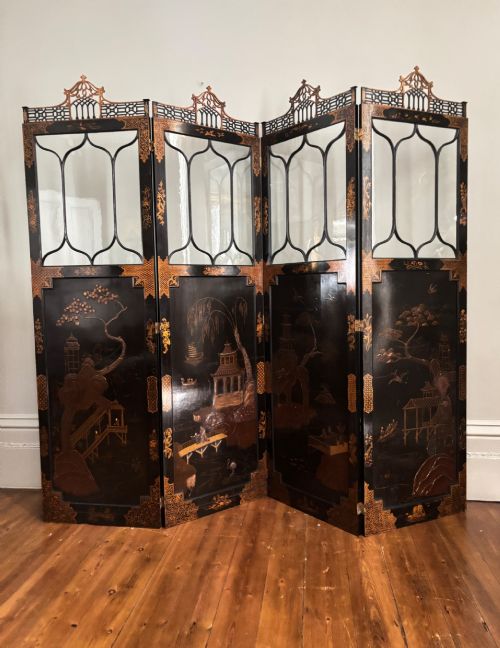
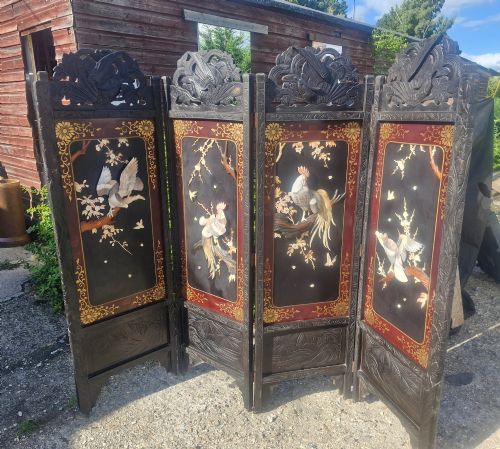
An oriental privacy screen serves as a movable partition, dividing interior spaces while introducing distinct artistic traditions from various periods. When searching for an oriental privacy screen, buyers encounter folding panels constructed in forms such as dressing screens and room dividers. These objects originate from diverse regional aesthetics, spanning Chinese, Japanese, Burmese, Indian, and Anglo-Indian traditions.
The pieces available on this page reflect multiple eras, ranging from the Regency and Victorian periods through the early twentieth century up to nineteen fifty. Common formats include four-fold and larger multi-fold configurations designed to segment domestic spaces. Each example demonstrates the specific decorative vocabulary of its period, from Victorian Chinoiserie to Chinese Chippendale and Japanese Meiji styles.
How they were made
Makers constructed these screens using substantive wooden frameworks, incorporating hardwoods and papier mâché for structural panels. Surface finishes frequently rely on black lacquer applied in layers, providing a lustrous base for subsequent artistic detail.
Artisans embellished the surfaces through varied techniques including deep carving of bone and wood, fretwork, and hand painting. Certain examples incorporate applied hardstone, gilt detailing, and textile elements such as silk cotton to build complex visual depth across the panels.
The listings on this site span from Regency and Victorian examples up to mid-century Burmese pieces, utilising brass, glass, and silk alongside traditional lacquer and hardwood.
What varies in quality
Quality in an oriental privacy screen rests upon the depth and execution of surface decoration, whether through intricate bone carving, painted detail, or fretwork precision. Superior examples display careful integration of materials like hardstone and gilt against the lacquer background.
The structural integrity of the folding hinges and the selection of underlying wood or hardwood also distinguish finer pieces. Consistency in the lacquer finish across multiple folds indicates superior workshop practices from the period.
The Oriental Privacy Screen Glossary
- Lacquer
- A durable resin finish applied in multiple coats to wooden surfaces, often sanded smooth and polished. This technique creates a deep, glossy sheen characteristic of many Asian decorative objects.
- Chinoiserie
- A European artistic style reflecting Chinese aesthetic influences, popular during the Victorian era and earlier periods. It manifests in decorative motifs applied to furniture and screens.
- Coromandel
- A type of Chinese incised lacquerware where designs are carved into a dark ground and filled with pigments or gold. The technique produces a textured, multi-layered pictorial surface.
- Hardstone
- Minerals such as jade, agate, or soapstone carved and mounted onto panels for decorative effect. These elements introduce contrasting colour and tactile relief to lacquer screens.
- Fretwork
- Ornamental geometric openwork carved into wood, utilised in panels and framework. This technique adds lightness and intricate linear pattern to the structure.
Oriental Privacy Screen: Frequently Asked Questions
How were folding screens used historically?
Historical interiors utilised folding screens to divide large rooms into smaller, manageable areas, block drafts, and create private dressing spaces. They provided flexible architectural solutions before permanent walls were altered.
In domestic settings, they served both functional partitioning roles and purely decorative focal points within reception rooms and bedchambers.
How do I clean a lacquered screen?
Dusting gently with a soft, dry microfiber cloth is the primary method for maintaining lacquered surfaces. Avoid using harsh chemical cleaners, abrasives, or excessive moisture that might compromise the finish.
Protect the screen from direct sunlight and temperature fluctuations to prevent the wood underneath from warping and the lacquer from cracking.
What defines Japanese Meiji style?
The Meiji period produced decorative arts characterised by exceptional technical precision and naturalistic motifs. Screens from this era often feature detailed depictions of flora, fauna, and figures.
Craftsmen combined traditional lacquer work with advanced carving methods, reflecting a period of significant artistic exchange and refinement in Japan.
How can I tell a Victorian Chinoiserie screen apart?
Victorian Chinoiserie pieces combine European furniture forms with European interpretations of Chinese motifs, typically executed in black lacquer with gilt painting. These items often date from the nineteenth century or the transition into the twentieth.
They display characteristic Western construction methods alongside imaginative Orientalist imagery, differing from authentic Asian export pieces of the same eras.