
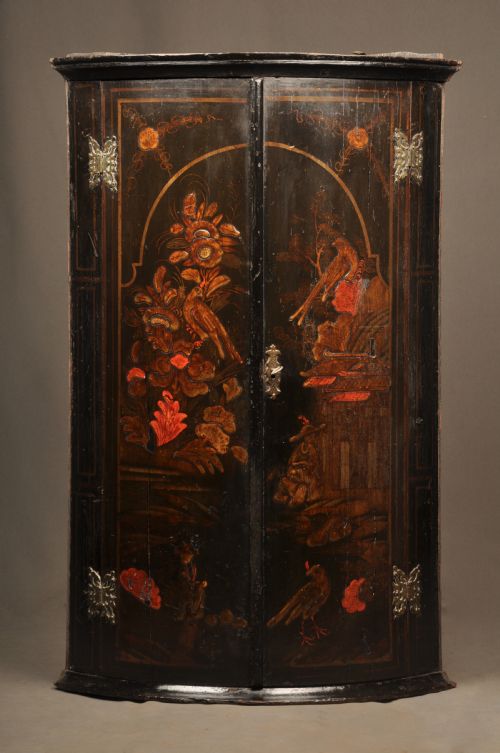


Gilt Painted Cupboard
A gilt painted cupboard brings surface depth and metallic lustre to a room, drawing the eye with decorative painted motifs.
Gilt Painted Cupboard
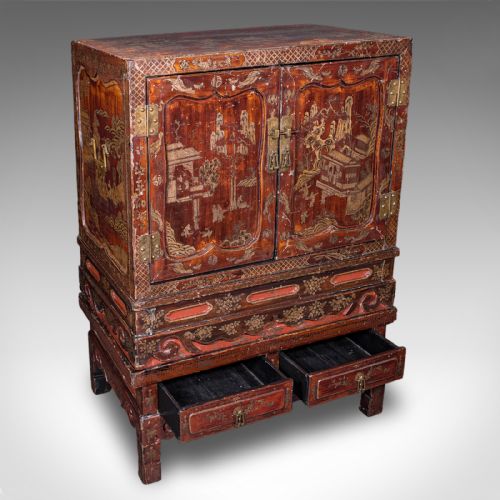
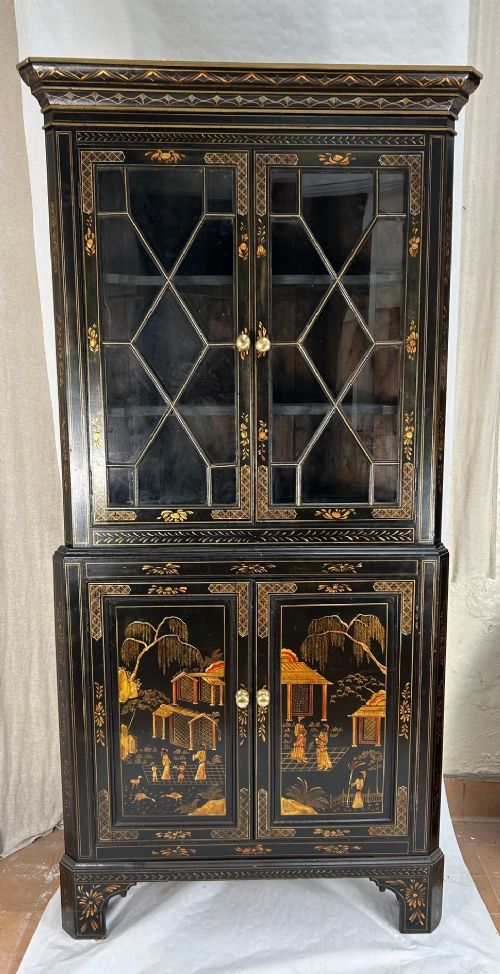
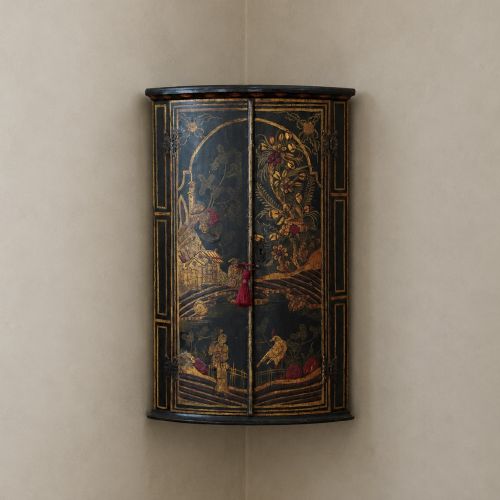
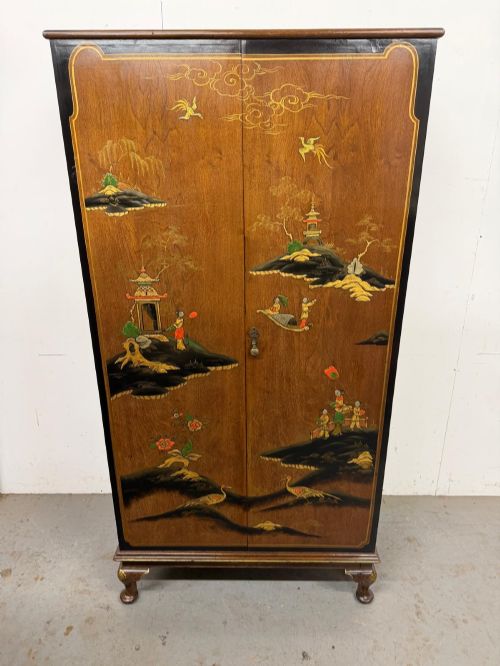
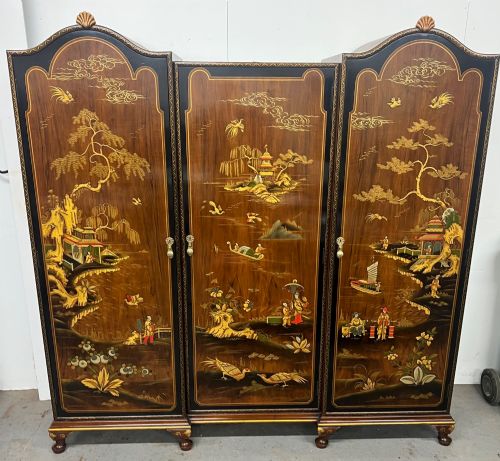
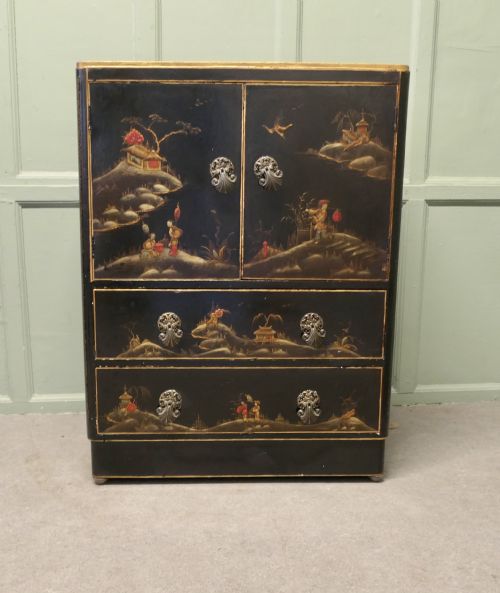
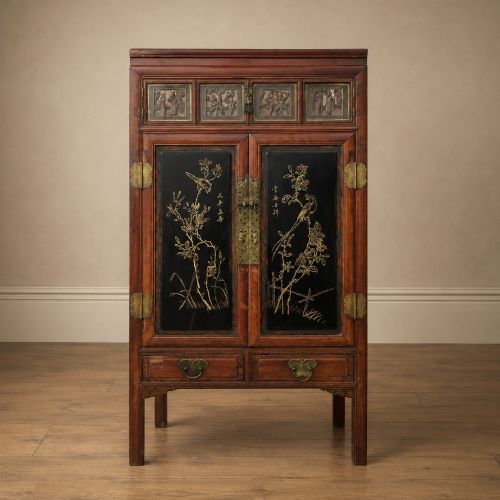
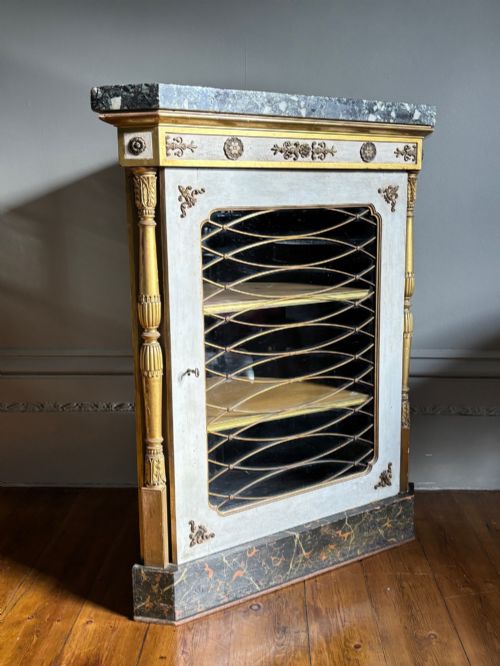
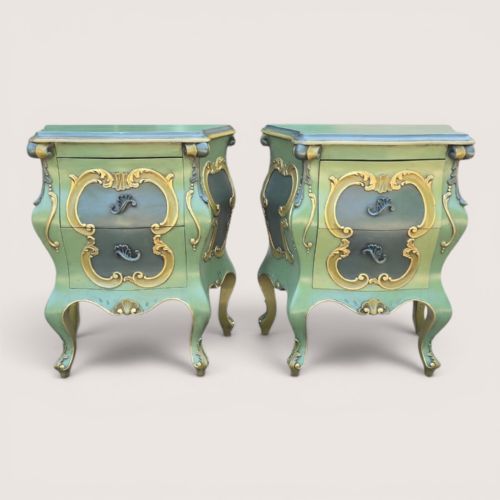
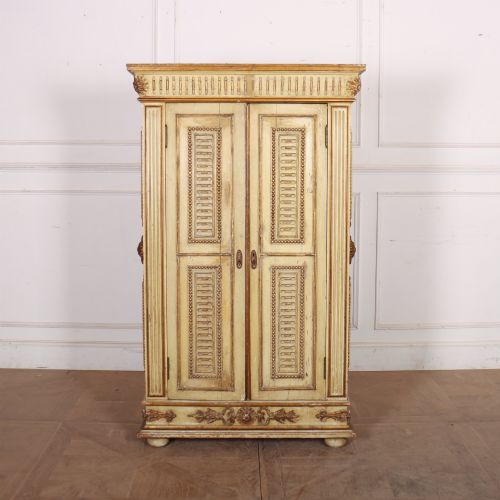
A gilt painted cupboard encompasses a wide range of forms including corner cabinets, side cabinets, cocktail cabinets and wardrobes. These storage pieces surface across various periods from the eighteenth century through to the early twentieth century.
Originating from diverse domestic settings, these items serve both functional storage and decorative display purposes. The forms range from compact wall-hanging vitrines to substantial breakfront side cabinets.
Materials and construction
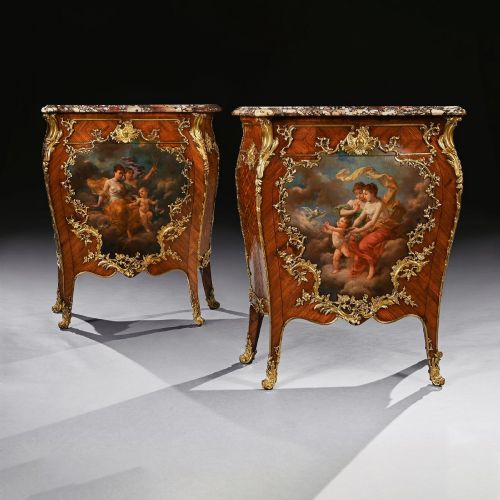
The construction relies predominantly on wood foundations, incorporating materials such as kingwood, marble, and brass alongside painted wood surfaces. Artisans applied layers of lacquer and paint to create rich backgrounds for subsequent gilding.
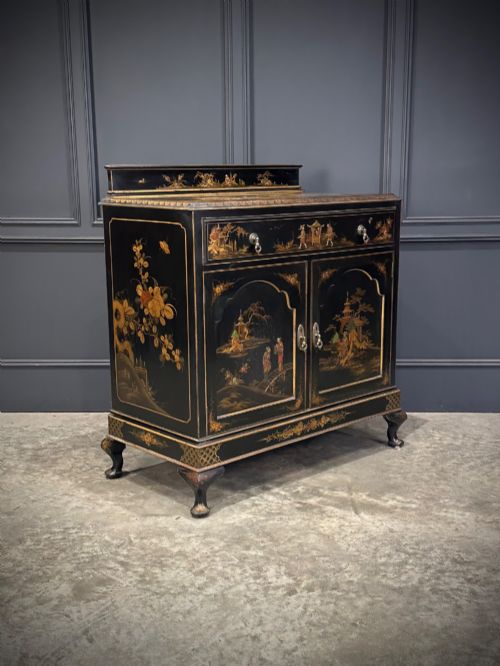
Techniques such as Japanning and Vernis Martin appear frequently, building up complex pictorial scenes on cabinet doors and panels. Gold leaf and gilt bronze mounts were then applied to highlight architectural lines and decorative hardware.
Periods represented span from the seventeenth century through to the Edwardian era and the 1930s.
What sets examples apart
Quality rests significantly in the precision of the painted and gilded surface work, where finer execution shows depth, restraint, and deliberate composition. The integration of authentic period hardware, such as brass mounts, elevates the overall execution.
The choice of underlying materials, including marble tops or carefully selected cabinet timbers, distinguishes standard production from more ambitious workshops. Preservation of the original lacquer and gilt layers remains a primary indicator of historical integrity.
Maples and Co.·Harrods
The Gilt Painted Cupboard Glossary
- Chinoiserie
- European decorative style inspired by Chinese artistic traditions, featuring motifs such as landscapes, figures, and pagodas. This style appears frequently on lacquered and painted cabinets.
- Japanning
- European imitation of East Asian lacquerwork, created by building layers of varnish and paint that were often heat-cured and decorated in gilt. It provides a glossy, dark background for painted scenes.
- Vernis Martin
- Eighteenth-century French imitation of lacquering developed by the Martin brothers, known for producing translucent and luminous painted finishes on furniture. It is often found on cabinets and vitrines.
- Commode
- Low cabinet or chest of drawers designed for domestic use, frequently featuring decorative painted or gilt surfaces. The form evolved through various French and Italian revival periods.
- Vitrine
- Glass-fronted display cabinet intended for the presentation of precious objects and porcelain. These pieces often incorporate architectural details and painted or gilded frames.
Gilt Painted Cupboard: Frequently Asked Questions
Where should I place a corner cupboard?
A corner cupboard fits neatly into unused room junctions, transforming dead space into a functional display area.
These pieces work well in dining rooms or living spaces to house glassware or small collections while adding vertical interest.
How do I care for a lacquered surface?
Lacquered and gilt surfaces require gentle dusting with a soft, dry cloth to prevent scratching the delicate finish.
Keep these cabinets away from direct sunlight and steady moisture to protect the underlying paint and gold leaf.
What is a cocktail cabinet used for?
A cocktail cabinet serves as a dedicated storage unit for glassware, bottles, and bar accessories.
Originating more commonly in twentieth-century designs, these pieces often feature drop-front work spaces for entertaining.
How do I distinguish eighteenth-century pieces?
Eighteenth-century examples display construction methods appropriate to the period, such as hand-cut dovetails and timber framing.
The surface wear and patina on these older lacquered and painted finishes develop naturally through extensive age.