
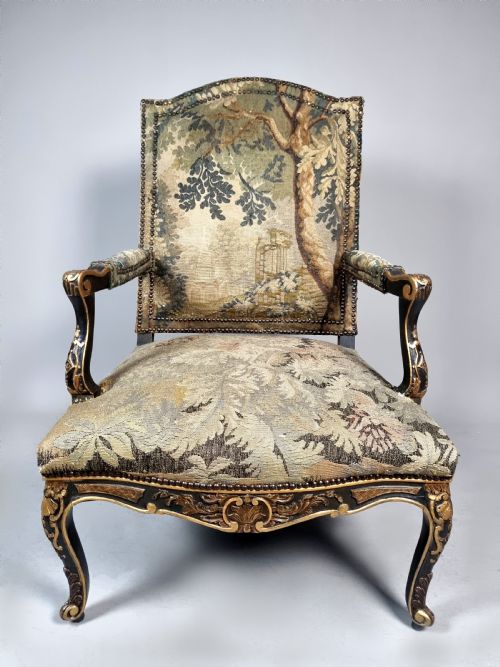

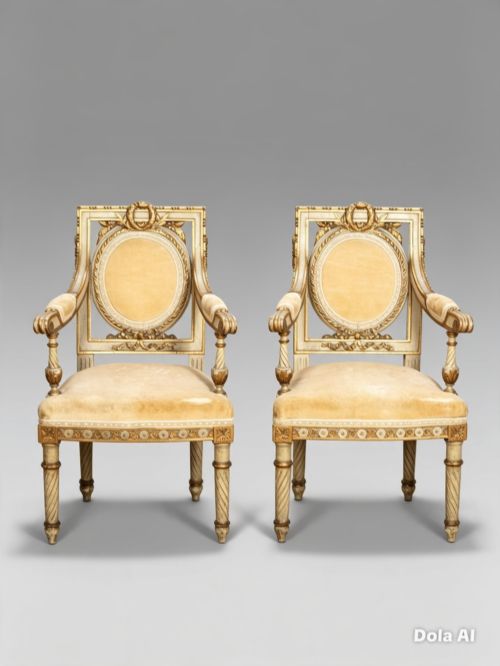


Gilt Painted Armchair
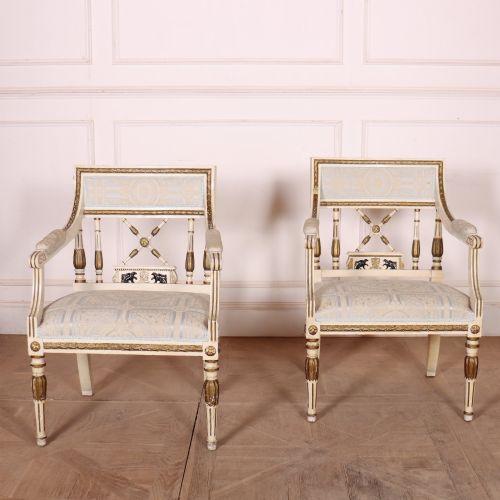
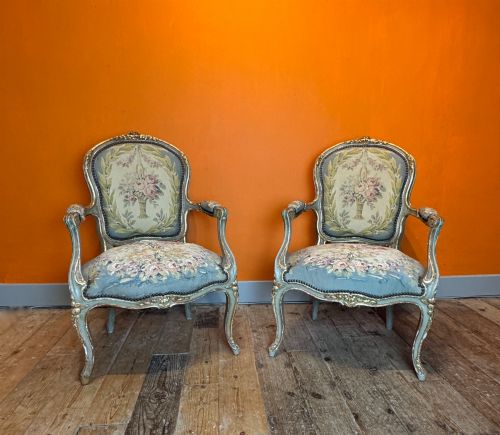
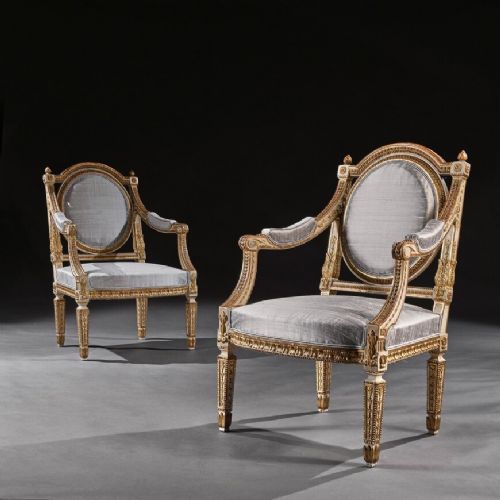
A gilt painted armchair brings sculptural elegance and rich continental character to a room through contrasting paint and metallic highlights.
Gilt Painted Armchair
When you search for a gilt painted armchair, you encounter seating designed primarily for formal reception spaces rather than everyday slouching. The listings here span the eighteenth century through to the early twentieth century, drawing heavily on French and Italian stylistic traditions.
The version you are most likely to meet on this page is a nineteenth-century French piece created in the Louis XV or Louis XVI style. These chairs frequently appear in pairs or larger sets alongside related salon seating.
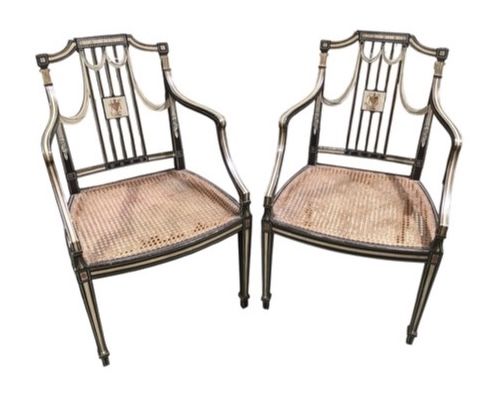
The evidence also includes English examples, such as George III period pieces and Regency library chairs. Maker attributions like Gillows occasionally anchor the more significant English forms in this category.
Materials and construction
Makers shaped these chairs from wood before applying a prepared ground layer of gesso to receive paint and gilding. Artisans used gold leaf or silver gilt to accentuate carved details, leaving the underlying painted wood visible in contrasting areas.
Upholstery forms an integral part of the construction, employing traditional materials like fabric, tapestry, and cane. Frames utilise carved wood joined by hand, often incorporating structural elements designed to support enclosed bergere sides or open arm designs.
Materials recorded across the archive include gesso, gold leaf, cane, tapestry, and painted wood applied to frame structures.
Evaluating craftsmanship and survival
The distinction between ordinary and exceptional examples rests in the crispness of the original carving and the restraint of the painted surface. Superior pieces display hand-carved ornamentation rather than moulded composition work, with parcel-gilt highlights that follow the natural contours of the wood.
Condition and originality dictate the standing of an armchair within this range. Retaining the original painted and gilt finish without later overpainting elevates a piece, while matched pairs or larger sets hold greater weight than single chairs.
Gillows
The Gilt Painted Armchair Glossary
- Parcel Gilt
- A technique where only specific portions of a carved wooden object are highlighted with gold leaf. This method creates a deliberate contrast against a painted or lacquered base background.
- Bergere
- A closed-arm upholstered armchair featuring solid sides filled with cane or upholstery. These chairs typically include a loose upholstered seat cushion resting within the frame.
- Fauteuil
- An open-arm wooden armchair originating in France, characterised by upholstered armrests left uncovered at the grips. They were designed for formal interior settings during the eighteenth century and later revival periods.
- Gesso
- A plaster-like mixture applied to wooden furniture frames to create a smooth surface for painting and gilding. It allows carvers to achieve sharp definition on intricate decorative motifs.
- Giltwood
- Timber that has been entirely coated in gold leaf rather than receiving a dual paint and metal finish. It represents a different decorative treatment compared to partially gilded surfaces.
Gilt Painted Armchair: Frequently Asked Questions
How do I date a gilt painted armchair?
Dating these chairs requires examining the underlying woodwork, the style of the carving, and the composition of the surface finishes. Pieces often reflect specific historical revivals, such as Louis XV, Louis XVI, or Regency designs popular during the nineteenth century.
Construction methods and tool marks on the timber frame provide further clues to the period of manufacture. Archival records and stylistic traits help narrow the origin to English, French, or Italian workshops.
Were these chairs used at dining tables?
These chairs were not intended for dining use, serving instead as occasional seating for drawing rooms, boudoirs, and reception halls. Their open or closed arms and upholstered frames prioritized comfort during conversation and leisure.
Armchairs and matching sets of salon chairs functioned as mobile elements of interior decoration. They were arranged to facilitate social gatherings in formal domestic spaces.
How should I care for a painted and gilded finish?
Preserving these surfaces involves keeping the furniture away from direct sunlight and maintaining stable humidity levels to protect the underlying gesso and wood. Dusting should be done gently with a soft, dry cloth without applying modern chemical polishes.
Avoiding moisture and abrasive materials ensures the delicate layers of paint and metal leaf remain intact. Professional conservation advice is recommended if the finish shows signs of flaking.