
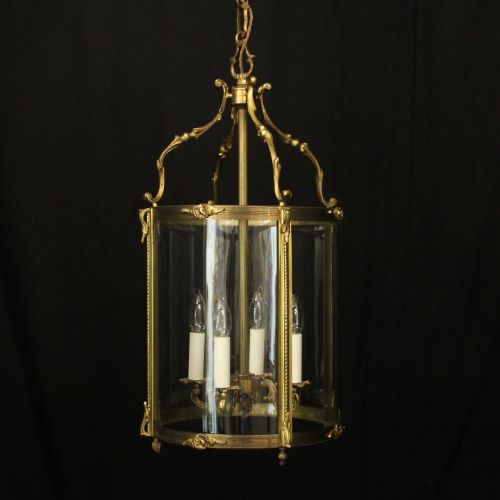
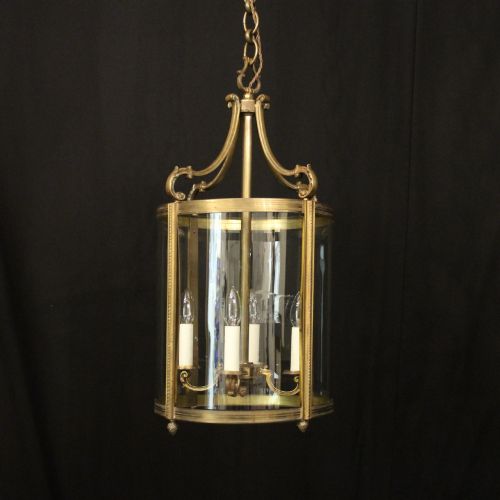
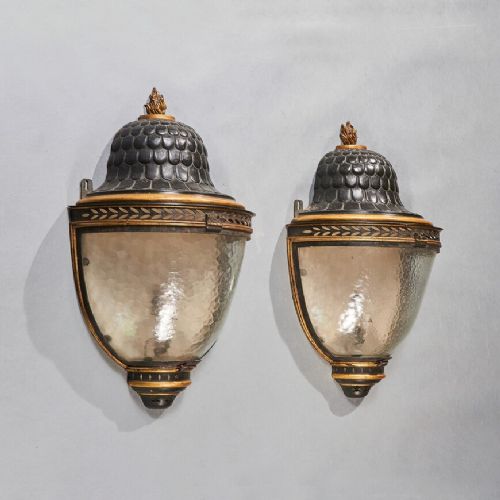
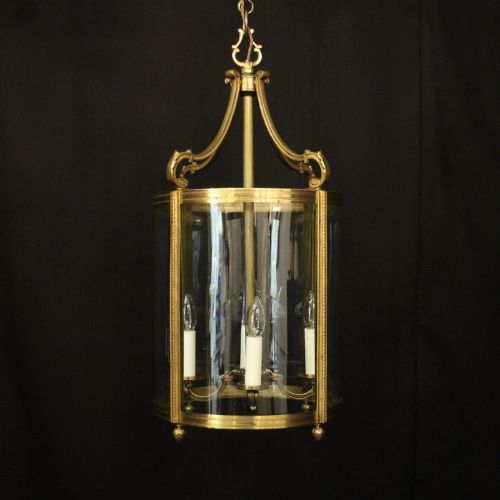


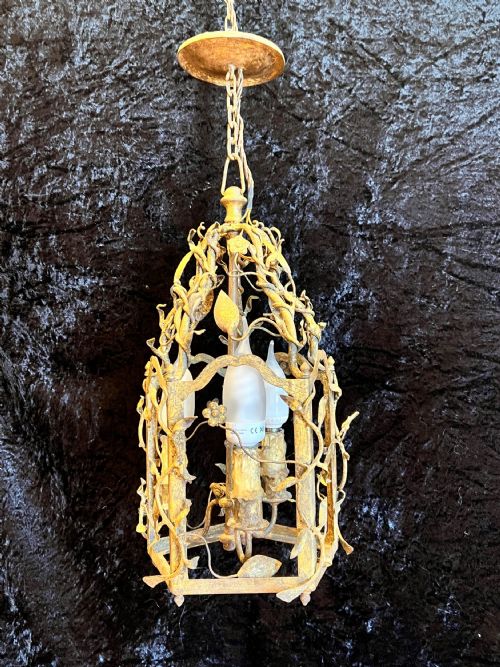


Gilt Metal Lantern
These gilt metal lantern fixtures bring immediate warmth and historical character to a hallway or entrance.
Gilt Metal Lantern
A gilt metal lantern serves primarily as an overhead or wall-mounted lighting solution, frequently encountered in French Neoclassical, Louis XVI, and Rococo Revival styles from the nineteenth and twentieth centuries. These pieces typically take the form of hall lanterns, hanging pendants, or wall lanterns designed to distribute illumination through clear or bevelled glass panes.
How they were made
The construction of a gilt metal lantern relies on cast brass or bronze frameworks that receive a gilt or silver-gilt surface treatment to emulate solid gold or polished metal. Artisans incorporated glass panels, including bevelled or convex types, secured within the metal frames to enclose the lighting elements.
Decorative details such as foliate motifs, porcelain flowers, or tole peinte accents were integrated into the structure, often reflecting classical architectural influences found in French chateaux and palaces.
Listings feature gilt metal lantern designs spanning the nineteenth century through the 1960s, executed in brass, bronze, and tole.
What varies in quality
The distinction between tiers of a gilt metal lantern rests upon the crispness of the metal casting and the depth of the gilding applied to the bronze or brass framework. Superior examples display refined hand-chased detailing in the foliate mounts and structural precision in the framing of glass panels.
Heavier gauges of metal and the inclusion of original bevelled or convex glass elevate an individual piece above simpler production standards. The overall harmony of proportion, particularly in larger hall lanterns and multi-light configurations, determines the standing of the work.
Jaeger Le Coultre
The Gilt Metal Lantern Glossary
- Gilt bronze
- Metal cast in bronze and treated with a gold-coloured finish or gold leaf. This material forms the primary structure for many French hall lanterns.
- Tole peinte
- Painted sheet metal used in decorative objects and lighting fixtures. It often appears in combination with parcel-gilt elements.
- Ormolu
- Finely cast or chased bronze that has been gilded with gold. It provides a bright, durable finish seen on nineteenth-century pieces.
- Convex glass
- Curved glass panes that project outward from the lantern frame. This technique diffuses light differently than flat panes.
- Bevelled glass
- Glass panes featuring angled edges that refract light. This treatment adds visual depth to hanging lanterns.
Gilt Metal Lantern: Frequently Asked Questions
Where should I hang a hall lantern?
These fixtures work best in high-ceilinged entrance halls, stairwells, or corridors where their hanging drop and glass panels can distribute light effectively.
Ensure you measure the vertical clearance from the floor to guarantee safe passage underneath the lowest point of the pendant.
How do I clean a gilt metal lantern?
Dust the metal framework and glass panels gently with a soft, dry cloth to prevent the accumulation of grime.
Avoid abrasive polishes or harsh chemical cleaners that can strip away the delicate gilt surface or damage applied porcelain decorations.
How can I identify a French Louis XVI style lantern?
Look for characteristic design elements such as symmetrical neoclassical motifs, urn finials, and crisp geometric framing.
These pieces frequently utilise gilded bronze and display a restrained architectural elegance distinct from heavier revival styles.