


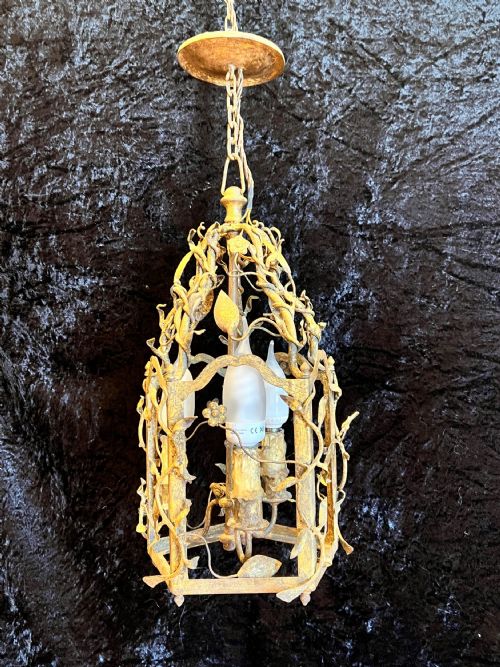


Foliage Gilt Chandelier
A foliage gilt chandelier brings botanical warmth and metallic polish into a room, combining naturalistic leaves and flowers with gilded finishes.
Foliage Gilt Chandelier
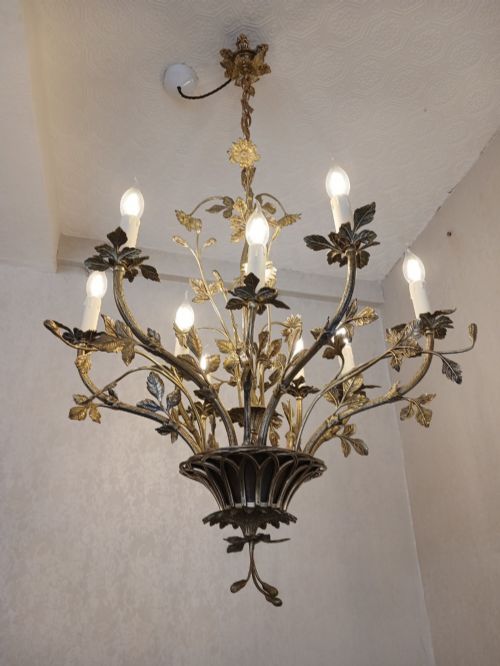
A foliage gilt chandelier is a hanging light fixture that combines plant-inspired metalwork, such as leaves, branches, and flowers, with a golden surface finish. These pieces frequently appear in styles that evoke French country interiors, Italian Florentine palazzos, and French chateaus.
The objects on this page span from the early twentieth century, specifically between nineteen hundred and nineteen thirty. During this era, makers produced multi-light pendants, cage chandeliers, and rustic lanterns designed to illuminate grand reception spaces or intimate drawing rooms.
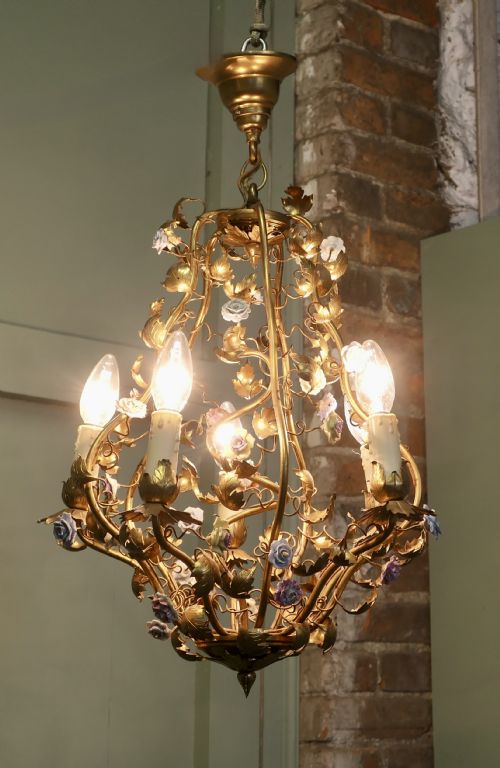
Buyers will most commonly encounter French and Italian examples featuring branches, ceramic blossoms, and crystal drops. These fixtures rely on five, eight, or twelve lights to distribute illumination across gilt metal and toleware surfaces.
Materials and construction
Craftsmen shaped these chandeliers from metals including gilt bronze, wrought iron, brass, and toleware. They formed individual leaves and petals by hand, soldering or wiring them into branching structures that mimic natural foliage.
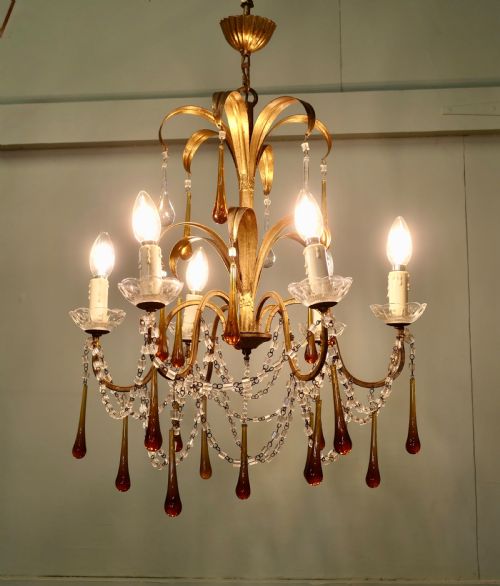
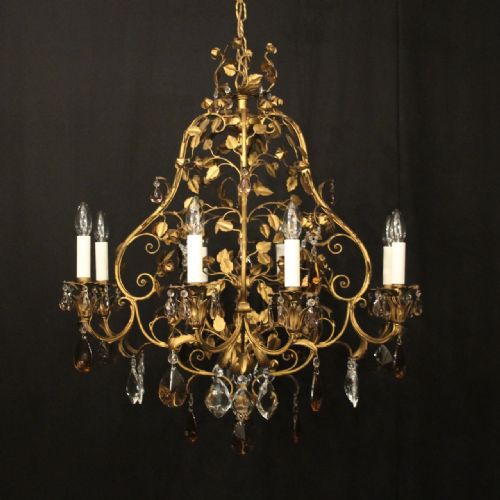
Many fixtures incorporate ceramic flowers, amber crystal teardrops, and clear crystal pendants suspended from the metal armature. Gilding was applied to the metal surfaces to catch the candlelight or early electric illumination, while iron and bronze provided structural support for heavy multi-light frames.
Distinguishing quality
Quality in a foliage gilt chandelier rests upon the delicacy of the botanical modeling and the depth of the metalwork. Superior examples display finely sculpted leaves and securely integrated ceramic or crystal elements that look organic rather than mechanical.
The richness of the gilding and the harmony between the structural bronze, iron, or wood determine the visual weight of the piece. Better proportioned multi-light frames distribute their bulbs evenly, ensuring that the botanical details remain visible from every angle.
The Foliage Gilt Chandelier Glossary
- Toleware
- Painted or lacquered metalware, commonly used to create simulated floral components and decorative leaves on early twentieth-century lighting.
- Giltwood
- Wood that has been treated with a thin layer of gold leaf or gold paint, seen on Florentine fixtures.
- Cage chandelier
- A lighting form where the metal frame encloses the internal lights and central shaft, often hung with crystal drops.
- Florentine
- A regional Italian style characterised by ornate, carved, and gilded floral motifs reminiscent of Renaissance art.
- Hollywood Regency
- A decorative style combining theatrical opulence with modern luxury, utilising gilt branch forms and bright metallic finishes.
Foliage Gilt Chandelier: Frequently Asked Questions
How do I hang a foliage gilt chandelier?
These fixtures require secure ceiling anchor points capable of supporting the combined weight of metal, ceramic, and crystal components. Professional electrical installation ensures the internal wiring safely handles the required bulb wattage.
Position the fixture at a height where the lower tier clears foot traffic while remaining a focal point within the room. Consider the ceiling height and table placement when determining the drop length.
How should I clean a gilded chandelier?
Dust the metal foliage and crystals regularly using a soft, dry feather duster or microfiber cloth. Avoid harsh chemical cleaners that can strip the gold leaf or damage painted toleware surfaces.
For deeper cleaning, wipe metal components gently with a damp cloth and dry immediately. Take care around delicate ceramic flowers and suspended crystal teardrops.
What rooms suit a branch chandelier?
Branch and foliage chandeliers work well in dining rooms, living spaces, and bedrooms where organic motifs soften architectural lines. Their naturalistic designs complement neutral walls and traditional interior palettes.
Smaller three-light lanterns fit into hallways or entryways, while larger twelve-light Florentine fixtures anchor high-ceilinged reception rooms.
How do I date a gilt chandelier?
Examine the materials, construction techniques, and wiring methods used in the frame. Pieces from the early twentieth century often display hand-soldered joints, specific toleware patinas, and period-appropriate brass or bronze components.
Stylistic cues such as Florentine floral carving or French Hollywood Regency branch motifs also point toward specific decades between nineteen hundred and nineteen thirty.