
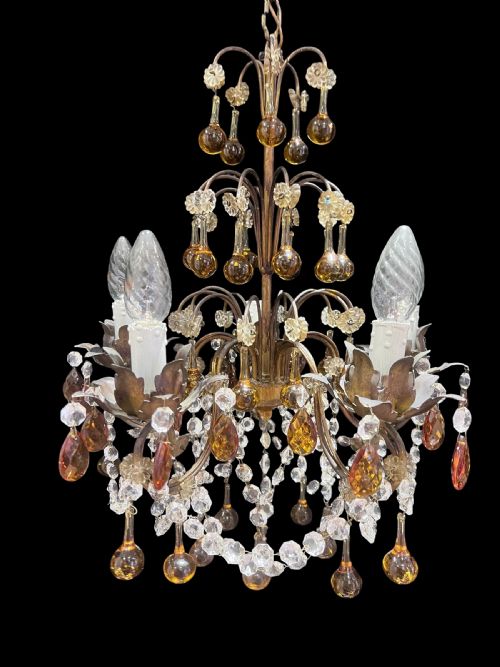
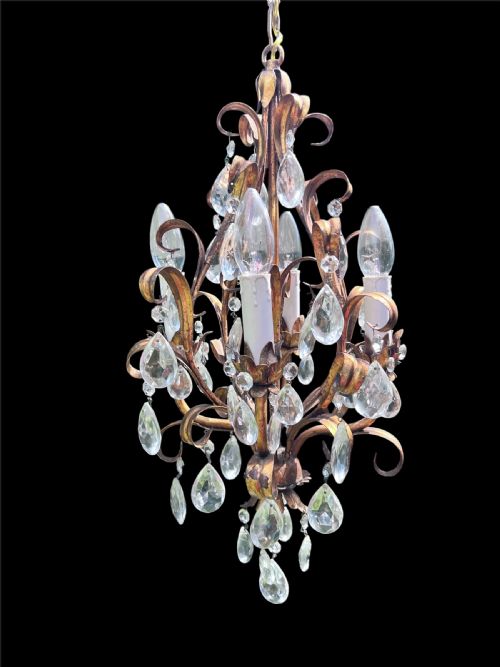


Italian Gilt Ceiling Light
An italian gilt ceiling light brings warmth to a room through gilded surfaces and glass drops.
Italian Gilt Ceiling Light
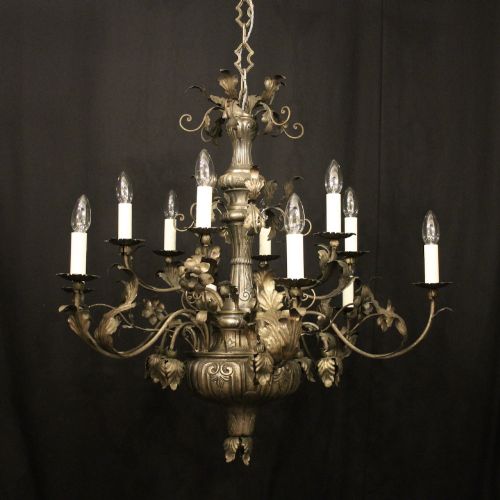
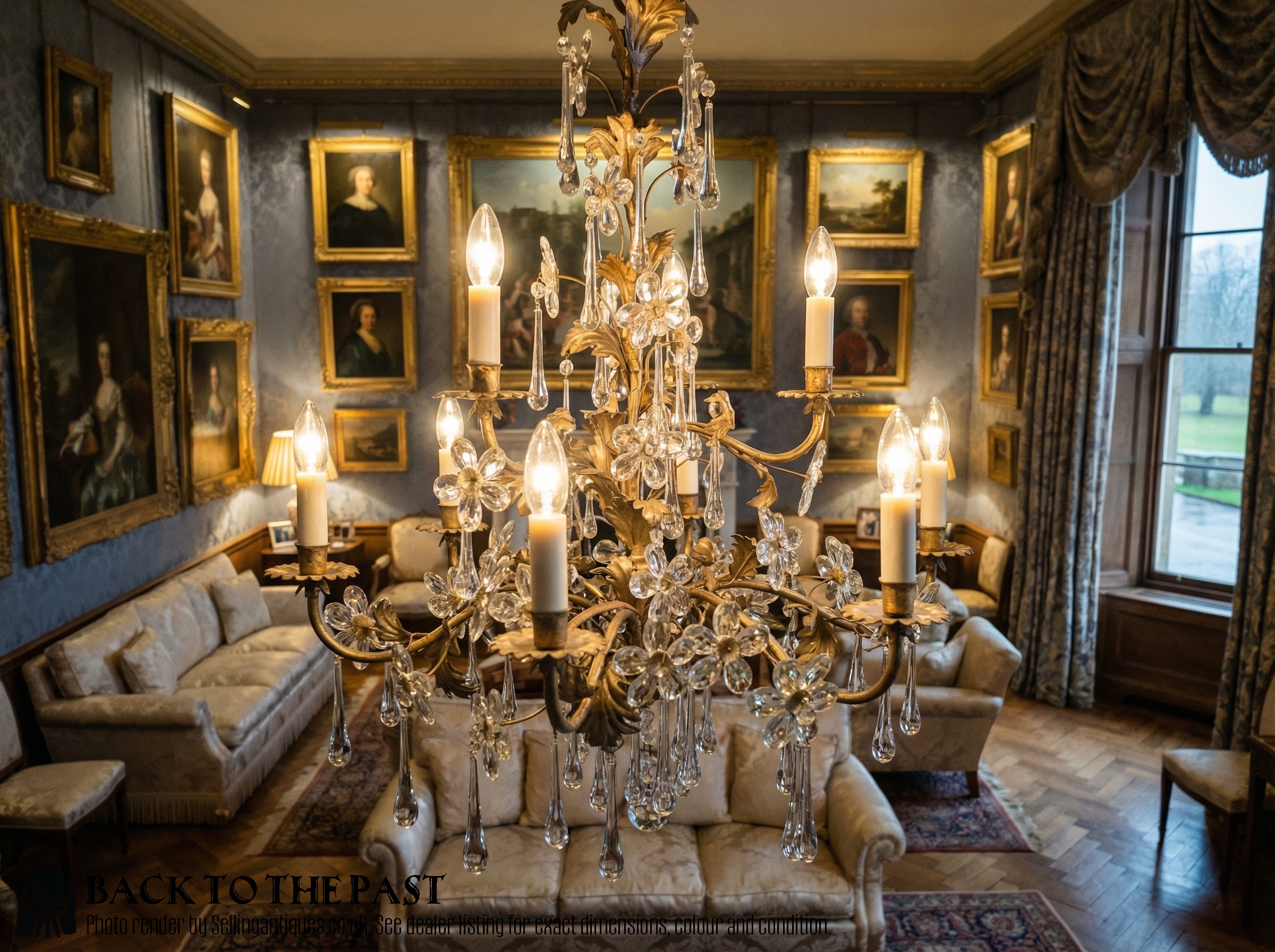
An italian gilt ceiling light takes the form of chandeliers, hanging lanterns, and pendant lights designed to illuminate grand spaces. The selection on this page centres heavily on twentieth-century examples, alongside nineteenth-century and eighteenth-century pieces.
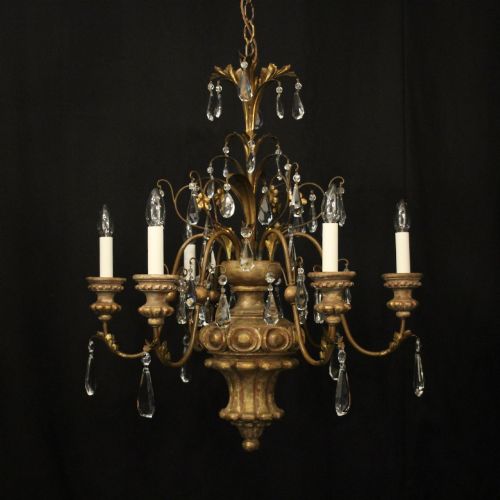
Buyers encounter distinct regional and stylistic variants, most notably Florentine designs characterised by carved wood and floral motifs. Other examples draw on Baroque and Rococo traditions, incorporating multi-tiered frames and ornate metalwork.
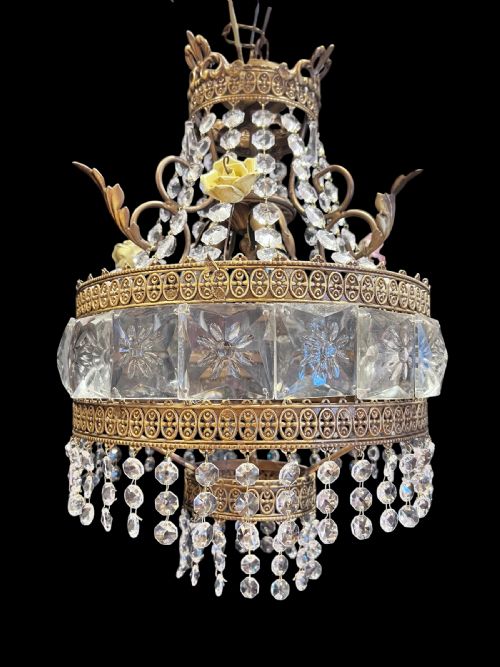
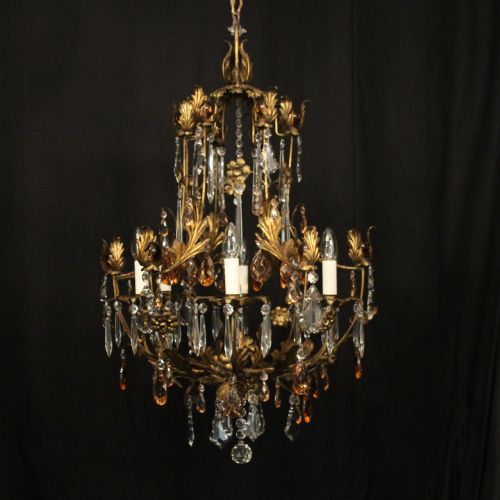
Configuration ranges from single-light hall lanterns to monumental chandeliers carrying twenty-four lights. Common formats include multi-tiered structures hung with crystal beads, coloured fruits, and porcelain flowers.
How they were made
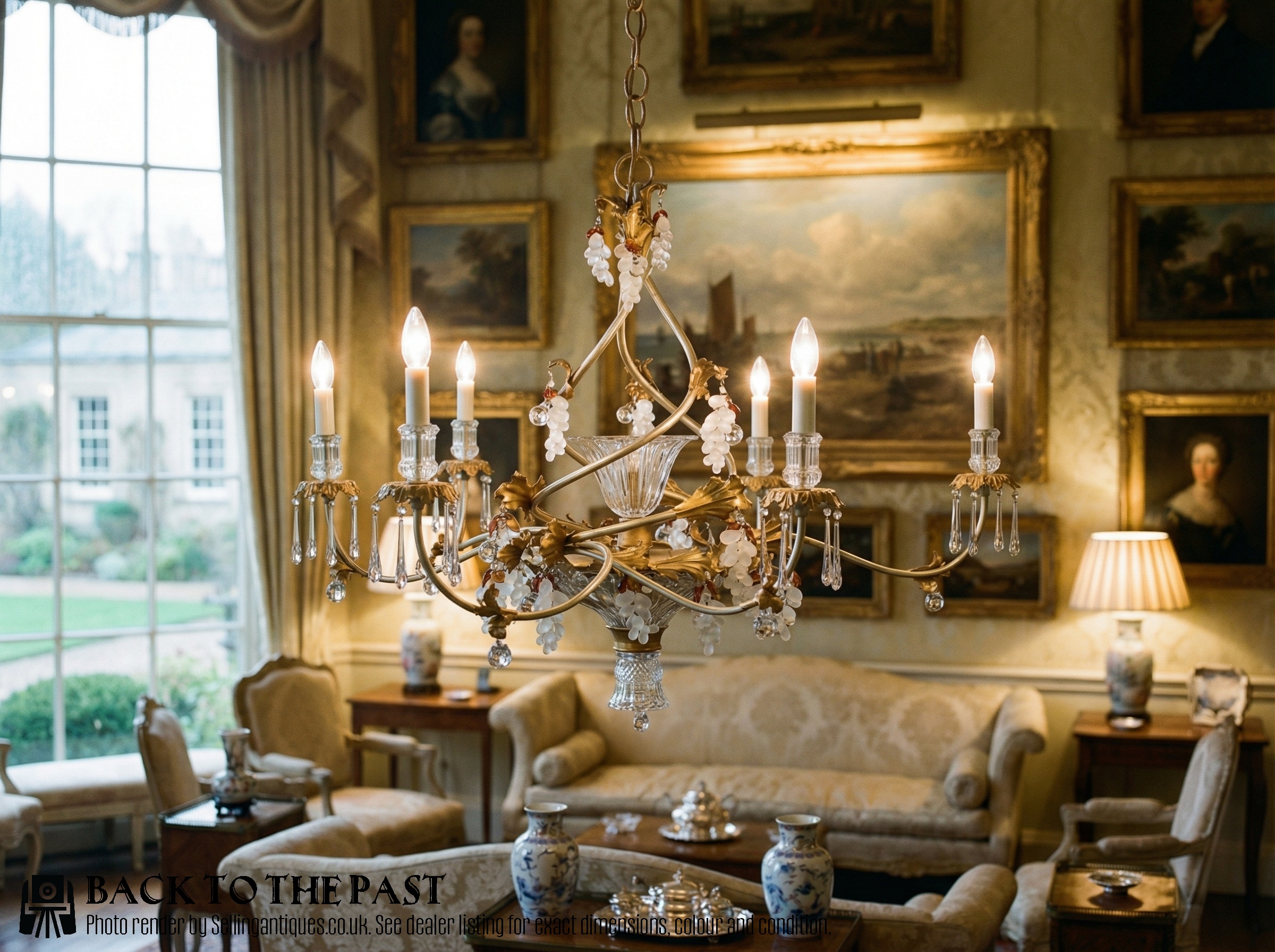
Construction relies upon a combination of carved giltwood, wrought iron, and gilt metal forming the structural skeleton of each fixture. Artisans shaped timber and forged metal before applying gold leaf or paint finishes.
Glass elements form a core component, utilising crystal drops, glass beads, and cut glass plates to refract light. Many designs integrate delicate decorative details such as porcelain flowers, polychrome pigments, and toleware accents.
Italian Gilt Ceiling Light Retail Price Guide 2026
Typical asking prices for italian gilt ceiling light among the pieces listed under this phrase on Sellingantiques today, from the lower quarter to the upper quarter. They describe what is for sale here now, not the wider market.
Some Florentine fixtures manage to smuggle entire gardens indoors, dangling delicate porcelain flowers and coloured glass fruits right above your head.
What varies in quality
Quality separates through the depth and execution of the carving on giltwood frames, where hand-tooled leaf work supersedes mechanical moulding. The richness of the gilding and the clarity of the glass crystal components also shift across different tiers of work.
Scale and structural ambition dictate division, moving from simple three-light frames to double-tiered structures carrying up to twenty-four lights. The integration of complex elements like porcelain flowers and coloured fruits marks more ambitious workshop output.
The Italian Gilt Ceiling Light Glossary
- Giltwood
- Timber that has been coated with a thin layer of gold leaf. This technique provides a warm, reflective surface across antique frames.
- Florentine
- A regional style originating from Florence characterised by carved wooden foliage and ornate leaf motifs. These pieces often feature layered gilt finishes.
- Toleware
- Painted or lacquered metalware used for decorative accents within lighting fixtures. It offers colourful contrast against gilded metal structures.
- Chandelier
- A branched ornamental light fixture suspended from the ceiling. They hold multiple light sources and frequently incorporate hanging crystal drops.
Italian Gilt Ceiling Light: Frequently Asked Questions
How do I hang a heavy antique chandelier?
Hanging a heavy fixture requires securing the weight directly into ceiling joists or using a dedicated metal support bracket rather than relying on standard plasterboard.
Professional electrical installation ensures the internal wiring safely handles the total number of lamp holders.
What rooms suit an antique gilt ceiling light?
These fixtures suit reception rooms, dining areas, and high-ceilinged hallways where the scale and reflective metal finish can be fully appreciated.
Smaller single-light lanterns work effectively in compact spaces or entrance foyers.
How do I clean crystal drops safely?
Cleaning crystal elements involves removing each drop individually and washing them in warm water with a mild detergent.
Dry each piece thoroughly with a soft cloth before rehanging it onto the gilt frame.
How do I tell Florentine style apart?
Florentine pieces are distinguished by carved giltwood frames shaped as leaves, scrolls, and floral arrangements rather than symmetrical cast metal arms.
They frequently incorporate polychrome painted details alongside the gilded surfaces.