

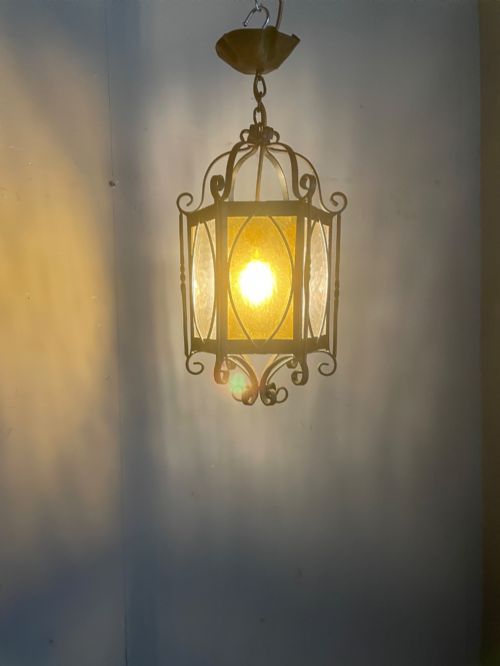


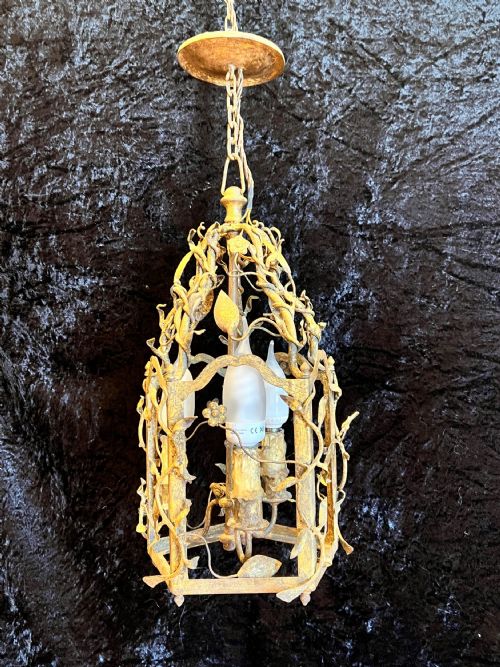


Rustic Hanging Light
A rustic hanging light brings warmth and old character to a room, using forged iron and glass.
Rustic Hanging Light
A rustic hanging light spans centuries of domestic illumination, from Georgian spill holders and iron chandeliers to later wrought iron hall lanterns and porch lights. You will frequently encounter lanterns and chandeliers forged from metal or wrought iron, often paired with glass or copper elements.
The selection ranges across several periods, notably the nineteenth century, nineteen-hundreds, and nineteen-thirty, drawing on styles such as Arts and Crafts, Gothic Revival, and French Country. These fixtures were designed to hang in halls, porches, and rooms where sturdy construction and traditional materials matter.
How they were made
Makers utilised forged wrought iron, cast iron, and copper to build the structural frames and lanterns, shaping metal by hand or casting it carefully. Glass panels, frosted glass, and coloured crystal fruits such as grapes, apples, and pears were added to refract the light.
Some examples incorporate organic materials like maple wood, leather, vellum, and red and roe deer antlers, reflecting traditional craftsmanship. Blacksmiths shaped the iron components to create durable fixtures intended for everyday use.
Several chandeliers opt for unconventional adornment, substituting standard drops with coloured crystal fruits including grapes, apples, and pears.
What varies in quality
The standard of a rustic hanging light depends on the dexterity of the metalwork and the integration of materials like hand-stitched leather, vellum, or copper. Finely forged details, such as those on blacksmith-made lanterns, distinguish simpler items from more ambitious artisan pieces.
Design complexity also plays a part, ranging from basic single-bulb pendants to multi-branched chandeliers hung with crystal fruits or intricate shamrock motifs. The preservation of original glass panes and the integrity of the structural frame determine the standing of each piece.
The Rustic Hanging Light Glossary
- Wrought iron
- Iron that has been heated and worked with tools by a blacksmith. This material provides the sturdy, textured frames seen on many period lanterns and chandeliers.
- Arts and Crafts
- A design movement valuing traditional craftsmanship and simple forms. Pieces in this style often feature exposed metalwork and honest construction.
- Chandelier
- A branched hanging light fixture designed to hold multiple illumination sources. Examples in this category range from iron branch frames to multi-lantern configurations.
- Spill holder
- A small container used for holding tapers or wooden spills to transfer fire. Early nineteenth-century examples appear among these lighting and hearth accessories.
- Hall lantern
- An enclosed hanging light designed specifically for entryways and corridors. They frequently utilise glazed panels to protect the internal flame or bulb from draughts.
Rustic Hanging Light: Frequently Asked Questions
What periods do these rustic lights come from?
The selection spans from the eighteenth century through the Georgian era and the nineteenth century, up to the nineteen-twenties and nineteen-thirties.
Different decades brought distinct aesthetic choices, moving from early forged iron work to Arts and Crafts designs and later antler constructions.
Where were these hanging lights used?
These fixtures were typically hung in hallways, porches, and large rooms where durable, practical illumination was required.
Enclosed lanterns protected the light source in draughty entryways, while larger multi-branch chandeliers illuminated principal living spaces.
What materials should I expect to find?
Construction relies heavily on metals such as wrought iron, cast iron, copper, and brass, often combined with glass or frosted glass.
Some pieces incorporate organic and unusual elements, including maple frames, leather, vellum, and deer antlers.
How do I recognise an Arts and Crafts piece?
Arts and Crafts lighting emphasises visible construction methods and traditional materials like hand-worked copper and iron.
These designs often strip away excessive ornamentation in favour of honest form and tactile surfaces.