





Gilt Mantelpiece Clock
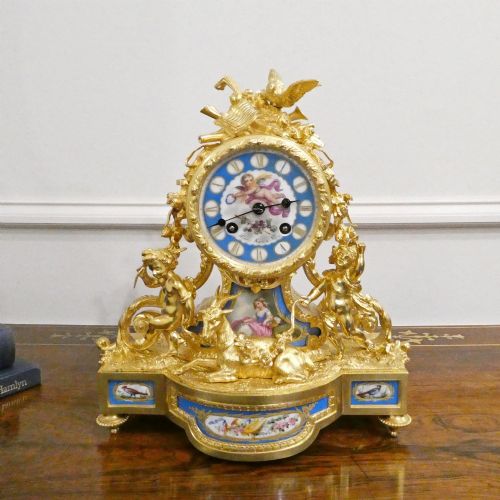
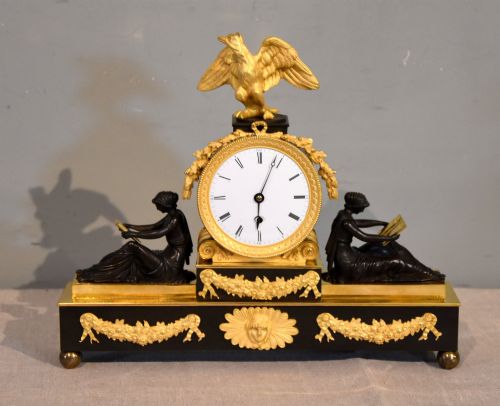
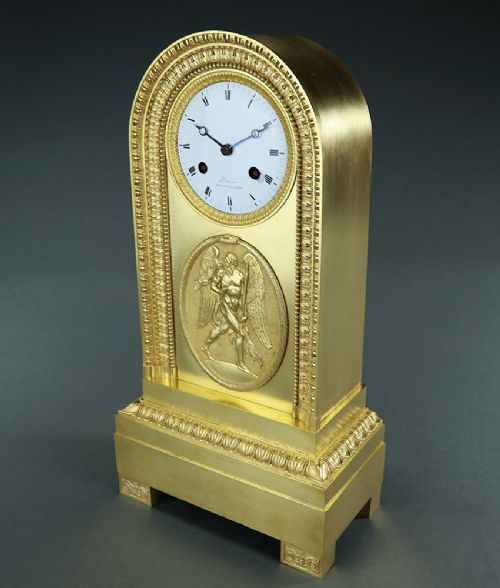
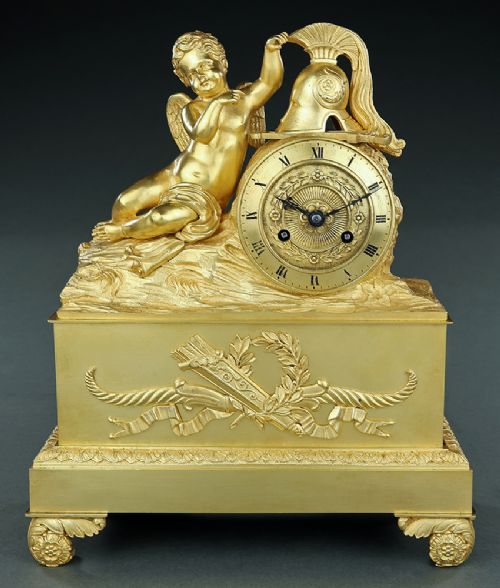
A gilt mantelpiece clock brings nineteenth-century French and English precision, ormolu shine, and porcelain panels to a room.
Gilt Mantelpiece Clock
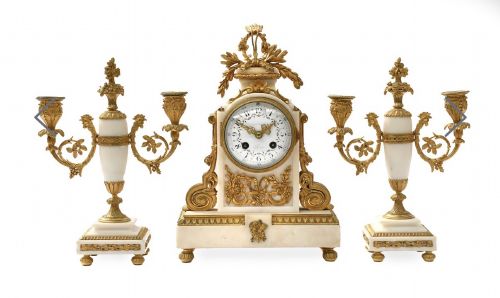
When searching for a gilt mantelpiece clock, a buyer looks at decorative timepieces designed to sit on a fireplace ledge or sideboard during the nineteenth century. These objects include freestanding French ormolu pieces, English Regency brass timepieces, and larger marble or porcelain garniture sets complete with matching candelabras.
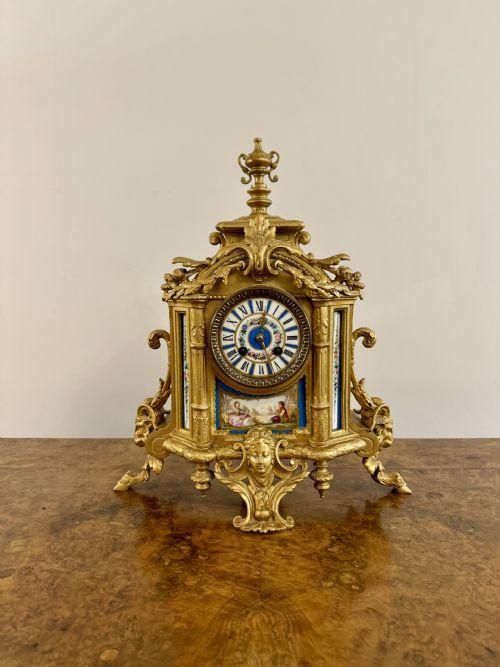
The version most likely to meet a buyer on this page is a French nineteenth-century gilt bronze or brass mantel clock, frequently decorated in the Louis XVI style, Rococo revival, or French Empire manner. Many incorporate enamel dials, drum heads, or Sevres-style porcelain panels framed by elaborate cast metal mounts.
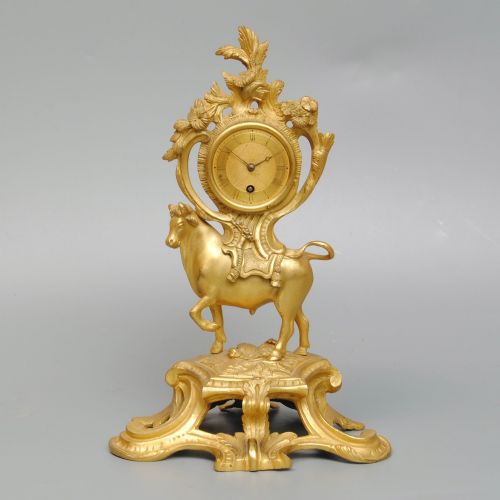
Makers and workshops such as Henry Marc, Japy Freres, Viner of London, and Breguet appear among the listed pieces, alongside unsigned French and English works from the Victorian era. Forms range from simple carriage timepieces and portico clocks to multi-piece sets featuring cherubs and urns.
Materials and construction methods
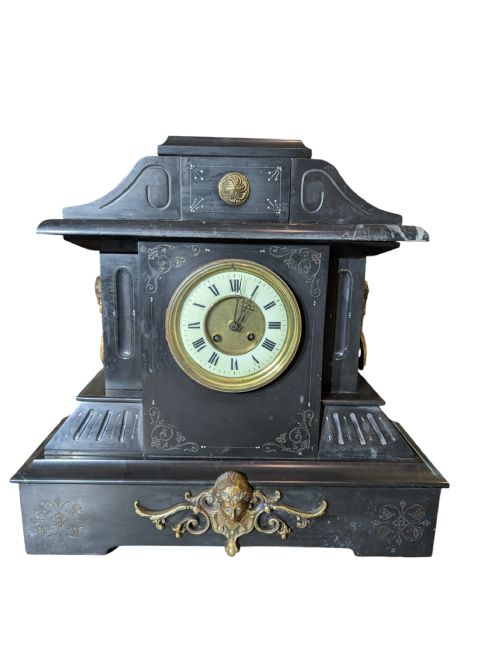
Gilt mantelpiece clocks rely on foundational metals such as solid brass, bronze, and copper cast into intricate decorative shapes before receiving a layer of fire gilding or ormolu. Artisans combined these metallic elements with contrasting natural materials like white marble, red marble, onyx, and cut crystal.
Dial faces utilised white enamel painted with Roman numerals, protected behind bevelled glass doors and bezels. Clockmakers integrated brass eight-day mechanical movements driven by springs or pendulums, housed within carved stone bodies or elaborate figural bronze cases.
Porcelain components, including painted plaques and dial centres, were imported from factories like Sevres and fitted directly into the metal armature of the clock case or garniture sets.
Listings span the nineteenth century, featuring Victorian, Regency, and French Empire periods alongside Louis XVI and Rococo revival styles.
Markers of distinction and build
The distinction between standard production and the top of the range rests on the crispness of the bronze casting and the depth of the hand-chased surface detail. Finer pieces exhibit sharp relief in foliage, figures, and scrollwork, whereas lesser examples show softer edges from worn moulds.
Quality also reveals itself in the integration of materials, such as heavy rouge or white marble bases fitted precisely to solid ormolu mounts rather than plated substitutes. Signed movements by notable makers command greater attention due to superior mechanical reliability and finishing on the brass gears.
Henry Marc·Baetens London·Henry Dasson·Viner London·Japy Freres·Arnold and Frodsham·Breguet
The Gilt Mantelpiece Clock Glossary
- Ormolu
- A technique of applying finely ground high-carat gold to an bronze object using a mercury amalgam, then firing it to produce a rich metallic lustre. This finish defines the golden appearance of many antique French timepieces.
- Garniture set
- A decorative arrangement consisting of a central clock flanked by matching objects such as candelabras, urns, or vases. These sets were designed to sit symmetrically on a mantelpiece.
- Portico clock
- A distinct architectural clock style featuring a tall, slender case supported by four columns resembling a classical portico. Cut crystal and glass elements often accompany these designs.
- Drum head clock
- A timepiece featuring a circular clock case shaped like a drum mounted atop a larger marble or metal base. They frequently appear in Victorian and nineteenth-century inventories.
- Carriage timepiece
- A portable spring-driven clock originally designed for travelling, typically fitted with a carrying handle and glass panels on all sides.
Gilt Mantelpiece Clock: Frequently Asked Questions
What is a clock garniture?
A clock garniture is a matched set containing a central mantel clock accompanied by subsidiary decorative objects, usually a pair of matching candelabras, urns, or vases designed to stand alongside it on a fireplace ledge.
These sets were produced extensively in nineteenth-century France to create a balanced, unified display across a drawing room mantelpiece.
How do I wind a mechanical mantel clock?
Mechanical mantel clocks utilise a key inserted into specific winding holes on the enamel dial face to tension the internal springs or lift the driving weights. Most traditional nineteenth-century movements require a gentle turn once every eight days.
Care must be taken not to over-wind the mechanism, as this can strain the internal steel springs and disrupt the pendulum beat.
What is the difference between ormolu and gilt brass?
Ormolu refers specifically to real gold leaf or mercury gilding applied to a bronze base, creating a warm, durable finish characteristic of high-end French decorative arts from the eighteenth and nineteenth centuries.
Gilt brass or gilt metal involves a similar golden surface treatment applied to a less expensive copper-zinc alloy base, often resulting in a lighter overall weight and slightly different surface wear.
Where were these clocks originally placed?
These timepieces were designed to occupy prominent positions in the formal reception rooms of nineteenth-century homes, most commonly centred on the mantelpiece above a fireplace.
They also stood upon sideboards, brackets, and pier tables where their reflective gilt surfaces and decorative porcelain panels could catch the light.