


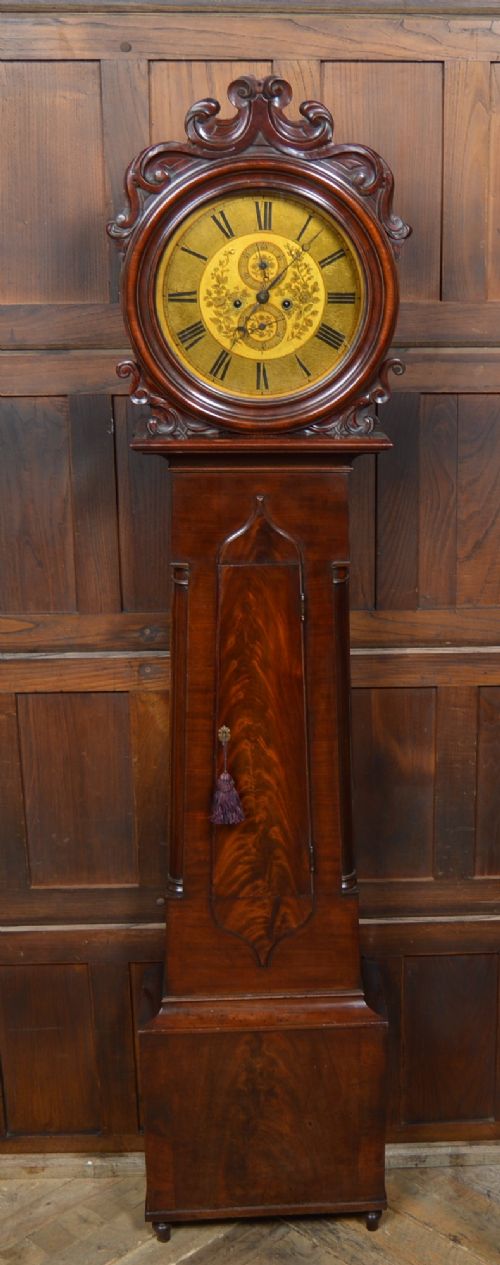


Drum Head Clock
A drum head clock holds a circular dial housing atop a tall case or a compact desk body, offering neat proportions and reliable mechanical movement.
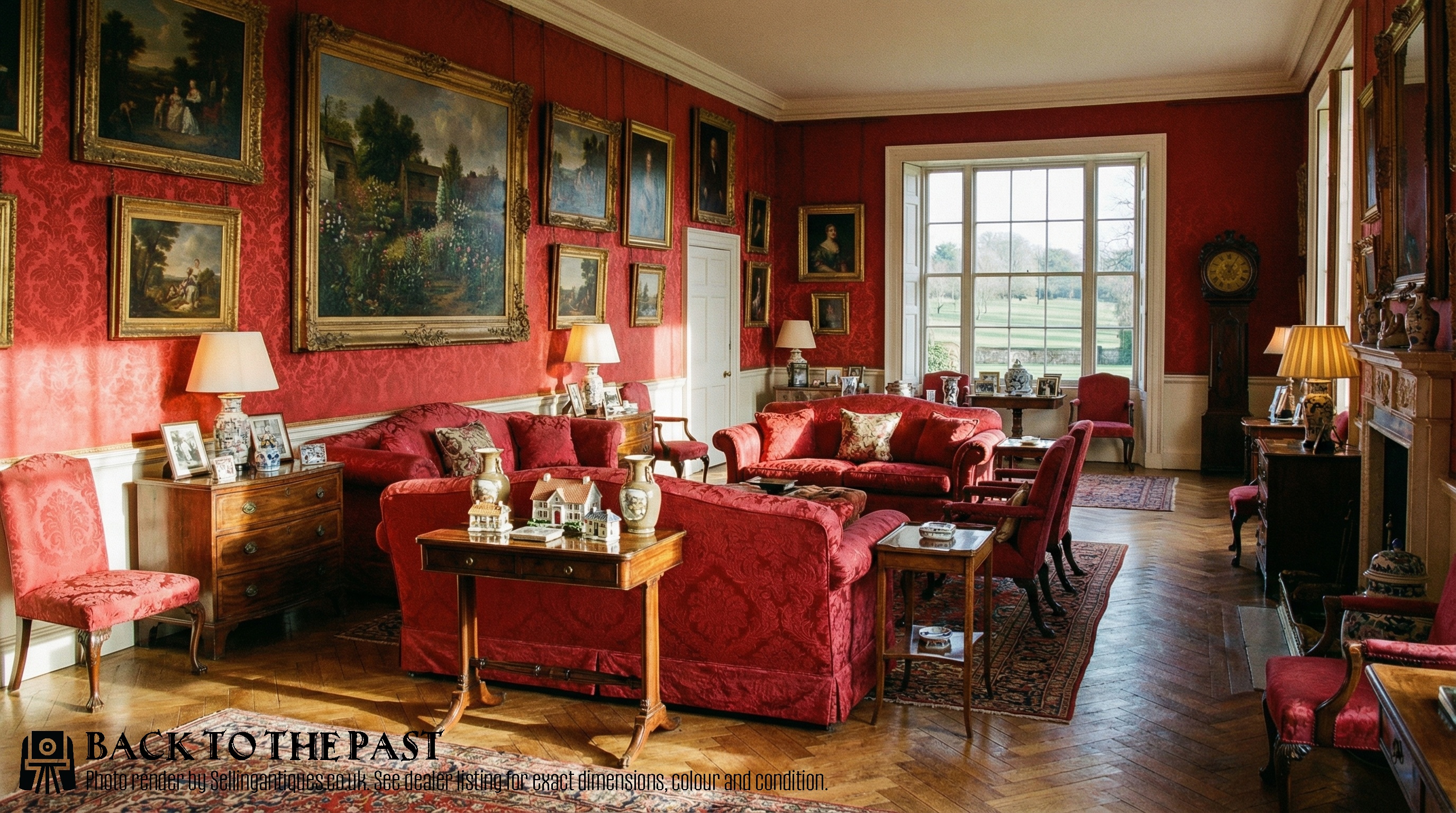
Drum Head Clock
A drum head clock derives its name from the distinct circular encasement that holds the dial, resembling the shape of a side drum. Buyers searching for a drum head clock encounter several distinct formats across this page, ranging from grand standing longcases to smaller shelf-bound mantel clocks and wall-mounted dials.
The tall varieties appear frequently as Scottish longcases in mahogany, flame mahogany, and burr walnut, often standing tall in hallways or living spaces. Mantel versions lean toward French production utilising ormolu, gilt bronze, marble, slate, and porcelain, while wall clocks utilise fusee movements in rosewood or mahogany housings.
Originating largely from 19th-century Victorian workshops, Regency cabinets, and French makers, these timepieces combine structural wood or cast metal with crisp enamel dials. Choosing between a tall grandfather version and a desk mantel piece depends entirely on the available floor space and the desired decorative period.
Materials and Construction
Cabinet makers constructed the standing and wall variants using rich timbers such as mahogany, rosewood, walnut, and flame mahogany, often incorporating brass inlay and fine carving. French mantel examples rely on cast ormolu, gilt bronze, and patinated metals, frequently paired with decorative elements like lion masks and Sevres porcelain panels.
Clockmakers fitted these housings with robust mechanical movements, utilising single or twin fusee gear systems and 8-day durations to maintain accurate timekeeping. Dials feature white enamel with distinct numerals, protected by heavy glass bezels set within the characteristic drum-shaped metal or wooden frames.
Listings feature 19th-century Victorian, Regency, and 1880 periods, spanning glass, brass, mahogany, gilt bronze, enamel, ormolu, iron, and porcelain.
Evaluating Quality and Craftsmanship
Quality rests upon the crispness of the casting in metal or the depth of polish and grain selection in timber cases. Superior examples display refined proportions, finely engraved dial signatures, and harmonious integration between the circular drum housing and the supporting base.
Movement sophistication also dictates standing. The presence of specialised escapements, full restoration of the original gear train, and signed plates from recognised makers elevate an individual piece above standard utility clocks.
Japy Freres·James McCabe·Whitelaw of Edinburgh·Louis Japy·Antoine Foullet
The Drum Head Clock Glossary
- Drum head
- A circular clock case housing shaped like a drum, mounted atop a longcase trunk or resting on a mantel base.
- Fusee
- A conical pulley connected to a cord or chain that equalizes the pull of the mainspring as it winds down, ensuring steady timekeeping.
- Ormolu
- Gilt bronze produced by applying a finely ground high-carat gold-mercury amalgam to a bronze base, creating a rich golden surface.
- Escapement
- The mechanical linkage that translates the swing of the pendulum into controlled rotational steps of the gear train.
- Longcase
- A tall floor-standing clock, often termed a grandfather clock, enclosing weights and a pendulum within a vertical wooden trunk.
Drum Head Clock: Frequently Asked Questions
What is a drum head clock?
A drum head clock is a timepiece featuring a circular, drum-shaped metal or wooden housing for the dial. This distinctive head sits either on a tall wooden longcase trunk or forms the main body of a mantel or wall clock.
The style became popular during the 19th century in Britain and France. It bridges the gap between traditional grandfather clocks and compact table timepieces.
Where were drum head clocks made?
These clocks were produced extensively in Britain, particularly in Scotland and London, alongside significant manufacturing centres in France.
British makers favoured tall mahogany and walnut longcases, while French workshops specialised in gilt bronze, ormolu, and marble mantel designs.
How do fusee movements work?
A fusee movement uses a conical pulley attached to a chain or cord that winds the mainspring power source. As the spring unwinds and loses tension, the chain moves to a wider part of the cone to maintain consistent torque.
This clever mechanism ensures the clock maintains steady accuracy throughout its running cycle.
How should I maintain my clock?
Keep your clock in a stable environment away from direct sunlight, dampness, and sudden temperature fluctuations. Standing longcases must be levelled carefully on the floor to ensure the pendulum swings evenly.
Professional servicing every few years keeps the mechanical gears clean and properly oiled.