


Gilt Longcase Clock
A gilt longcase clock brings monumental presence to a room, combining towering woodwork with gilded detail.
Gilt Longcase Clock
A gilt longcase clock is an upright timekeeper enclosed in a tall wooden case, frequently embellished with gilt decoration, lacquer, or painted finishes. When searching for a gilt longcase clock, buyers encounter towering floor-standing examples from the Georgian and eighteenth century alongside more compact twentieth-century variations.
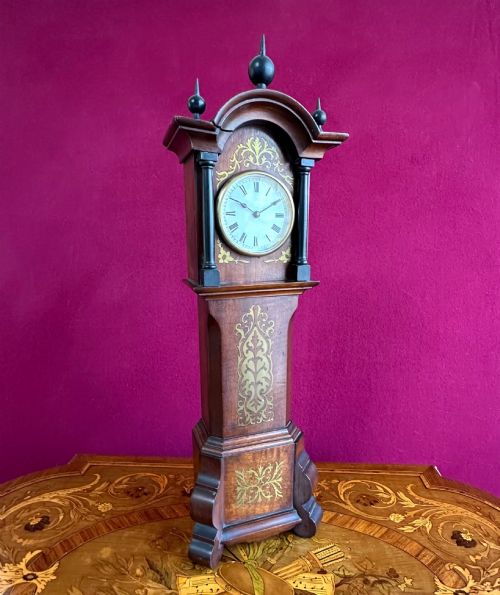
The selection ranges from early eighteenth-century pieces bearing intricate chinoiserie scenes to later French Louis XV and Louis XVI style models featuring ormolu and kingwood inlay. Miniature versions and grandmother clocks also appear, offering the height of a longcase design in a reduced proportion.
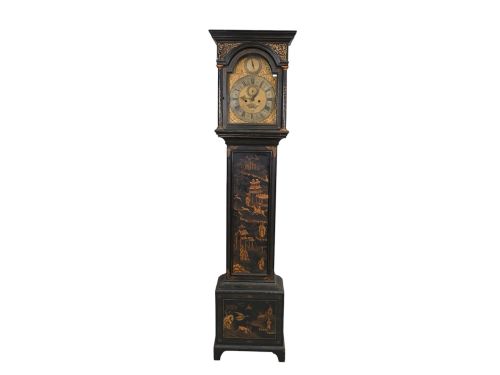
Most pieces on offer utilise lacquered wood or gilt surfaces paired with brass dials and glass door panels. Makers such as William Kipling London, Wise of Reading, Robert Berry, and Gardner of London represent the historic English tradition found within these listings.
How they were made
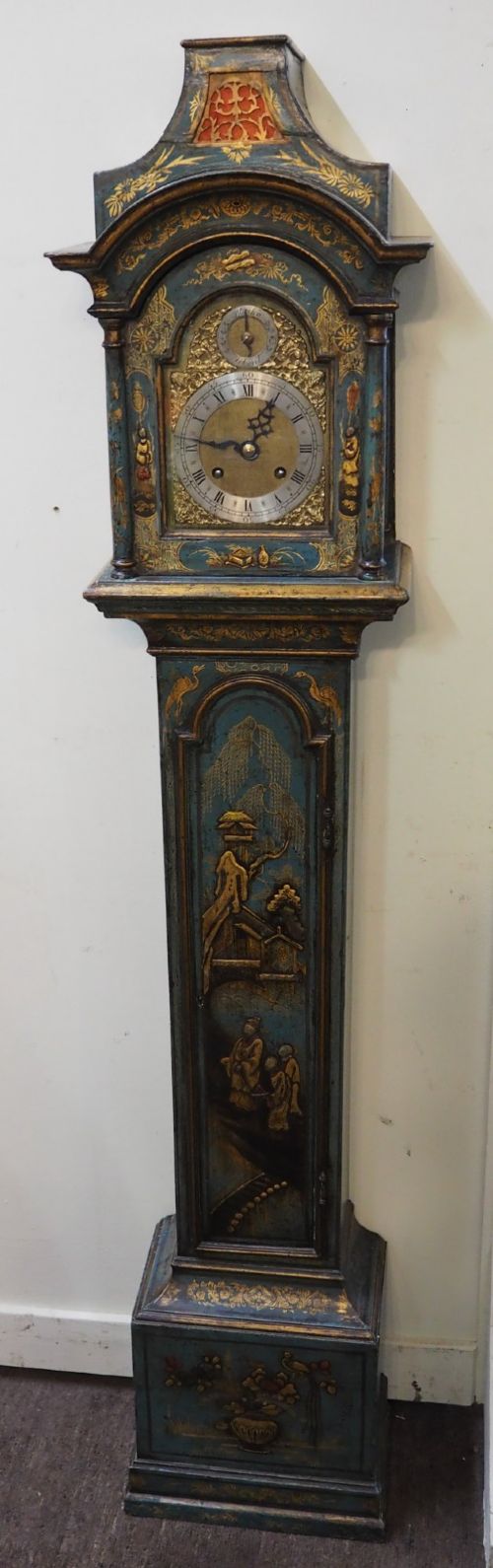
Craftsmen built these clock cases using timber foundations such as oak or kingwood, which were then coated in multiple layers of lacquer for the chinoiserie and japanned finishes. Gilt ornamentation and painted details were applied by hand to accent the raised motifs on the door and trunk.
Several models feature automaton movements, adding moving figures to tick away the hours alongside the pendulum.
What varies in quality
The refinement of the surface decoration defines the upper tier of these clocks, where hand-painted chinoiserie details and deep layers of lacquer show superior artistic execution. Simpler painted models offer a more domestic charm compared to the intricate gilding and ormolu mounts seen on French revival styles.
Proportion and scale also distinguish the pieces, with miniature and grandmother clocks requiring delicate cabinetry work to maintain the grandeur of full-sized grandfather clocks. The presence of a signed dial by a known maker elevates the historical interest of the mechanism.
William Kipling London·Wise of Reading·Robert Berry·Gardner of London
The Gilt Longcase Clock Glossary
- Chinoiserie
- European decorative style inspired by Chinese art and design, featuring painted or lacquered landscapes, figures, and pagodas. This technique dominates the decoration of eighteenth-century longcase clocks.
- Grandmother clock
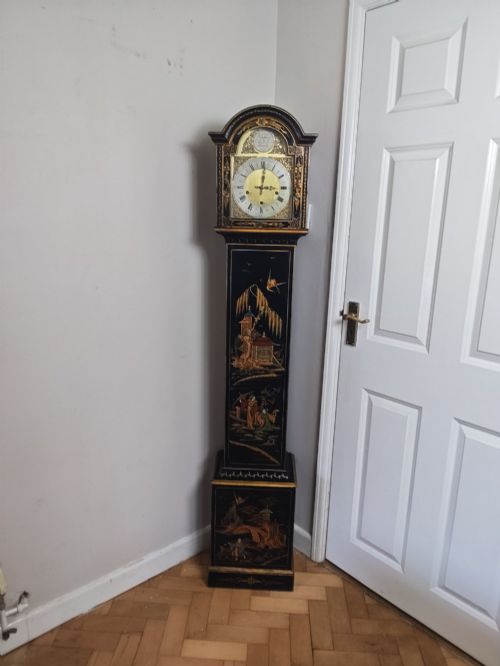
- A smaller, more slender version of the traditional grandfather longcase clock. These scaled-down timekeepers became popular during the twentieth century.
- Japanned
- European imitation of Japanese and East Asian lacquerwork, created through layered varnishes and raised metallic decoration. It provides the dark green and blue ground colours found on period cases.
- Ormolu
- Gilded bronze ornamentation applied to furniture and clock cases, particularly prominent in French Louis XV and Louis XVI styles. It adds cast metallic relief to the timber exterior.
- Kingwood
- A dense, richly grained timber utilised for cabinet work and inlay. It provides a dark, decorative surface on continental longcase designs.
Gilt Longcase Clock: Frequently Asked Questions
What is a gilt longcase clock?
A gilt longcase clock is a tall floor-standing timekeeper featuring wooden cabinetry enhanced with gold leaf, gilt brass, or lacquered decoration. These pieces range from grand eighteenth-century English examples to French ormolu-mounted styles.
They combine tall clock cases with brass movements and glass-fronted doors designed to display the oscillating pendulum and weight-driven mechanism.
How do I tell an 18th century clock apart from later pieces?
Eighteenth-century examples typically display hand-applied japanning, deep lacquer work, and engraved brass dials signed by regional or London makers. The proportions reflect the cabinet-making standards of the Georgian period.
Later nineteenth and twentieth-century pieces, including Edwardian miniatures and 1920s musical grandmother clocks, often utilise modified chime systems and brighter gilt finishes while referencing earlier historical styles.
What is the difference between a grandfather and a grandmother clock?
A grandfather clock is a full-sized floor-standing timekeeper measuring over six feet in height, designed with substantial timber proportions. A grandmother clock is a smaller, more slender variation produced in reduced dimensions.
Both utilise similar weight-driven or spring-driven movements and brass dials, but the grandmother clock offers a compact silhouette suited to smaller spaces.