

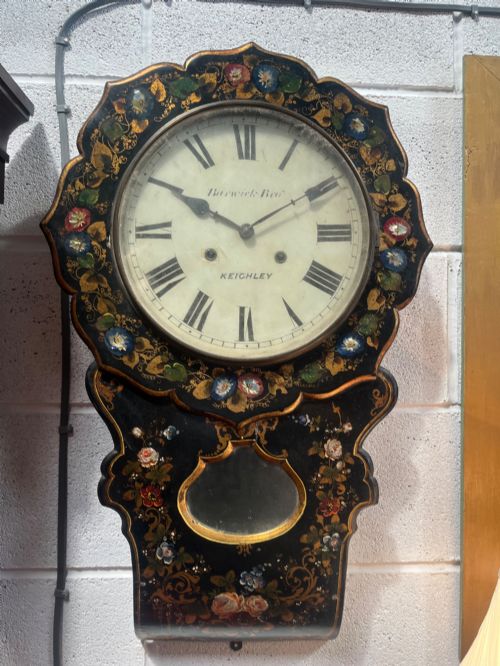
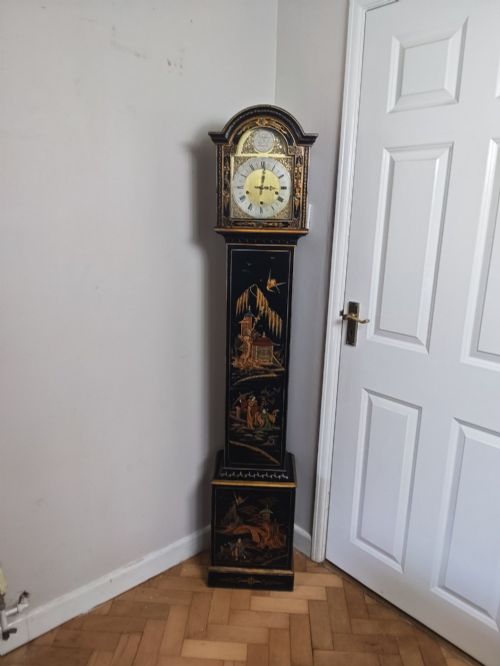


Gold Lacquered Clock
These gold lacquered clock pieces bring hand-finished Chinoiserie ornament and striking movements into a room, offering both traditional timekeeping and rich visual texture.
Gold Lacquered Clock
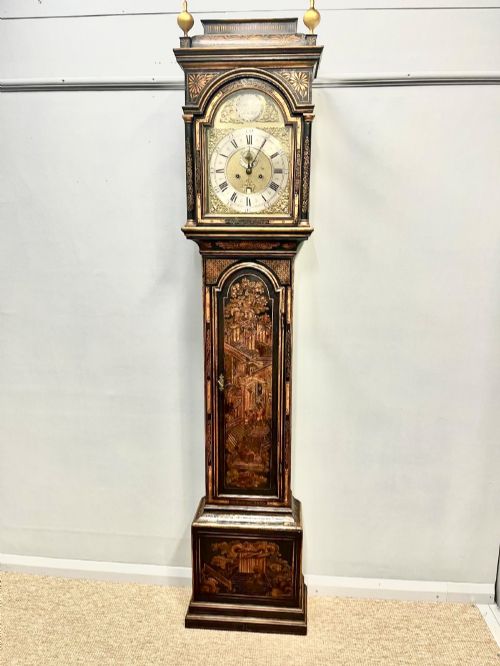
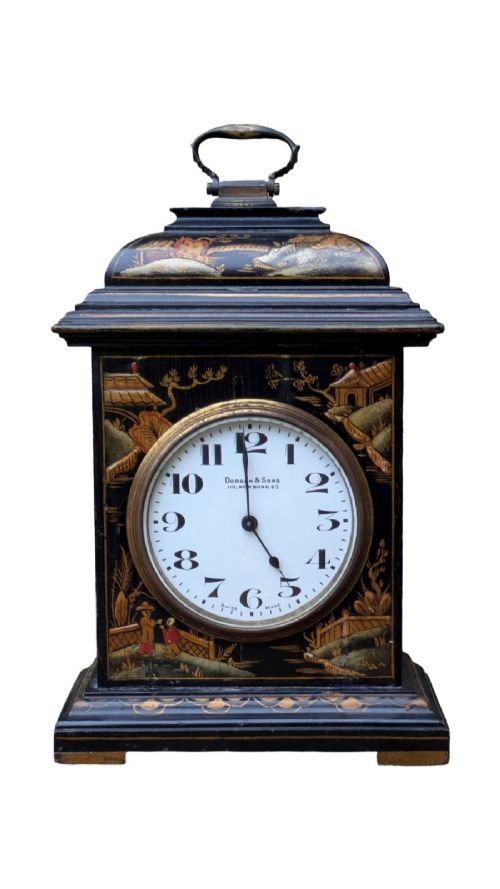
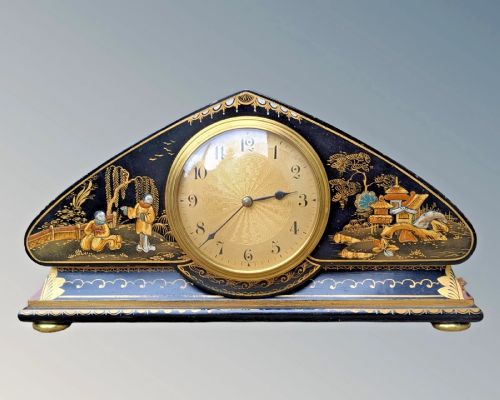
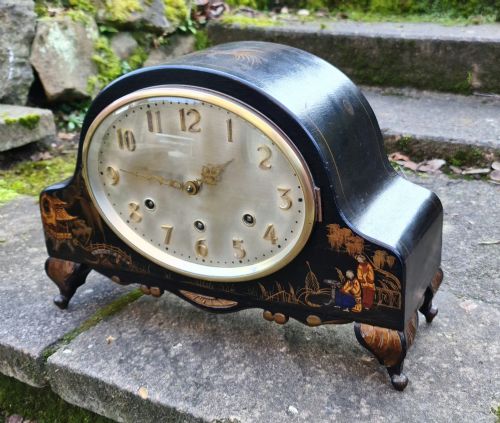
When you search for a gold lacquered clock, you encounter timepieces ranging from compact mantel and bracket formats to full-height longcase and grandmother clocks. These objects merge mechanical timekeeping with decorative lacquerwork, predominantly executed in Chinoiserie styles across several centuries.
The pieces appearing on this page span diverse periods, including Georgian examples, 18th Century workshop pieces, and later 19th Century and early 20th Century revivals. Formats vary from wall-hanging clocks to monumental longcase clocks, each incorporating painted decoration alongside brass fittings and glass panels.
Buyers are most likely to meet mantel clocks and bracket clocks alongside taller longcase versions. These items showcase distinct regional and period characteristics, linking English movement-making with decorative lacquer finishes.
How they were made
Makers constructed the bodies of these timepieces using woods such as ebonised timber, standard wood, papier-mache, and lacquered wood as foundations. Artisans applied layers of lacquer and paint to create the characteristic red, green, and gold surfaces associated with Chinoiserie ornamentation.
Clockmakers combined these decorated wooden and papier-mache cases with brass movements, glass dial covers, and intricate painted decorations. Eighteenth-century examples often utilised movements produced by named London makers, while later revivals integrated diverse mechanical systems.
Gold Lacquered Clock Retail Price Guide 2026
Typical asking prices for gold lacquered clock among the pieces listed under this phrase on Sellingantiques today, from the lower quarter to the upper quarter. They describe what is for sale here now, not the wider market.
What varies in quality
The distinction between tiers of these clocks rests upon the execution of the lacquer finish and the sophistication of the movement. Pieces featuring detailed red or green ground lacquer with refined gold Chinoiserie painting stand apart from simpler painted versions.
Internal mechanics further separate standard production from superior work. Examples housing signed movements by makers such as James Smith, Chater & Son, or Robert Berry demonstrate higher workshop standards than unsigned or later derivative pieces.
James Smith·Chater & Son·Robert Berry
The Gold Lacquered Clock Glossary
- Chinoiserie
- European decorative style reflecting Chinese artistic influences, frequently featuring figures, pagodas, and landscapes rendered in gold lacquer.
- Bracket clock
- A portable household clock originally designed to sit upon a wall bracket, typically featuring a brass carrying handle and striking movement.
- Longcase clock
- A tall pendulum clock enclosed in a wooden case standing directly on the floor, also known historically as a grandfather clock.
- Ebonised wood
- Timber treated with a finish to imitate expensive ebony wood, commonly providing a dark contrast to gold lacquer decoration.
- Grandmother clock
- A slender, shorter version of the traditional longcase clock, often produced in the early twentieth century.
Gold Lacquered Clock: Frequently Asked Questions
What is a gold lacquered clock?
A gold lacquered clock is a timepiece housed in a wooden or papier-mache case finished with lacquer and detailed with gold Chinoiserie decoration.
These clocks range from small mantel models to tall longcase pieces produced across the eighteenth, nineteenth, and early twentieth centuries.
How do I identify a period clock?
Period identification relies on examining the case construction, the style of the lacquer work, and the mechanical movement inside.
Eighteenth-century examples often feature signed brass dials and specific London maker signatures, whereas later pieces reflect nineteenth and twentieth-century revival styles.
Where should I place a longcase clock?
Longcase clocks require a stable, dry interior wall with adequate floor clearance to stand completely upright.
Positioning them away from direct heat sources helps preserve the delicate lacquer surface and ensures the pendulum swings evenly.
What maintenance do these clocks need?
Mechanical timepieces require regular winding, and striking or musical movements benefit from professional servicing by a qualified horologist.
The lacquered exterior needs only gentle dusting with a soft, dry cloth to protect the painted and gilded surfaces.