





Gilt Leather Bindings
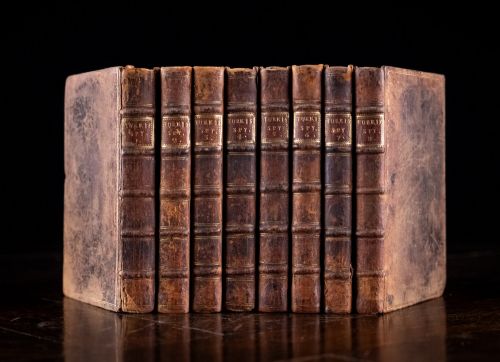
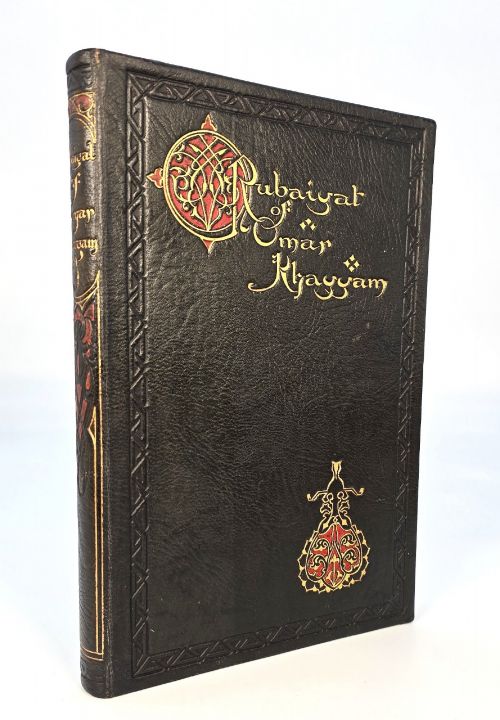
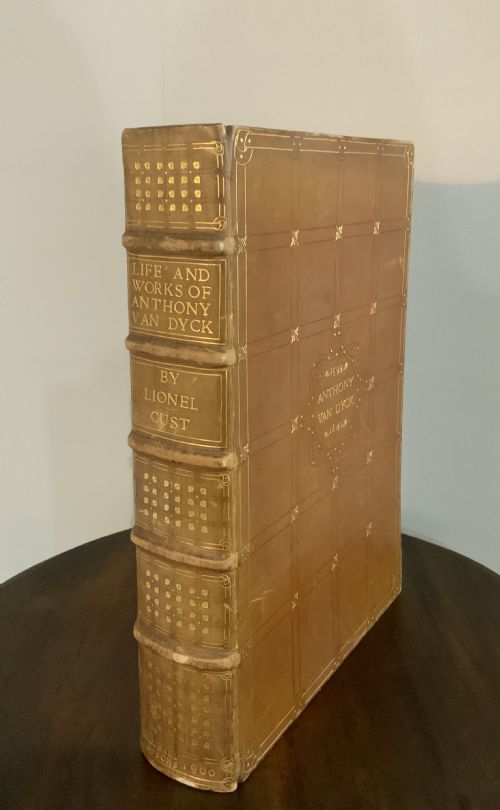
These gilt leather bindings are beautifully decorated books from the eighteenth, nineteenth, and early twentieth centuries, offering both literary content and decorative appeal for shelves and libraries.
Gilt Leather Bindings
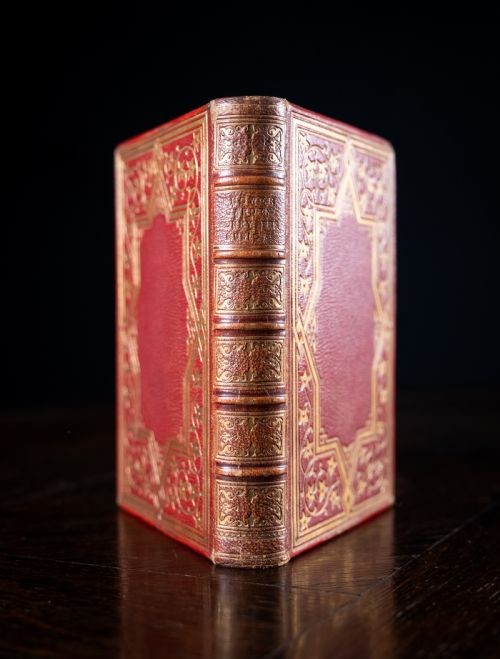
Gilt leather bindings comprise antique books, multi-volume sets, and collected works produced primarily during the eighteenth, nineteenth, and early twentieth centuries. These volumes range from single poetry books and biographies to extensive sets such as historical memoirs and complete novels.
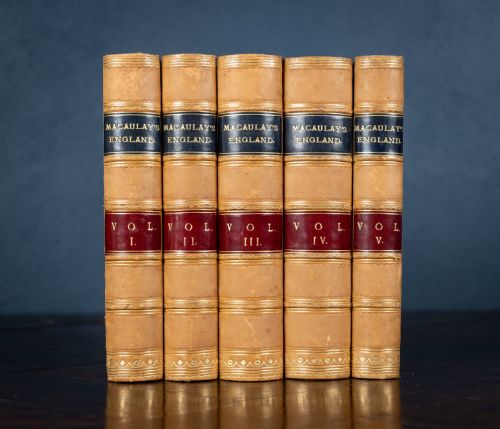
The versions most frequently met on this page include nineteenth-century leather and vellum bound volumes, alongside matching multi-volume sets decorated with gold tooling. Victorian and Edwardian examples sit alongside earlier Georgian editions, showing a continuity in traditional bookbinding forms.
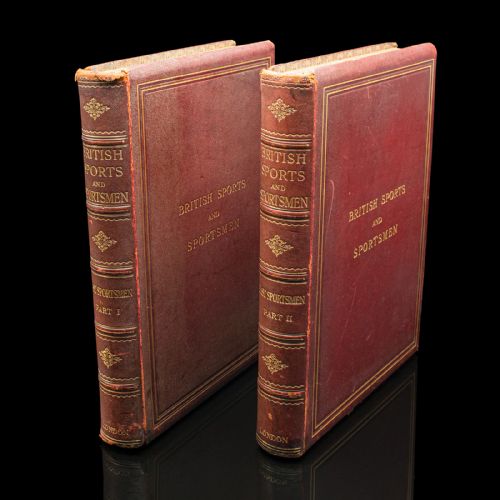
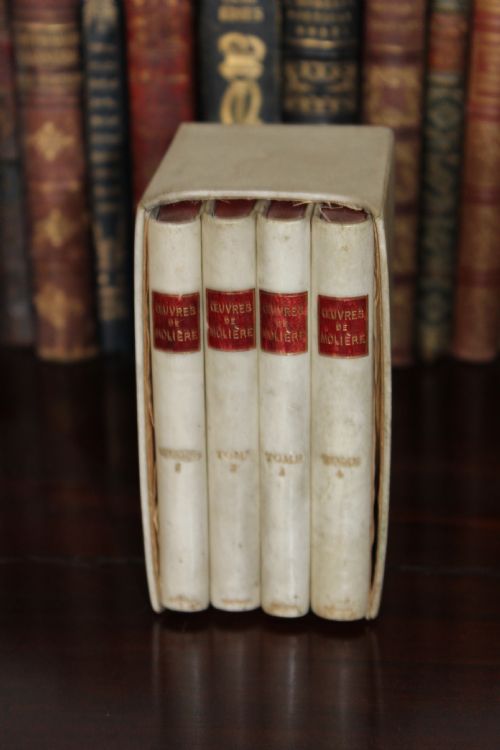
Buyers encounter individual reference books, complete sets of plays, and translated works, all enclosed in protective coverings of calfskin, vellum, or standard leather. The contents vary widely from natural history and sporting references to classical literature and political history.
Qualities of Construction
The standard of a binding depends on the precision of the gold tooling and the uniformity of the leather treatment across the spine and boards. Finer examples display crisp, clear impressions in the gold leaf and carefully matched grain in the calfskin or vellum.
The consistency of multi-volume sets distinguishes superior editions, particularly when binders maintained uniform lettering and decoration from the first book to the last. Rebound volumes and complete original sets demonstrate different approaches to preservation and presentation.
The listings span from the eighteenth century through the Edwardian period, incorporating materials like vellum, calfskin, and gold leaf.
Henry Young & Son
The Gilt Leather Bindings Glossary
- Calfskin
- A soft, smooth leather derived from the skin of a calf, commonly utilised for durable and refined book bindings.
- Vellum
- A fine parchment prepared from calfskin, used as a sturdy and pale covering material for special book editions.
- Gold Leaf
- Gold beaten into an extremely thin sheet, pressed onto leather bindings to create permanent metallic decoration and lettering.
- Marbled Paper
- Paper decorated with colourful swirling patterns, frequently selected for the endpapers inside antique book covers.
- First Edition
- The first commercially produced printing of a book, often sought after by collectors and bibliophiles.
Gilt Leather Bindings: Frequently Asked Questions
How should I clean antique leather bindings?
Dust the exterior gently with a dry, soft cloth to remove surface particles without disturbing the paper or leather.
Avoid using modern chemical cleaners or excessive moisture, as liquids can stain the leather and damage the gold leaf tooling.
Can I store these books in direct sunlight?
Keep these volumes away from direct sunlight and heat sources to prevent the leather and marbled paper from fading and drying out.
Stable indoor humidity helps preserve both the vellum covers and the internal paper pages over long periods.
How do I identify a complete book set?
Check the title pages and volume numbers against the publisher details to ensure all matching parts are present.
Uniform bindings and matching spines usually indicate that volumes were published and bound together as a set.
What is the difference between calfskin and vellum?
Calfskin is a flexible, tanned leather with a visible grain, while vellum is an untanned, smooth parchment made from skin.
Vellum provides a stiffer, pale white covering, whereas calfskin offers a softer texture and darker natural tones.