
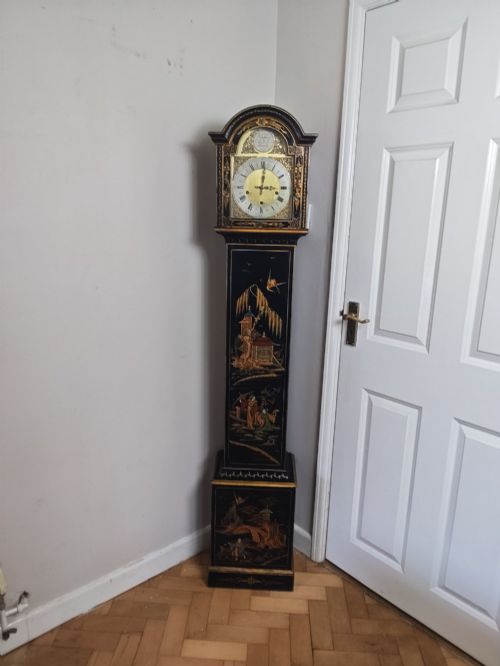
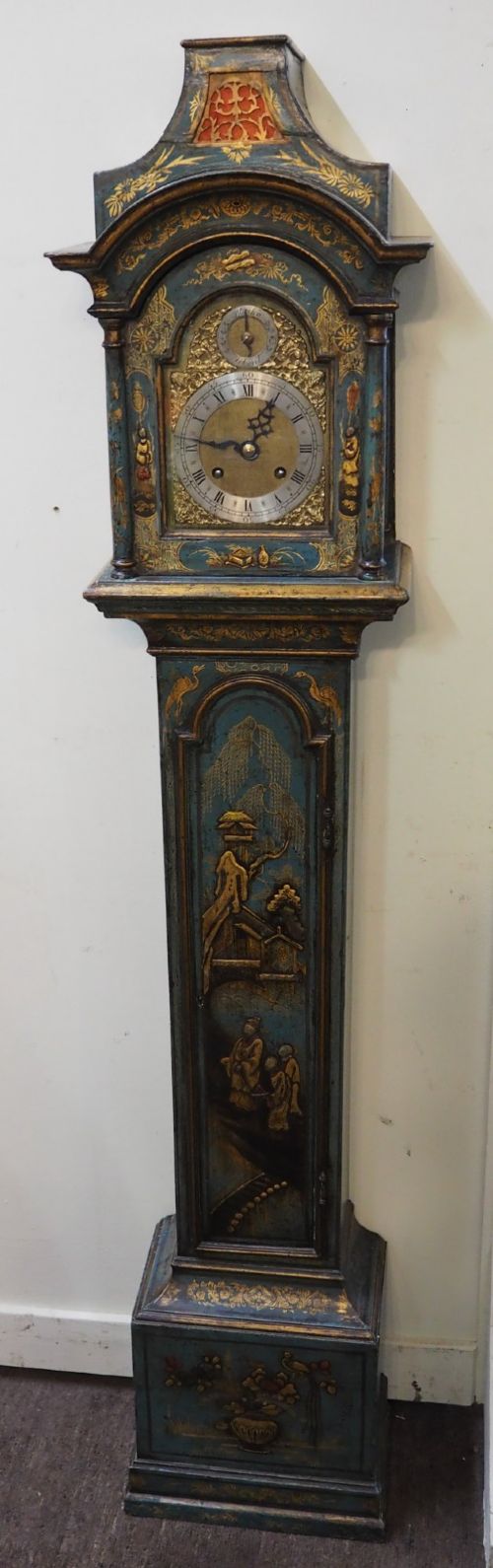
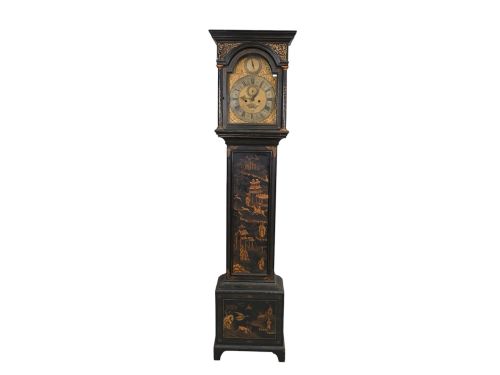


Gilt Lacquered Tall Clock
A gilt lacquered tall clock brings striking Chinoiserie decoration and height to a room, offering rich visual detail across eras.
Gilt Lacquered Tall Clock
A gilt lacquered tall clock is an imposing timepiece designed to command attention in a hallway or principal room. When exploring these pieces, collectors encounter longcase and grandfather clocks alongside smaller grandmother variants.
The selection ranges from early Georgian examples dating to the eighteenth century through to later nineteenth and early twentieth century interpretations. Most items on this page display traditional Chinoiserie motifs rooted in Georgian aesthetic traditions.
Origin points vary between English centres like London and Scottish locations such as Edinburgh. Cases appear in forms ranging from musical movements to automaton mechanisms and standard striking longcase clocks.
Materials and construction methods
Maker workshops built these tall clocks using wood carcases prepared for complex surface decoration. Japanned wood and lacquered finishes provided the smooth foundational layers required for intricate pictorial work.
Gilt and gold leaf applications highlight figures, landscapes, and architectural details against dark or coloured lacquer grounds. Brass components frequently structure the dial faces and internal movements.
Some timepieces include tiny mechanical automata figures designed to move while the clock measures the passing hours.
Assessing quality in tall clocks
Quality reveals itself in the depth and preservation of the Chinoiserie decoration across the wooden case. Finer examples display crisp gilt detailing and harmonious proportions that retain their original visual impact.
The sophistication of the internal movement further separates standard pieces from exceptional ones. Clocks featuring musical mechanisms, automata, or signed dials by makers like William Kipling command particular attention.
William Kipling London·Gardner of London
The Gilt Lacquered Tall Clock Glossary
- Chinoiserie
- European decorative style reflecting Chinese artistic motifs. It appears prominently on lacquered tall clock cases.
- Japanned wood
- European imitation of East Asian lacquerwork using layered varnishes. This technique creates the dark, glossy surface typical of these clocks.
- Longcase clock
- Tall pendulum clock enclosed in a wooden case. These tall clocks are frequently referred to as grandfather or grandmother clocks.
- Automaton
- Moving mechanical figure integrated into a clock face or case. Certain longcase examples incorporate these animated elements into their design.
Gilt Lacquered Tall Clock: Frequently Asked Questions
How do I care for lacquer furniture?
Lacquer surfaces require gentle maintenance away from direct sunlight and fluctuating temperatures. Dusting with a soft, dry cloth preserves the delicate gilt decoration and polished finish.
Avoid harsh cleaning products or excessive moisture, which can damage the aged surface layers and gold leaf details.
Where were these clocks made?
These timepieces were produced in various urban workshops across Britain during the Georgian era and subsequent centuries. Major centres included London, where prominent makers signed their dials.
Other examples originated further north, such as in Edinburgh workshops, reflecting regional variations in clockmaking and case decoration.
What are Westminster chimes?
Westminster chimes comprise a specific melodic sequence played by the clock movement on the quarter hour. This musical feature adds an auditory dimension to the visual presence of the tall clock.
Such movements appeared in later iterations, particularly during the early twentieth century alongside traditional striking mechanisms.