




Gilt Lacquer Tea Tray
A gilt lacquer tea tray brings rich, dark surfaces and brilliant metallic detail into daily use.
Gilt Lacquer Tea Tray
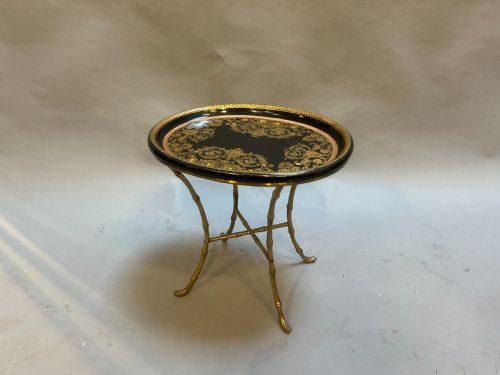
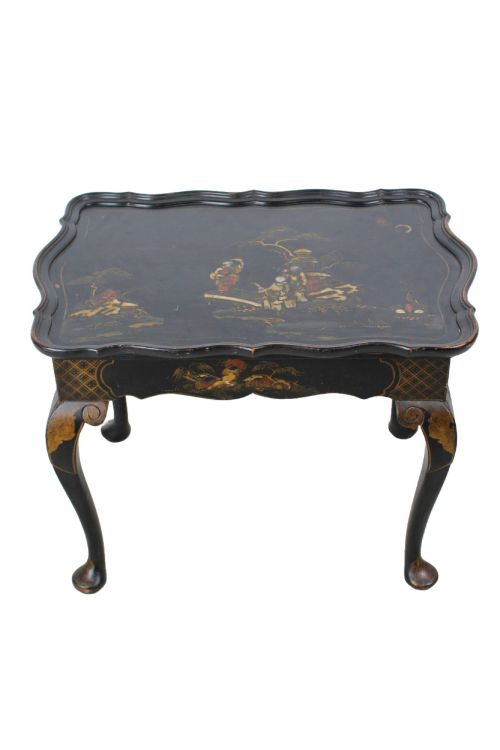
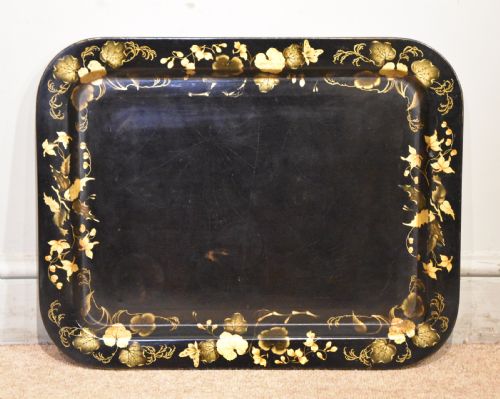
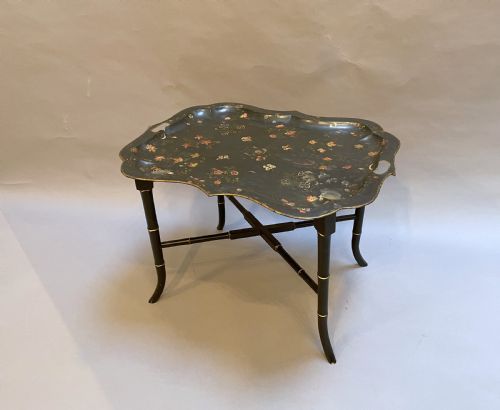
When you search for a gilt lacquer tea tray, you encounter pieces that function both as portable servers and as decorative centrepieces. The selection spans the Georgian, Regency, and Victorian periods, often appearing mounted upon later wooden or iron stands to serve as occasional coffee or drinks tables. These items typically present oblong, oval, or circular formats designed to hold vessels or display objects.
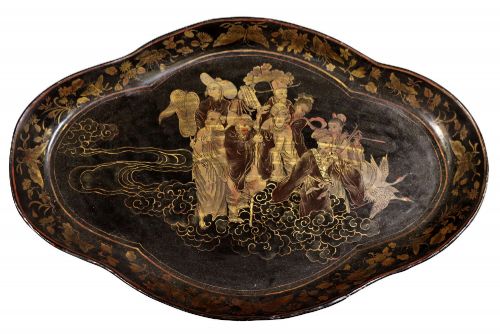
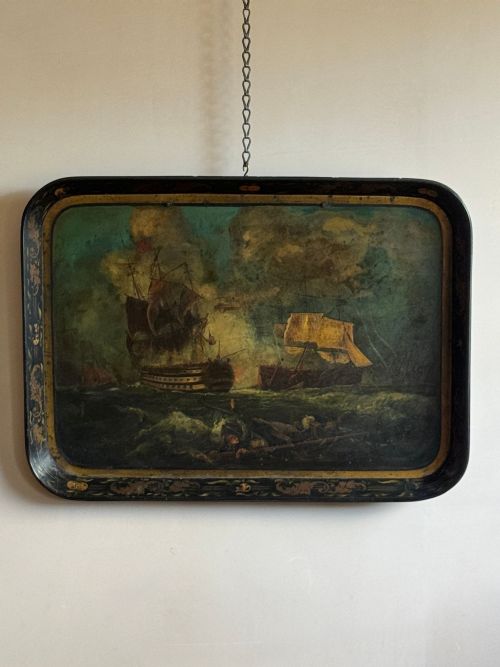
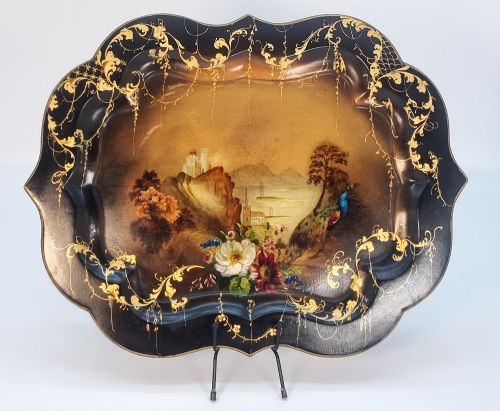
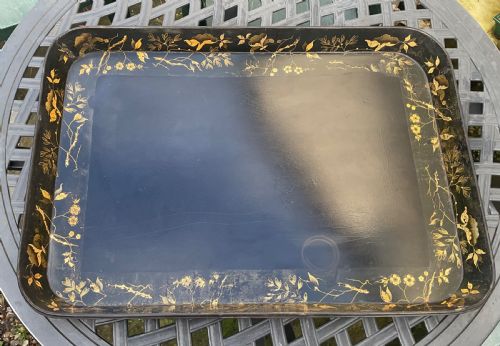
The most common examples on this page are papier-mâché and lacquered wood trays decorated with Chinoiserie motifs, floral scenes, or figurative subjects like fishing and hunting. They frequently arrive in ebonised finishes paired with gold leaf or painted gilt embellishments. While many survive as flat serving trays, a significant number now exist as tray tables supported by custom stands.
How they were made
Maker's workshops built the core structures from papier-mâché, wood, or tôle ware, applying multiple coats of lacquer to achieve a smooth, hard foundation. Artisans then built up the decoration using gold leaf and hand-applied paint, frequently employing Chinoiserie scenes featuring figures, pavilions, and floral elements.
Makers sealed these decorated surfaces with clear varnishes to protect the delicate gilt work and painted details from moisture and wear. Iron or wooden stands were often added later in the lifespan of these objects to convert low serving trays into functional tables.
A remarkably literal fish story awaits in the selection, featuring a massive naive papier-mâché tray dedicated entirely to fishing interest.
What varies in quality
The sophistication of the hand-painted and gilded ornamentation distinguishes exceptional examples from standard production. Trays bearing the signatures or stamps of prominent makers demonstrate superior artistry in their pictorial depth and precision of line.
The structural integrity of the papier-mâché or lacquered wood base, along with the preservation of the original surface finish, dictates the standing of each piece. Retaining the authentic painted highlights without extensive later repainting elevates the desirability of the tray.
Jennens & Bettridge·Henry Clay
The Gilt Lacquer Tea Tray Glossary
- Papier-mâché
- A composite material made from paper pulp or layers of paper reinforced with glue, then pressed and dried into a rigid form. It provided a lightweight yet durable base for lacquering.
- Chinoiserie
- A European artistic style reflecting Chinese motifs and decorative techniques, popular on English trays. It relies on imaginative depictions of oriental landscapes, figures, and architecture.
- Tôle ware
- Painted or lacquered sheet metal items, often utilised for serving trays and table tops. These pieces display durable enamel surfaces finished with gilt decoration.
- Japanned
- A European imitation of Asian lacquerwork created through the application of heat-dried varnishes and paints. This technique produced glossy, dark surfaces suited to gold embellishment.
- Ebonised
- Wood or papier-mâché treated with a dark stain or black paint to resemble expensive ebony. It served as a dramatic background for contrasting gold leaf and bright pigments.
Gilt Lacquer Tea Tray: Frequently Asked Questions
Can I use a gilt lacquer tea tray for serving?
These trays were originally built to carry tea services and drinks, and many remain sturdy enough for light serving duties today.
However, moisture and heat can damage aged lacquer and delicate gold leaf, so many owners prefer to display them on stands or use them for dry storage.
How do I care for a lacquered tray table?
Dust the surface regularly with a soft, dry cloth to prevent scratching the delicate finish.
Avoid placing hot cups or damp items directly onto the lacquer, and keep the piece away from direct sunlight and radiators to prevent warping.
What is the difference between papier-mâché and wood trays?
Papier-mâché trays were moulded from compressed paper pulp or sheets, offering a remarkably smooth and seamless surface for detailed painting.
Wooden trays relied on traditional joinery and solid timbers, providing greater structural rigidity for larger formats.
Why are so many trays mounted on stands?
Many of these pieces began life as portable serving trays used in Georgian and Victorian drawing rooms.
Over time, owners and dealers added custom wooden or iron stands to convert them into functional coffee tables and side tables for modern living spaces.