


Chinoiserie Coffee Table Tray
A chinoiserie coffee table tray combines hand-painted Far Eastern motifs with utilitarian stands to create a striking surface for any room.
Chinoiserie Coffee Table Tray
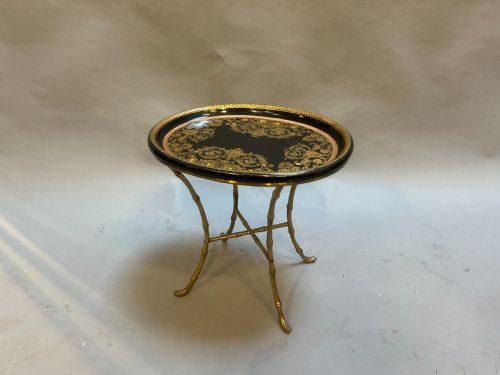
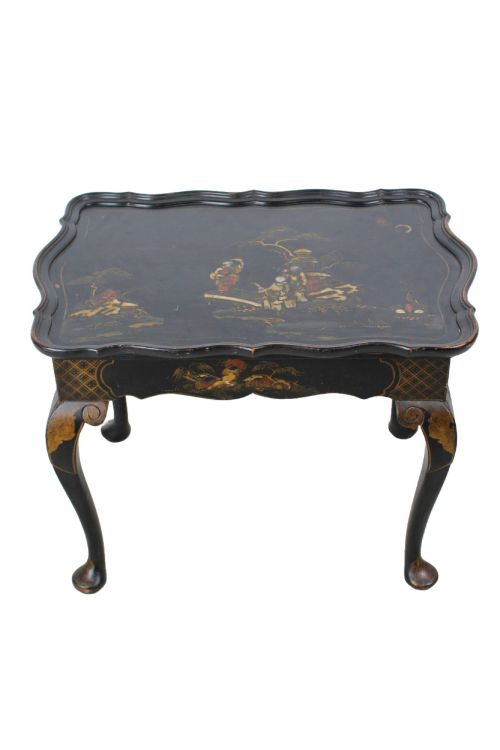
A chinoiserie coffee table tray is a versatile furnishing that adapts traditional serving pieces into low tables through the addition of a custom or period stand. These items bring ornate, painted decoration to a standard living space, functioning as functional coffee tables or occasional surfaces.
The selections encountered here span several distinct historical periods, featuring items originating from the Victorian and Edwardian eras alongside Regency interpretations and pieces dated around nineteen-ten and nineteen-twenty. Buyers will frequently meet papier-mâché and lacquered wood forms configured as tray tables, serving trays on stands, and occasional tables.
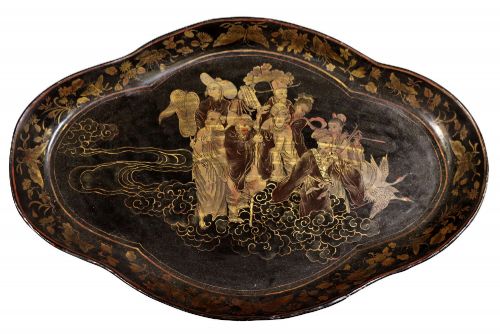
Many examples utilise folding or fixed wooden bases, transforming deep serving trays into stable platforms for daily use. The surface designs consistently display classic orientalist scenes rendered in gilt and contrasting colours against dark grounds.
Materials and Construction
Papier-mâché serves as a primary foundation for numerous pieces, offering a lightweight yet remarkably resilient structure when properly pressed and dried. Artisans built these durable trays by layering paper pulp with glue and oil, then pressing the mixture into moulds before applying layers of black lacquer.
Wood and ebonised timber provide the structural support for both the trays and their dedicated stands, often accented with gilt highlights or brass fittings. Lacquered wood and gilded surfaces receive careful hand-finishing, sealing the intricate floral and figural designs beneath protective clear coats.
Many of these trays began life serving afternoon tea before spending their retirement holding television remotes and coffee cups on sturdy new legs.
Assessing Quality
The refinement of the hand-painted decoration sets apart exceptional examples from standard production pieces, particularly in the precision of the gilt work and the depth of the lacquer. Superior items retain crisp detail in their figurative scenes and floral borders, showing little sign of heavy rubbing across the primary surface.
The integrity of the papier-mâché or timber foundation dictates longevity, with finer pieces maintaining structural rigidity in both the tray rim and its supporting stand. Original stands that complement the exact dimensions and period of the tray command greater appreciation than later replacements.
The Chinoiserie Coffee Table Tray Glossary
- Papier-mâché
- A composite material made from paper pulp or layers of paper bound with glue, heavily used for nineteenth-century serving trays. This medium allowed makers to create smooth, curved surfaces that held thick layers of black lacquer.
- Ebonised timber
- Wood treated to resemble expensive ebony, typically through staining or painting a dark finish onto a lighter base timber. This technique creates a dramatic, high-contrast dark ground that makes gilt and painted chinoiserie motifs stand out.
- Lacquered wood
- Timber coated with resin-based finishes that dry to a durable, glossy surface resistant to moisture. The process requires multiple coats, with each layer rubbed down by hand before the final decoration is applied.
- Gilt
- A thin layer of gold leaf or gold paint applied to decorate surfaces and highlight specific details in the design. It catches ambient light and defines the borders of painted scenes against dark lacquer backgrounds.
- Occasional table
- A small, movable table designed for specific, intermittent use rather than central placement in a room. In this context, it often describes a tray top table easily shifted beside seating.
Chinoiserie Coffee Table Tray: Frequently Asked Questions
What is a tray top coffee table?
A tray top coffee table pairs a raised-edge serving tray with a sturdy wooden stand, creating a removable top surface. This configuration allows the top to be lifted off independently if needed.
Most examples seen here utilise nineteenth-century or early twentieth-century trays mounted onto complementary bases for modern domestic use.
How do I care for lacquered surfaces?
Lacquered and papier-mâché surfaces require gentle treatment using a soft, dry cloth to remove dust. Avoid chemical polishes and keep them away from direct heat sources and moisture.
Using coasters and mats protects the historic finish from rings and scratches during everyday use as a coffee table.
Are these trays attached to their stands?
Many traditional tray tables feature a removable tray resting securely within a folding or fixed wooden frame. This design reflects their original purpose as portable serving pieces.
Buyers should check individual pieces to see whether the tray lifts free from the base or is permanently secured.
How do I identify a Victorian tray?
Victorian pieces frequently utilise moulded papier-mâché with deep rims, finished in black lacquer and detailed with hand-painted gold or polychrome floral motifs. These trays often bear the marks of British manufacturers from the mid to late nineteenth century.
Their substantial weight and dense composition distinguish them from lighter twentieth-century reproductions.