

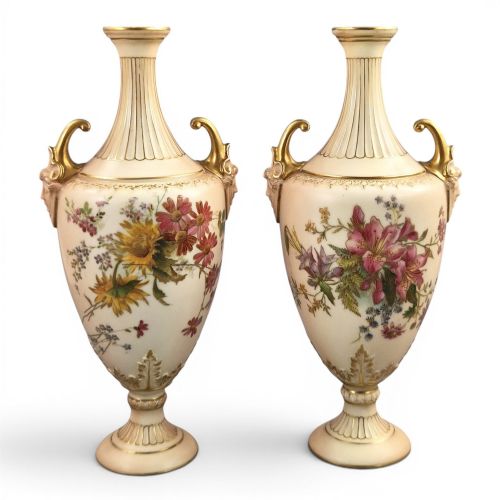


Gilt Ivory Ceramic Urn
A gilt ivory ceramic urn brings soft porcelain warmth and bright gilding into a room, capturing the finest aesthetic tastes of the nineteenth and early twentieth centuries.
Gilt Ivory Ceramic Urn
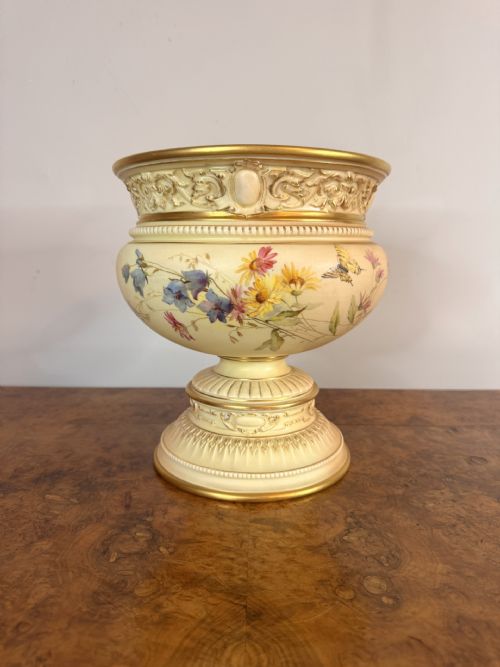
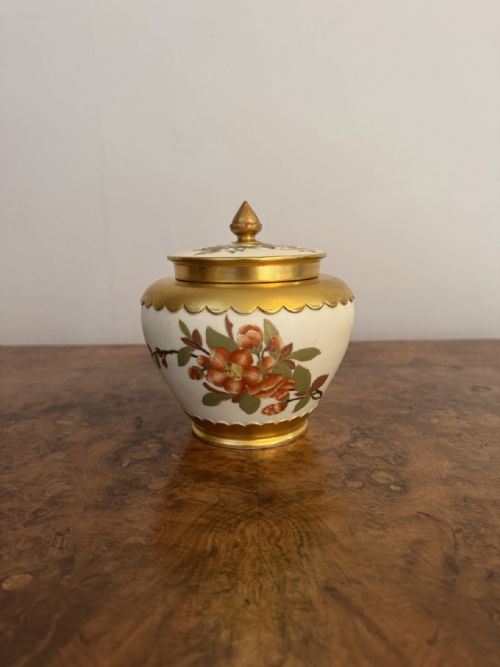
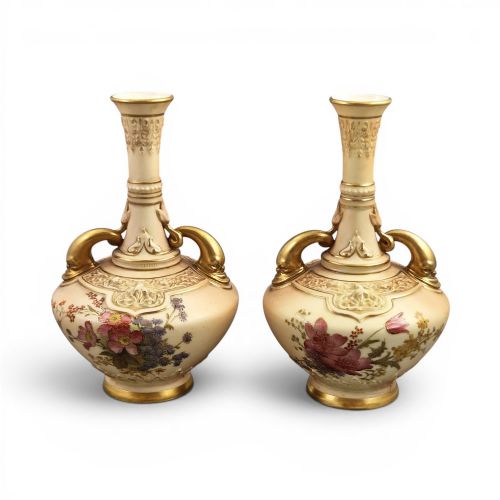
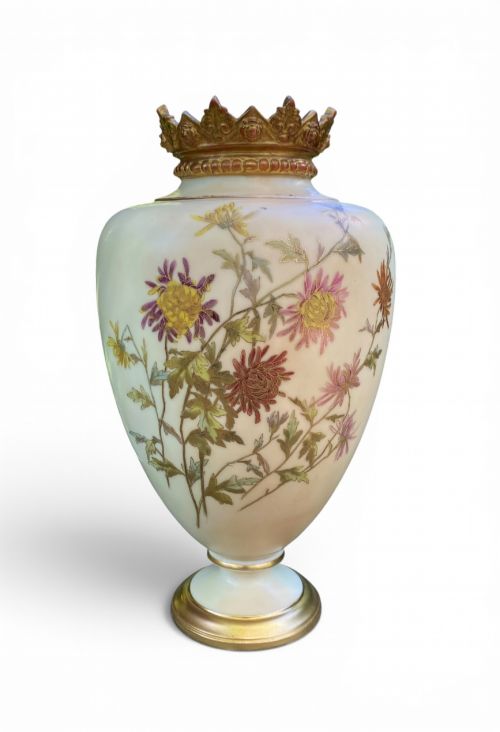
The pieces on this page are predominantly creations from Royal Worcester, appearing in blush ivory colourways accented with delicate hand-painted flora and raised gold leaf. You find single showpieces alongside matched pairs, each exhibiting the distinct aesthetic movements of their respective decades.
How they were made
Potters shaped fine porcelain bodies before applying smooth glazes to achieve the characteristic soft ivory surface. Artisans then hand-painted botanical details, often depicting chrysanthemums and floral sprays in subtle enamel colours.
Makers applied rich gilding and gold leaf to handles, rims, and pierced mounts, subsequently firing the porcelain to bond the metallic highlights permanently to the ceramic body.
Gilt Ivory Ceramic Urn Retail Price Guide 2026
Typical asking prices for gilt ivory ceramic urn among the pieces listed under this phrase on Sellingantiques today, from the lower quarter to the upper quarter. They describe what is for sale here now, not the wider market.
Some urns feature sculpted ceramic dolphins attempting to balance delicate gilt handles.
What varies in quality
The standard of a piece rests heavily upon the finesse of the hand-painting and the complexity of the porcelain form. Examples featuring signed artistry, such as work by Jas Stinton, demonstrate superior execution compared to standard factory decoration.
The crispness of pierced gilt handles and the preservation of delicate enamel work distinguish the finer specimens. Heavier ornamentation and balanced pairs elevate certain items above simpler single vases.
Royal Worcester
The Gilt Ivory Ceramic Urn Glossary
- Blush ivory
- A soft, matte cream ceramic glaze developed by nineteenth-century potteries to mimic the warmth of real ivory. It served as a favoured ground for delicate floral painting.
- Potpourri pot
- A lidded ceramic vessel pierced with small holes designed to diffuse dried scented herbs and petals into a room. These often double as ornamental urns.
- Gilding
- The application of gold leaf or gold powder to ceramic surfaces to create metallic highlights. It accentuates handles, rims, and decorative borders.
- Ewer
- A large jug with a wide spout and scrolled handle, often produced purely for display as a decorative pedestal vase rather than for pouring.
Gilt Ivory Ceramic Urn: Frequently Asked Questions
What is a blush ivory finish?
Blush ivory is a signature matte cream glaze developed in the nineteenth century, providing a warm background for floral painting.
It sets these ceramics apart from bright white porcelains of earlier eras.
How do I date these urns?
Makers utilised factory date codes, impressed ciphers, and registration numbers stamped underneath the porcelain base.
Stylistic cues such as Victorian aesthetic motifs or Edwardian forms also indicate the decade of creation.
Were these pots used for potpourri?
Many lidded vessels feature pierced openings designed specifically to hold fragrant dried plant materials.
Others served strictly as decorative vases and urns for display on mantelpieces and pedestals.
How do I care for gilt porcelain?
Dust the porcelain gently with a dry, soft cloth to protect the delicate enamel colours and gold leaf.
Avoid abrasive cleaners and moisture, which can damage the antique gilding and matte glaze.